Sunday, 20 September 2009

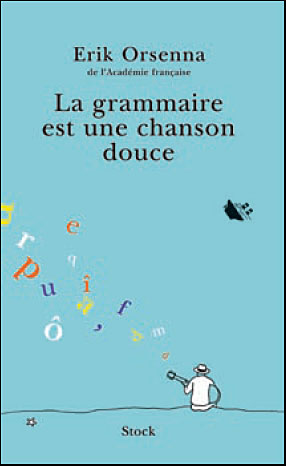
La grammaire est une chanson douce (Erik Orsenna)

--The blurb--
"In Orsenna's witty rumination on words and grammar, 10-year-old Jeanne and her 14-year-old brother, Thomas, are shipwrecked on a strange island where words have become independent. Rendered mute, the siblings visit the Word Market, where one can buy the perfect word for any occasion. They also travel to a town full of independent words that strut around without the need for human beings to utter them. Such word adventures help restore the siblings' power of speech."

--The review--
Erik Orsenna is possibly one of the world's few remaining polymaths. He is not only a graduate of the London School of Economics (with a degree in politics, philosophy and economics), but also wrote a book to rival Nick Hornby's 31 Songs (in the form of History of the World in Nine Guitars, with Thierry Arnoult), and is known for writing books with titles that professional pedants die for (as well as Grammar is a Gentle, Sweet Song, he has also written the as-yet-untranslated Les chevaliers du subjonctif). Further to this, there's another reason why his books should be more widely known to adults: the editions of La grammaire... published by the French publisher, Stock, contain sublime illustrations, which are also by the author. Adults sometimes like pictures in their books, too (even if they don't want to admit it).

Happily, the Saint-Exupery-style illustrations are not the only positive aspect of La grammaire.... Orsenna is skilful in his use of child characters, putting him on a par with the more well-known Jostein Gaarder (particularly in relation to Gaarder's Hello? Is There Anybody There?) and with the work that made Antoine de Saint-Exupery so stratospherically famous, Le Petit Prince. Other similarities to these books include Orsenna's fantasy-soaked setting and imaginative style, so it is understandably pleasing to have this Saint-Exupery link confirmed towards the end of the novella, even if the author isn't necessarily someone whose work Orsenna desires to emulate directly.

Orsenna is also wonderfully expressive and didactic, particularly in one passage where he compares constructing a phrase to decorating a Christmas tree: "You start with the naked tree, and then you decorate it to your whims and desires...Pay attention to your phrase: if you burden it with too many garlands and baubles - that is to say adjectives, adverbs and the like - it can collapse too." Whether Orsenna is deliberately didactic is difficult to say, but either way, he is not irritating in this, and he is successful. Overall, the story is well-constructed, its ending is satisfying, and its two main characters, Jeanne and Thomas, are as well-drawn as the other characters that they meet along the way. This is an enchanting hook into Orsenna's work, and, with its cleverness and wit, proves enjoyable for children and for grammar buffs alike.

Other works by Erik Orsenna*
Portrait of the Gulf Stream: In Praise of Currents (2008)
Tidings from the Isle of Flight (2005)
History of the World in Nine Guitars (1999)
André Le Notre: Guardian to the Sun King (1999)
Love and Empire (1993)

*noted here are only the works that have been translated into English; a wider selection is available in French.

Three Men In A Boat (Jerome K Jerome)

--The blurb--
"It would be unfair to say that any of the three men were hypochondriacs; it was simply that they suffered from a constant malaise, consisting of every symptom but housemaid's knee. The only cure for it was a revitalising trip in an open boat. Bearing frying pans, elusive toothbrushes, pies, lemonade and whisky, for medicinal purposes only, the three men and Montmorency the dog (whose ambition in life is to get in the way) embark on their hilarious adventures on the Thames. After considerable enjoyment and irritation - getting lost in the maze, arguing with some quarrelsome swans, falling in the river - the three men decide that being out of a boat seems a more inviting alternative. Despite being over a century old, its sparkling insights into human - and canine - nature ensure that Three Men In A Boat is as fresh and invigorating today as when it was first published."

--The review--
Younger readers (read: school age) often deride older texts, decrying them as being irrelevant, hard, and boring. However, fans of modern comedy, from the most cutting-edge to the slightly cheesier stuff, will find plenty to delight in while reading Three Men In A Boat: it contains everything from the cringeworthy comedy of the Chuckle Brothers, through to Bill Bailey-style digressions and general wordplay. While it is occasionally a bit middle-class for some people's tastes, this is easily ignored when readers are presented with Jerome's sharp observations about the real surrounding towns and villages of the Thames.

While the novel is a certainly a slice of local history, Jerome is not your usual tour guide: he pulls no punches when it comes to giving his opinions of the places through which the characters pass. Locals to the Thames area will certainly appreciate them even more. As well as containing his famous diatribe against my own home town, Maidenhead ("Maidenhead itself is too snobby to be pleasant...It is the town of showy hotels, patronized chiefly by dudes and ballet-girls. It is the witch's kitchen from which go the demons of the river [steam-launches]...the heroine of the three-volume novel always dines there when she goes out on the spree with somebody else's husband"), I also had a little giggle at Jerome's assessment of nearby Reading, which Jerome describes as, at Walton, "[while doing] its best to spoil and sully and make hideous as much of the river as it can reach, [it] is good-natured enough to keep its ugly face a good deal out of sight." Clearly Jerome and Betjeman were in cahoots when it came to slighting this part of the country ("come, friendly bombs, and fall on Slough...").

However, as well as indulging his bitchy side, Jerome is also lyrical (I refer you to the passage beginning "Sometimes, our pain is very deep and real", which begins on page 96 in the Penguin Popular Classics edition, and which will be easily findable via the free Gutenberg etext) and apt (his passage on the domination of our intellect by our digestive organs is highly accurate and British in the extreme, especially the part about tea). This is not to say that there are no weaknesses in the novel; the digressive style takes some time to get used to, and while there was the occasional lovely piece of description relating to the dog, I felt that Jerome could have made more of the animal character.

There are certainly a good many reasons why this is Jerome's best-known novel; however, it seems a shame that the exposure of his other work should be cut out at its expense. I would definitely be interested in reading more.

Other works by Jerome K Jerome
Idle Thoughts of an Idle Fellow (1886)
Second Thoughts of an Idle Fellow (1898)
Three Men on the Bummel (1900)
Paul Kelver (1902)
Tommy and Co (1904)
They and I (1909)
The Philosopher's Joke (1909)
All Roads Lead To Calvary (1919)
Anthony John (1923)

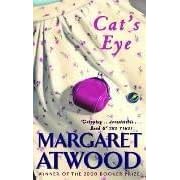
Cat's Eye (Margaret Atwood)

--The blurb--
"Cat's Eye is the story of Elaine Risley, a controversial painter who returns to Toronto, the city of her youth, for a retrospective of her art. Engulfed by vivid images of the past, she reminisces about a trio of girls who initiated her into the fierce politics of childhood and its secret world of friendship, longing, and betrayal. Elaine must come to terms with her own identity as a daughter, a lover, an artist, and a woman—but above all she must seek release from her haunting memories. Disturbing, hilarious, and compassionate, Cat's Eye is a breathtaking novel of a woman grappling with the tangled knot of her life."

--The review--
In Cat's Eye, Margaret Atwood defers to the traditional idea of girls being bitchy and manipulative, especially in numbers. Cat's Eye, however, is not traditional in the least. Elaine enjoys, in tandem with her brother, a non-traditional, relaxed, tomboyish childhood, which is brutally cut short by the female mind as Elaine finds out more and more what other girls expect from her.

Any female who has been victimised by other girls in the past will be cut to the quick by Atwood's realistic delineation of the relationship between the girls in this murky and controlling sorority of four, in which loyalties change daily (if not even more often). Atwood ups the ante with the shock factor, though: while many of us associate these cruel behaviours with teenage girls, the characters at the time of these occurrences are barely more than ten years of age, which I found tempered the realism slightly. However, this is more than compensated for by Atwood's lyricism and her ability to make us wince in equal measure elsewhere in the novel.

This, all in all, makes for a gripping read, and it provides a welcome departure from Atwood's frequent dystopias (even though she comes back to it later on in her writing life), although the scenarios set up in Cat's Eye are perhaps added to by the idea that they are real dystopias, not hypothetical ones. It does tail off towards the end, and admittedly I couldn't always see the importance of Cordelia specifically (her manipulation of Elaine seemed much more of a team effort with the other girls than a sole project), but I certainly liked the idea of the cat's eye acting as a central symbol throughout. The use of a physical object for this (i.e. the cat's-eye marble) is also a very human idea: how many of us have been catapulted back through time, jolted there by the sight of a single innocuous object? Its universality is appealing, and yet Atwood has chosen something unusual enough to be interesting.

Cat's Eye, while not perfect, therefore at least serves to show that Atwood is not a one-trick pony. Providing gripping, sophisticated and yet readable novels, her oeuvre is certainly worth the addition to any bookshelf.

Other novels by Margaret Atwood
The Edible Woman (1969)
Surfacing (1972)
Lady Oracle (1976)
Life Before Man (1979)
Bodily Harm (1981)
The Handmaid's Tale (1985)
The Robber Bride (1993)
Alias Grace (1996)
The Blind Assassin (2000)
Oryx and Crake (2003)
The Penelopiad (2005)
The Year of the Flood (2009)

Monday, 31 August 2009

update August 2009

# of books read in August: 5

Cumulative total: 41 (target within reach!)

1. You Are Here (Bremner, Bird and Fortune)
2. Le Dossier: How To Survive The English (Sarah Long)
3. Du phonographe au MP3 (Ludovic Tournès)
4. Where Angels Fear To Tread (E. M. Forster)
5. Born on a Blue Day (Daniel Tammet)
6. The Tale of Genji (Lady Murasaki; tr. Arthur Waley)
7. The Comedy of Errors (William Shakespeare)
8. The Golden Gate (Vikram Seth)
9. Al Capone Does My Shirts (Gennifer Choldenko)
10. A History of Modern Britain (Andrew Marr)
11. The Power and the Glory (Graham Greene)
12. Le CV de Dieu (Jean-Louis Fournier)
13. Extremely Loud and Incredibly Close (Jonathan Safran Foer)
14. The Music of Silence (Andrea Bocelli)
15. Love (Toni Morrison)
16. Class: The Secret Diary of a Teacher in Turmoil (Jane Beaton)
17. The Wives of Bath (Susan Swan)
18. The Penelopiad (Margaret Atwood)
19. The Queen and I (Sue Townsend)
20. Molly Fox's Birthday (Deirdre Madden)
21. Daisy Miller (Henry James)
22. The Rules of Attraction (Bret Easton Ellis)
23. Gods Behaving Badly (Marie Phillips)
24. Cold Comfort Farm (Stella Gibbons)
25. The Crucible (Arthur Miller)
26. The British Museum is Falling Down (David Lodge)
27. them (Joyce Carol Oates)
28. Flaubert's Parrot (Julian Barnes)
29. Adrian Mole: The Cappuccino Years (Sue Townsend)
30. Fahrenheit 451 (Ray Bradbury)
31. Tears of Darkness: The Story of the Bataan Death March and its Aftermath (Michael and Elizabeth Norman)
32. Cat on a Hot Tin Roof (Tennessee Williams)
33. Oryx and Crake (Margaret Atwood)
34. Of Mice and Men (John Steinbeck)
35. The Bell Jar (Sylvia Plath)
36. The Nigger of the Narcissus (Joseph Conrad)
37. The Past is Myself (Christabel Bielenberg)
38. The Road Ahead (Christabel Bielenberg)
39. The Other Hand (Chris Cleave)
40. Conference at Cold Comfort Farm (Stella Gibbons)
41. The Rules of Engagement (Anita Brookner)

Average number of books per month: 5.1

% by male authors: 54%
% by female authors: 46%

Friday, 28 August 2009

The Rules of Engagement (Anita Brookner)

--The blurb--
"'I have come to believe that there can be no adequate preparation for the sadness that comes at the end, the sheer regret that one's life is finished, that one's failures remain indelible and one's successes illusory.' Elizabeth and Betsy are old school friends. Born in 1948 and unready for the sixties, they had high hopes of the lives they would lead, even though their circumstances were so different. When they meet again in their thirties, Elizabeth, married to the safe, older Digby is relieving the boredom of a cosy but childless marriage with an affair. Betsy seems to have found real romance in Paris. Are their lives taking off, or are they just making more of the wrong choices without even realising it?"
blurb from www.word-power.co.uk

--The review--
All aspiring writers know that there seem to be so many rules to which one must adhere in order to be successful: show, don't tell; write what you know; use dialogue...There are so many articles on how to be a successful or interesting or readable writer that it can be overwhelming at best. At worst, you can read an article by an enormously well-known author and find that you disagree with something they say, while simultaneously feeling that you shouldn't.

Anita Brookner, though, does at least prove the rule that writing is definitely enhanced by letting one's characters speak. Her writing is improved considerably in terms of pace and vision when more dialogue is added, but even when it isn't there, The Rules of Engagement proves itself to be a confessional, confidential and intimate novel, with the air about it of sitting down with a close friend for a pot of tea while she tells you everything. This effect is in no way diminished by Brookner's awe-inspiring vocabulary ('suzerainty' and 'mephitic' being two such examples).

However, despite the tell-all atmosphere that Brookner's protagonist creates, it is not as sinister a novel as first expected. For this kind of relationship between girls, Margaret Atwood's Cat's Eye is far better for delivering that. Brookner's novel has a timeless, slightly old-fashioned quality, especially regarding women and jobs; she mentions the 1980s, and yet you don't even realise that you're this far ahead in time until you're told so.

While The Rules of Engagement has its many good points, including its slightly unfathomable title (though when 'engagement' equals 'involvement' it makes much more sense), the Racine reference that runs throughout the book is untranslated from the original French and is thus accessible only to a reduced audience. Further to this, its inclusion is often contrived and the plot and characters are no better for its existence in the novel.

The novel's elegance is notable, but ultimately it is a forgettable work; it lacks real bite, and Brookner's Booker Prize-winning Hotel du Lac may be a better bet. On the whole, though, I would direct readers instead to the works of Deirdre Madden, who spins a tauter yarn with more memorable characters.

Other works by Anita Brookner (selection)
A Start in Life (1981; published in the USA as The Debut)
Hotel du Lac (1984)
Brief Lives (1990)
Incidents in the Rue Laugier (1995)
The Bay of Angels (2001)
Leaving Home (2005)
Strangers (2009)

Bookish Bits & Bobs: Censorship and Controversy

Lists of frequently banned and challenged books proliferate on the internet, telling eager readers of the books banned and protested against for everything and anything from being sexually explicit (DH Lawrence's Lady Chatterley's Lover) to not upholding traditional values (John Steinbeck's Of Mice and Men). The fact of these books being challenged or banned seems only in most cases to achieve the opposite effect: readers only want to read them more.

The most consistent 'victim' of the challengings and bannings (bannings taking place mainly in school and public libraries) is perhaps Judy Blume, who has had many of her books objected to for dealing with teenage issues so explicitly (such as masturbation, teenage sex, menstruation, racism, and parental divorce). It is worth asking what such protestors hope to achieve. Are they all religious nutcases who want their children to believe that everything is sweetness and light? Are they Mary Whitehouse-type figures who want to bring back the days of corsets, the birch, and being seen and not heard? Or are they parents who are paranoid that the information contained in such books will only serve to highlight their own parental weaknesses to their teenagers?

But more sinister, perhaps, is when books are actually changed on behalf of the public in order to not offend their sensibilities, or worse, simply to modernise. The two biggest casualties are surely Hergé (creator of Tintin) and Enid Blyton. The works of these writers are now at least 80, approaching 100 years old, so it is inevitable that the worlds inhabited by the characters and the attitudes represented therein will be very different to what 21st-century readers experience. The writers have therefore been criticised for a battery of 'offences' that held little or no offensive value when the books were written. Hergé's catalogue of offences alone comprises animal cruelty, racism, violence, colonialism and fascism - pretty serious allegations for a cartoon series about a young Belgian reporter and his dog. Hergé himself altered particularly patronising passages of Tintin in the Congo in 1946, but this was a voluntary change (unlike the changing of images of Tintin hunting animals, which was not, although Hergé did eventually redraw this as well). Even as recently as 2007, consumers were calling for Tintin in the Congo to be withdrawn from publication completely. While this was easily the most controversial Tintin album, it was not the only one to fall under scrutiny: The Shooting Star had a very Jewish-looking character's name changed to something less ethnically specific so as to avoid causing offence.

Enid Blyton has perhaps come off even worse, and to even greater protest around the world at the changes made to her books. The protests from the politically correct were obviously strong enough to result in many of Blyton's books having names or actions of characters changed in later reprints, but perhaps the naysayers did not count on the loyal battalions of Blyton fans, whose views on these changes can be found all over the internet. They complain that as a result of the changes, the books have become watered-down, less action-packed, and far less a portrait of the time in which they were written, as well as serving as a betrayal of Blyton herself. Blyton too is charged with racism and sexism in particular, with the Noddy series and the Faraway Tree series being most affected by the changes, as well as several of her books for younger children that feature golliwogs. The changes have been made chiefly in order to cause less offence and to modernise, and doubtlessly traders of second-hand and antique books will be thrilled - older editions of Hergé's comics already sell for hundreds of dollars (even the ones that were already edited by Hergé), so unedited versions of Blyton's works may be set to grow exponentially in price.

But the booksellers may be the only ones who are pleased by the changes. I personally find it discomfiting on several levels (though more in relation to Blyton's works than to Hergé's - at least at the time of the changes to the Tintin comics, Hergé was still alive to defend himself). On a practical note, we cannot go on adapting or the books will be unrecognisable - especially since times change so quickly. If I were going to be flippant, I would ask what was coming next - Dick and Jo (sorry, Rick and Joe) texting on their iPhones? Noddy trading in his little motor for a chavmobile?

More seriously, I believe that there is something to be said for maintaining authorial integrity. While the debate over how far we actually own works once they have left the authors' hands will rage forevermore, surely preserving a snapshot of their time is not only essential in order for us to teach our children how times change but also a matter of respect for the authors' work. I know I'll certainly be guarding my Faraway Tree books (featuring Dame SLAP, thank you) with my life.

Thursday, 27 August 2009

Conference at Cold Comfort Farm (Stella Gibbons)

--The blurb--
"A sequel to the original Cold Comfort Farm, Conference at Cold Comfort Farm is set 16 years later and satirises the social and cultural scene of the period. The farm has been refurbished as a museum in faux-rustic style and becomes the venue for a conference of the International Thinkers' Group..."

--The review--
Having missed out on a bargainous copy of the exceedingly rare Christmas at Cold Comfort Farm on Ebay recently, I tried to take comfort in my other new acquisition: a copy of the almost-as-rare and just-as-bargainous Conference at Cold Comfort Farm.

The massive lapse in time between the plot of Conference at Cold Comfort Farm and its predecessor means that we have a whole lot of catching up to do in the first chapter alone. The tying up of the fates of the main characters seems rushed, and even though they don't really star in the rest of the story, it would have been fulfilling for readers to find out more about Flora's husband and children.

Equally, it would have been satisfying to find out more about the fates of Cold Comfort Farm's previous occupants (especially that of the slightly-crackers Aunt Ada Doom), but this is rather glossed over, which is a shame given the potential for amusing subplots and anecdotes that this could have yielded. However, despite these missed opportunities, Gibbons does at least have a lot of other solid material and extracts as much humour from this as is possible. She satirises academia and academic people with precision and wit, offering a welcome, more rusticated alternative to David Lodge's more modern academic satires, and, as usual, offers the reader rich descriptions of landscapes and conversations.

While it perhaps does not quite draw level with the original Cold Comfort Farm in terms of storyline quality and character depiction, Gibbons still creates a rattling good yarn, and leaves the reader wondering what could possibly be next in the Starkadders' ongoing saga.

Other works by Stella Gibbons*
Bassett (1933)
The Priestess, and other poems (1933)
Miss Linsey and Pa (1935)
Nightingale Wood (1938; republished with new illustrations by Sophie Dahl in 2009)
My American (1939)
Christmas at Cold Comfort Farm (1940)**
The Rich House (1941)
Ticky (1943)
The Bachelor (1944)
The Matchmaker (1949)
The Swiss Summer (1951)
Beside The Pearly Water (1954; short stories)
The Shadow of a Sorcerer (1955)
Here Be Dragons (1956)
White Sand and Grey Sand (1958)
The Weather at Tregulla (1962)
The Charmers (1965)
The Woods in Winter (1970)

*All of the following are available from Amazon marketplace at the time of writing, at (mostly) reasonable prices.
**very rare and often stratospherically expensive. This short story is available, however, in The Virago Book of Christmas (edited by Michelle Lovric).

Tuesday, 25 August 2009

The Other Hand (Chris Cleave)

--The blurb--
"We don't want to tell you too much about this book. It is a truly special story and we don't want to spoil it. Nevertheless, you need to know something, so we will just say this:

It is extremely funny, but the African beach scene is horrific.

The story starts there, but the book doesn't.

And it's what happens afterwards that is most important.

Once you have read it, you'll want to tell everyone about it. When you do, please don't tell them what happens either. The magic is in how it unfolds."

--The review--
Subtle titles and subversive blurbs are sure ways to draw readers in, and luckily for Chris Cleave, his book has both. The title is ambiguous and intriguing, while the blurb equally serves as an unusual hook to grab potential readers. However, these perceptions are perhaps purely British: The Other Hand was published as Little Bee in the US, putting the main character centre stage. Is this because the Americans don't do subtlety? Or is it a cleverer 'revival' strategy whereby publishers are trying to get names-as-titles back in fashion (though I somehow doubt it)?

In any case, Chris Cleave is certainly one to watch. The novel is essentially pro-immigration, but the characters (especially the principal character, Little Bee) are well-crafted, incisive, witty, intelligent, touching and humorous. They are also well-contrasted, successfully creating the effect of collision between two vastly separate worlds: Little Bee could not be more different from those who end up protecting her. The events of the novel, on one scale, seem slightly improbable, but one has a scary feeling that they are closer to the truth than many of us can ever know. Cleave's work drags readers out of their usual 'out of sight, out of mind' mentality and forces us to differently consider those around us, their backgrounds, and what they might be doing here. Whether this was Cleave's main aim, or whether he was not trying to be as didactic as that, is subsidiary. Even if he is pro-immigration, by the end of the novel we don't really care - our interest in and feeling for the characters is chiefly a human interest rather than a political or racial one.

Cleave also has the ever-rarer quality of being a contemporary writer who is able to write sublimely, both in terms of expression and style and in terms of grammar. Even many of the excellent young authors out there today, such as Marie Phillips (author of Gods Behaving Badly, which is possibly one of the most enjoyable books of the past couple of years), have been known to make appalling grammatical errors. My main fear when I see teachers and writers making such mistakes is that such errors will pass into the public consciousness to become correct, because people trust these people to be right - even when they are wrong. Cleave, thankfully, is not among this particular conglomerate, and is consequently able to shine above others, with his subversive and unusual humour and way of thinking only serving to draw the reader in further.

Other work by Chris Cleave
Incendiary (2005)

Sunday, 23 August 2009

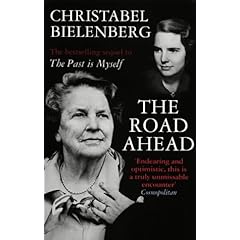
The Road Ahead (Christabel Bielenberg)

--The blurb--
"Following her wartime memoirs in "The Past is Myself", Christabel Bielenberg continues her story from the end of the war. Germany was devastated by war and its aftermath, while to the author Britain seemed grey and exhausted. She was soon appointed "The Observer"'s special correspondent in Germany and, reunited with her husband - technically an enemy alien - she joined the struggle for reconciliation with, and the rebuilding of, a defeated nation. A near-fatal accident to her husband, and her own illness, persuaded the young couple to turn their backs on England and Germany, and make a new start farming in Ireland. Although life was harsh at first, the beautiful scenery of the Wicklow Mountains provided a haven for the family and for the hosts of young people from all over the world who joined them each summer. Christabel became involved with the Peace Women of Northern Ireland, and learned as much as she could about her adopted country."

--The review--
Sequels to anything are usually quite the minefield. They have high expectations attached, both for the author's reputation and for the book itself. There are certainly many successful sequels, so it's clearly not impossible. But equally, there are just as many that fall by the wayside, and The Road Ahead distinguishes itself from the start given the general absence of memoir sequels.

Anybody expecting the same pace and style as found in The Past Is Myself may be disappointed: the war has come to a close, and so the atmosphere is different from the off (it is still charged, but perhaps with more melancholy, and there is more looking ahead than nostalgia). It is also arguably more complex in political content, which again falls prey to Bielenberg's weakness of being quite vague at times. The memoir can be seen at its strongest, perhaps, at Christabel and Peter's arrival in Ireland. Their farming exploits, from finding a property to delivering lambs, inject the memoir with a bit more vigour and humour, contrasting nicely with its previous languorous pace.

Readers of this novel, then, will perhaps be more interested in Christabel and her family on a personal level (even though we arguably hear less about the children than we do about Christabel and her husband), whereas readers of the prequel will perhaps be more history-centred in their interests. This perhaps shows, then, not that expectations for sequels should not be as high, but rather that expectations for follow-ups should certainly not be the same.

Other work by Christabel Bielenberg
The Past Is Myself (1968)

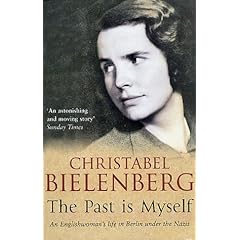
The Past is Myself (Christabel Bielenberg)

--The blurb--
"A story of a British woman, married to a German lawyer shortly before WW2 and her subsequent experience as a German citizen in the war under Nazi rule."

--The review--
There is certainly no shortage in the book market of war memoirs: as well as perhaps the most famous in Anne Frank, interested readers can also choose from those of Zlata Filipovic, Vera Gissing, and Christabel Bielenberg. While these four reflect various points of view of war from various different countries, Bielenberg's memoir differs in that it offers not just political insight, but also political involvement. The imprisonment of her husband, the execution of her friends and her interview with the Gestapo all cause readers to draw breath and admire the shrewd quickwittedness that is displayed by the author. An interesting extra dimension is also brought by the fact that Christabel is British and living in Germany with her German husband, as well as the fact that the memoir is not insular in terms of class (Bielenberg enjoyed a very middle-class upbringing, and this is highly evident, but she seems to slot in equally effectively with the rural working-class community of the tiny Black Forest village in which she lives).

The memoir is tightly-packed and full of plenty of good material from someone who is highly intelligent and humorous, and the quasi-nepotism that is exhibited in her entry to journalism is still grimly reminiscent of today's market. Bielenberg's skill in character development is also notable, which is perhaps further demonstrated by her introduction to the follow-up, where she explains that she has written it due to the curiosity of her readers as to what happened to her and her family next.

This does not mean that the memoir is without its faults: Bielenberg can be extremely vague at times, particularly on the more complicated points of the story, and this is something that also dogs the sequel. Nevertheless, this does happily not prevent the memoir from being an authentic, memorable and well-written piece of history, and should successfully spur all interested readers on to the next instalment.

Other work by Christabel Bielenberg
The Road Ahead (1992)