Showing posts with label ebook. Show all posts

Sunday, 14 July 2013

Bookish Bits and Bobs: Vive les livres

It's recently been reported that the French consumption of ebooks has gone up by 2% between 2011 and 2013...making a total of a mere 3% of book sales. This compares to around 22% consumption in the US and around 10% consumption in the UK. So why are French readers not interested?

Trying to get a connection? Good luck with that
One theory that has been posited is that the French are less enthusiastic about gadgetry in general, meaning that ebook uptake was always bound to be slow. Only about 1% of the adult population of France is said to own an ereader, while this figure is more like 26% in the US. This of course doesn't account for tablet ownership, but even if we look at this, it too is lower (10% of the French adult population owns one, compared to 34% in the US). These statistics are perhaps surprising to those who spend most of their time around Paris, where ebook readers, tablets and smartphones abound. However, travel just a couple of hours south and it's clear that such gadgetry is a novelty, with ereader users getting strange looks in public as they are such a rare sight. In some very rural areas, connectivity is also still limited to non-existent, which will limit uptake.

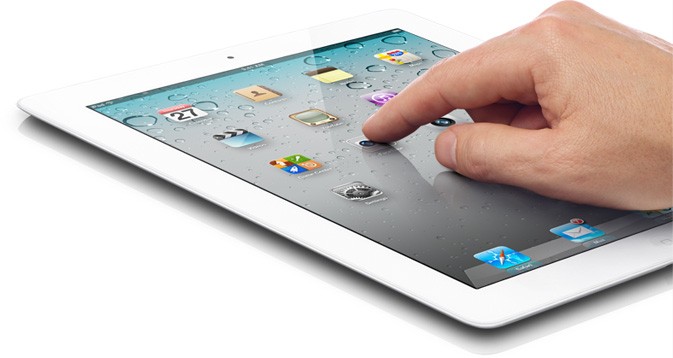
It's also worth bearing in mind that salaries in the US are higher than in France. According to the BBC, the average American works for $3,263 a month, while the average French person earns $2,886 - and while differences in the cost of living can partly justify this gap in salary, it would not be true to say that everyday living costs are always lower in France. (Long-distance train travel and food are just two of the things that spring to mind as being cheaper in the US.) Prices of these gadgets are also comparatively lower. Not many people in France (outside the capital, of course) have the spare €400 required for the 16GB iPad 2 - whereas people in the US, with higher average salaries, are able to snag one for $400 (about €300 at today's exchange rate). But this can't be all there is to it. Why aren't the French interested in this technology, or in reading ebooks in general?

The French version of Big Brother
At the risk of sounding deliberately polemic, it could be observed that the French are just slow on the uptake in general when it comes to new trends, and that they also just have different tastes (and that this is, indeed, part of the country's charm). For instance, celebrity gossip and reality TV does exist in France, but to nowhere near the same degree of popularity as in the US or UK. They are also more parochial in their food tastes, preferring to continue exploring the cuisine of their own country (or even just region) rather than branching out and cooking dishes from many different countries. This naturally stretches into technology and more specifically into education and technology. Smartboards in French state schools? You have to be joking.

The front-facing, chalk-and-talk French system
Why is education important in this debate? It's not that all schools in the UK and US are now teaching exclusively from e-textbooks and dancing around bonfires of their old paper copies (although there are of course reasons why this wouldn't be such a terrible thing), as compared to France, where students are still made to copy out chalked notes from the blackboard (erm, in some places...see right!). While a lack of technology in French schools is partly linked to the country's slow uptake of e-readers and so on (given that children and adults arguably haven't been shown the benefits to any advanced degree), it also links back to the fact that French education is still very traditional indeed. It's probably roughly where Britain was back in the eighties or maybe even the seventies. "Special needs" go largely unaddressed; little account is taken of students' differing learning styles (kinetic, aesthetic and so on); rote learning is highly prized; arts, sports and even sciences take a back seat in primary schools, while most of the learning time is spent on literacy and numeracy; and learning is overall very book-based, with focus on individual rather than group learning. 

Perhaps this sounds harsh and a French student who's left the system recently (or is still in it) will soon come along to debunk this. But it seems doubtful. One of the strengths (and weaknesses) of the French education system is its lack of overall change across the years, and this would explain the lack of technological assimilation in French schools. The "if it ain't broke, don't fix it" philosophy prevails. Why would students need ebook readers or smartboards? Textbooks and blackboards work just as well. In 2010, only 66% of French teachers claimed to have used technology in their classroom in the last 12 months, compared to 96% of UK teachers. The teachers in France cited reasons for this which included potential disruption to the class, difficulties in installing the technology, and doubting the technology's pedagogical efficacy. All of this amounts to an attitude and ethos whereby physical books are highly prized by French children and adults. Combined with the income levels and gadget prices mentioned above, this makes them more likely to use paper books than electronic ones.

Bookshop, rue de la Convention, Paris
The same pattern pervades the French book market. Having spent their education with the value of physical books being reinforced, the French are keen to continue prizing this, with the prices of paper books being highly protected so that authors are paid properly. High book prices have driven consumers in other countries to flock to online sellers, but as well as cherishing paper books and the academic institution of the country's authors, the French also like to uphold the livelihood of independent booksellers, which is partly driven by anti-capitalist sentiments as well as a sense of intellectual honour. This all means that in France, large online companies (and suppliers of ebooks) cannot win over independent (or at least physical) retailers - at least for now. 

A smartboard being used in a French state school
One can therefore conclude that far too many factors are still too strongly at play in favour of paper books for the French to even consider converting seriously to ebooks. So could this ever change? The French have already started stealing Britain's TV shows (creating their own versions of Money Drop and Come Dine With Me, to name but a few), even if some of these were programmes that Britain decided it didn't want anymore way back in the eighties (such as Family Fortunes); will they therefore be following the UK and US suit in the near future? Back in 2010, when the above data was initially released, then-education minister Luc Chatel announced a €60m investment in school technology, and in October 2011, telecoms company Orange worked with the French government to establish a promising pilot scheme in schools. Called the Tablette Elève Nomade project, 300 Samsung Android tablets were provided to six schools across three French districts, and it went so well that the initial one-year trial was extended to last a further year. Teachers noted several positive changes, including easier motivation of disaffected learners, easier differentiation, increased team work and bonding among students, and increased parental involvement. 

Maccy D's, French-style...a sign of progress?
All of this indicates that in the right environment and with appropriate support, parents, students and teachers are all receptive to the use of new technology. As children who were born into a world where smartphones and at-home web access are normal begin to grow up, it's possible that the new young population (who, if current trends continue, are more likely to live in a shoebox of a studio flat than a roomy detached house) will be keener to read digitally (even if only to save space). Perhaps only then will ebook sales increase. France is slower to pick up on trends - but it often gets there eventually. For better or for worse, celebrity magazines such as Voici! are gaining in popularity in France, Amazon is well-used (even though discounts are nowhere near as large thanks to laws protecting authors), and even McDonalds (you'd think the arch enemy of the French) does well throughout the country. Ebook sales are likely to do this too in the end, with likelihood perhaps being increased with the decline of traditional physical bookstores such as the Fnac. However, somehow it seems less probable that France will ever stop loving books in general. Vive les livres indeed.

Monday, 20 May 2013

Print shop

I promise I have some book reviews coming up for you in the next few days (Fidel Castro, Helen Simonson and The Simpsons are all on the menu), but for tonight, here's a quick nugget of news to contribute to the debate of 'print versus digital'.

After publishing Riding The Bullet as an ebook only in the year 2000, Stephen King has pulled off a complete volte-face with the publication of his latest book, Joyland, which will be released only as a print copy. He hasn't ruled out the possibility of digital copies being available in future, but for now has said that he would prefer people to get off their backsides and go to an actual bookshop.

King's wishes may be a little desperate given the rise of e-tailing: many fans probably won't get off the sofa and go to the bookshop round the corner when they can still order the paper copy of the book online. However, King's polemical point about wanting people to appreciate the physicality of a print book is still strong and valid. I received a Kindle for Christmas in 2011, and while I greatly value the fact that I no longer have to cart a ton of books with me on my commute or on holiday, as well as the low price of certain ebooks, I do not feel that reading on an ebook reader is a comparable experience to reading physical books (and I think I'd say that regardless of what ebook reader I had).

Why? These reasons can seem superficial, but they all add up to a big part of the experience of reading 'real' books. Being unable to see the thickness of the book, or feel its weight, reduces my ability to perceive how much of the book I have read, which can lead to aimlessly skipping through pages to see where the next chapter starts. And no, having the percentage gauge at the bottom of the screen doesn't help. I also miss, to a degree, the cover art of a book, in the same way that vintage record fans find CDs inferior. (However, I used to have this problem with MP3s too, suggesting that my mourning for the loss of book cover art may decline over time.) There are also still several formatting issues with ebooks that are yet to be resolved and which just don't (or at least rarely do) occur in printed books. Finally, there's the lack of sensory experience in ebooks that is provided by regular publications - not just the feeling of the weight and the look of the illustrations, but also the smell of the pages, the sound that they make when you turn them, and the rough grain of their texture beneath your fingertips (although I'll grant you that the absence of papercuts incurred by reading ebooks is something to be grateful for).

I can therefore completely understand Stephen King's reticence when it comes to encouraging the digital revolution. But at least his success means that even if he does choose to eventually publish Joyland digitally, it is far likely to be for ideological reasons - and not for financial ones.

Tuesday, 31 July 2012

Bookworm News (July 2012)

Man Booker Prize Longlist 2012
The longlist for the prestigious Man Booker Prize was announced this month, with several famous names sitting alongside debut novelists. Perhaps unsurprising given the series' success and popularity, Hilary Mantel features with Wolf Hall's sequel, Bring up the Bodies. Other famous names on the list are Michael Frayn for Skios, Will Self for Umbrella, and André Brink (who is nominated for his 21st novel, Philida). These individuals are in the company of several other novelists who have also written multiple books but somehow stayed off the radar: Nicola Barker (nominated for her ninth novel, The Yips), Deborah Levy (who is also nominated for her ninth novel, entitled Swimming Home), Ned Beauman (for second novel The Teleportation Accident) and Tan Twan Eng, for The Garden of Evening Mists (his second novel). Finally come the debutants: Jeet Thayil (with Narcopolis), Sam Thompson (for Communion Town), Alison Moore (The Lighthouse), and Rachel Joyce (The Unlikely Pilgrimage of Harold Fry).

So who do I think is in with a shout? Rightly or wrongly, it is rare for a relative unknown to win this prize, so I would skew more towards Will Self as a possible winner (perhaps because I am already a fan of his writing). From among the more unknown authors, Ned Beauman - whose success at such a young age almost makes me wish I'd never heard of him - seems the brightest star thanks to a strong literary and journalistic track record, especially in the face of competition such as Sam Thompson's Communion Town (which gets very bad reviews on Amazon) and Alison Moore (whose debut novel, The Lighthouse, for which she is nominated, is not even available to the general public yet. The mind boggles). In any case - more on this subject once I've managed to have a closer look at the books. May the best win!

Banned Books Week
Yep, there's a week for this. And I think it's so unspeakably cool that I'll be trying to spearhead a week of related activities at my school throughout its duration (September 29 - October 6, for the interested). As part of the festivities, the American Booksellers Foundation for Free Expression will help booksellers make videos of people reading from banned books and post them online. And we all know how much kids (whether reluctant or avid readers) love a video clip. More than 90 videos were produced last year by booksellers alone, with more than 800 videos being posted in total of people reading banned books on YouTube. Intrigued? Then check out http://www.bannedbooksweek.org/ for extra info. You'll find me in the resources section, printing out book lists and posters, and checking out display ideas and activities. And, if you're anything like me, you'll be buying one of these as well.

Join The Great Book Migration
The rest of the year is also packed with a whole host of stunning literary activities: as well as NaNoWriMo in November, you can also join The Great Book Migration. Vision correction specialists Ultralase, in conjunction with UK athlete Jonathan Edwards, have decided to track 100 books in a nation that spends an average of 8 hours reading per week (which, encouragingly, is higher than I would have thought). From Dracula to One Day, the books will be found in public places with 'Read Me' labels attached. The finders can then log where they found the book using QR codes, Twitter, Facebook or email. Keep your eyes open now...they really could be anywhere from airports to park benches. Plus, if you find a book, you not only get to keep it but are also entered into a draw to win a £10 Amazon voucher. So get hunting - and remember those who have lost their sight to a degree that they are no longer able to experience the joy of reading traditional books.

The UK's favourite fictional folk
A poll of over 2000 people has been conducted to reveal Britain's favourite literary characters. Some of the results are arguably surprising (with Hermione trouncing Harry, for one), but it's perhaps a no-brainer that a beloved Jane Austen character comes very close to the top of the list. With Bond fever sweeping the nation, however (see the Bond in Motion exhibition at Beaulieu, or the Designing 007 expo in London for more "shaken, not stirred" goodness), it's this fictional Secret Service agent who steals the top spot. Here's the list in full:

1. James Bond
2. Elizabeth Bennett (Pride and Prejudice)
3. Jane Eyre
4. Hermione Grainger (Harry Potter series)
5. Miss Marple (Agatha Christie)
6. Harry Potter
7. Gandalf
8. Bella (Twilight)
9. Poirot
10. Jack Ryan (Tom Clancy)

Film-tacular
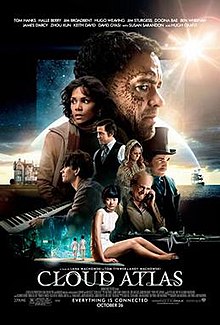
There are plenty of cinematic treats to look forward to in the near future as yet more books are transformed into films and released on DVD for our viewing pleasure. Bel Ami, based on the 1885 novel by Guy de Maupassant and starring Robert Pattinson, Uma Thurman and Christina Ricci, was released on DVD this month, and the newest incarnation of Les Misérables on the silver screen coming out at the end of December for some countries, and at the beginning of January for others. Starring such luminaries as Anne Hathaway and Russell Crowe, it promises to be a strong contender to the 1998 version (featuring the hunky Liam Neeson). Before that, though, is the first adaptation of David Mitchell's Cloud Atlas in October, which has Tom Hanks, Halle Berry, Hugh Grant and Jim Broadbent in leading roles. What with all this excitement (plus the new version of The Great Gatsby also coming out before Christmas), I may barely be able to contain myself. I might need a cinema subscription this term.
Thomas Pynchon's full back catalogue to be published in ebook form for first time
Celebrated US author Pynchon is probably most famous for Gravity's Rainbow - a weighty tome which not even I have read (although it's been on my Amazon wishlist for some time). However, this writer's back catalogue is about to become even more accessible to the modern reader due to being made available for ebook readers for the first time. Not only will Gravity's Rainbow suddenly become ultra-portable, but so will Against The Day, Inherent Vice, Slow Learner, and others. So now there's no excuse to not get cracking - although the nature of most ebook devices means other passengers on your commute won't be able to take a sneaky peek at the cover and be secretly impressed, sadly.

Looking to detox pre-Christmas?
[image]
Yep, it's the C-word - but sadly it's necessary to think this far ahead if you're like me and just go mad when faced with a plate of mince pies. There are always going to be various methods of preparing for this and putting a damage limitation strategy into action (mine will probably be Weight Watchers...again). But another strategy could lie in the hands of the raw foodists, such as Rebecca Kane, whose new book is out now. Whether you're looking to lose weight, improve your health, change your relationship with food, feel more confident, or just discover new foods, a raw food diet (even for a short time) could tick those boxes. The author lost 4 stone this way and has coached would-be raw foodists for 10 years on this particular lifestyle, before now incarnating the raw food philosophy into an easy-to-digest book for your delectation. The book, entitled Turn Your Shine On, is supposed to encourage us to reconnect with ourselves, and its recipes and tips could even help alleviate conditions such as migraines and IBS. Although the book has meal plans, it also encourages readers to choose appropriate goals and manage their own progress between stages, balancing a 100% raw philosophy with a normal day-to-day lifestyle (which doesn't mean you can never eat lasagne or cake again. YAY.).
The pen is mightier than the sword
In this age of digital wizardry, it can seem alien or strange at times to pick up a proper pen or pencil. With my handwriting already having slightly schizophrenic qualities, I worry occasionally that without practice, the art of handwriting something beautifully could be lost. Ed Beerbohm, from Paperstone, agrees. “The resurgence of the fountain pen is yet another instance of our increasing appetite for nostalgia," he says. "The march of technology can be quite alienating and it is not surprising that some of us want to connect to a simpler past which the fountain pen seems to embody.” I still take great pleasure in writing handwritten letters to my special ones and fear that this, too, is a dying art. Reminiscing is supposed to be great for mental health (as long as you don't spend *all* your time doing it, presumably), so if harking back to simpler methods we can enhance our well-being, I'm all for it. I remember being at school in the late 1990s, where we were obsessed by pens of all kinds, from Parkers (Chris, I'm looking at you!) to scented gel pens (pretty much obligatory along with being total Spice Girls homies), stopping off at glittery pencils along the way. Encouragingly, fountain pen sales are rising - meaning that, hopefully, there are others out there who feel as I do. Now - where's my Parker?

Thursday, 26 July 2012

Winnie and Gurley: The Best-Kept Family Secret (Robert G Hewitt)

--The blurb--
"When they met in 1906, Winnie Griffith was the headstrong fifteen-year-old daughter of a wealthy small-town merchant and Gurley Hewitt the hardworking twenty-year-old orphaned son of a Methodist circuit rider. When they fell madly in love, nobody approved. It took them two years to overcome the opposition, and then they married. It was a romantic beginning. This is the story of its tragic end.
Award-winning artist Robert Hewitt is the youngest grandchild of Winnie and Gurley. Throughout much of his life the family conspired to keep him ignorant of his grandparents' story even as they were hanging onto a large horde of memorabilia and materials that, all together, told the tale. All of it ended up in Winnie's gargantuan black trunk, the same trunk in which she'd carried her schoolgirl wardrobe back and forth on the train to Rollins College. After Winnie's death, at her specific instruction, the family gave the trunk to Robert. Reader response to his 2010 memoir of the toys and activities of his childhood - No Instructions Needed: An American Boyhood in the 1950s - made Robert open the trunk and follow the clues. In Winnie and Gurley: The Best-Kept Family Secret, he invites us to join a quest for family truth in which he unwinds the threads of deception and memory. The result is the discovery of an all-American mix of ambition and ardor all but fated not to end well. Definitely a Who Do You Think You Are? kind of story, Winnie and Gurley: The Best-Kept Family Secret is a book to be relished and thought about about anyone who's ever wondered if things were exactly as they seemed in his or her family."

--The review--
An apocryphal story that's often to be found in collections such as the Chicken Soup for the Soul series shows a teacher asking their class how many of them know something about their parents, then grandparents, then great-grandparents. Progressively fewer and fewer hands are raised, and it's chilling to think that in just three generations, most of us will be forgotten by our descendants. Stories like Winnie and Gurley go a long way towards preventing this happening in author Robert G Hewitt's family (although he is an only child, and never mentions having any children of his own, so it's possible that the story dies with him anyway).

In any case, the circumstances following the death of the protagonist, Winnie, combine with an extraordinary treasure trove of evidence and memorabilia to create a spellbinding narrative. Part biography, part mystery, and part photojournalism, the format is equally unique - but it is for this reason that buying Winnie and Gurley in the form of a physical book is more advisable than purchasing it as an ebook, purely to maximise the quality and enjoyment of the photographs and documents provided. These are interspersed throughout the book, with informative captions, and are best viewed close up in the highest resolution possible and on good-quality paper, rather than on a screen.

The story is not always told chronologically, but this doesn't make it difficult to follow (although this is not to say that the inclusion of a simple family tree would not have helped). To the contrary, it makes compelling reading, with the reader desiring further, detailed explanations of what has actually occurred within the family. However, it is in some ways clear that the book is not ready for publication beyond the ebook format: graphics at times seem amateurish, information is at times repeated unnecessarily and occasionally the story appears disorganised, which is always a danger with choosing a non-chronological format. An editor would need to take a red pen to this before traditional publication was considered, but the reading public would surely benefit from the result. The combination of genres as mentioned above means there is something in the tale to appeal to all, and Hewitt's style is trusting and only semi-formal, giving the impression that he is telling the story to you personally.

It's possible that some readers find the ending unsatisfactory, as ultimately the mystery is never resolved, but this is true to life, where not all mysteries are resolved. Even though this is the case, what remains is a precious legacy not just for the Hewitt family, but for readers everywhere.

Other work by Robert G Hewitt
No Instructions Needed: An American Boyhood in the 1950s

Wednesday, 30 November 2011

Bookworm News: October/November 2011

Awards news
The 2011 Nobel Prize in literature has been awarded to Swedish poet Tomas Tranströmer. The citation from the committee said that "through his condensed translucent images he gives us fresh access to reality." The eighty-year-old recipient of the $1.5 million award beat off stiff competition, including Haruki Murakami, and has had his work translated into more than 50 languages - so there's no excuse for us all to not seek out his poetry.

The Forward Poetry Prize was also won by John Burnside, who had made the shortlist three times previously. He was awarded the £10,000 prize for his collection Black Cat Bone, which has also been shortlisted for the TS Eliot Prize alongside work by Carol Ann Duffy and Alice Oswald, to name just a few.

Across the Channel it is a secondary school biology teacher who has won France's most prestigious literary prize, the Prix Goncourt, with The French Art of War (L'art français de guerre). Alexis Jenni will not receive a large monetary award as a result of being declared the winner, but will take his place in the hall of fame with previous winners Proust, de Beauvoir, and Houllebecq, and enjoy an almost guaranteed increase in sales and acclaim.

Poor Economics: A Radical Rethinking of the Way to Fight Global Poverty by Abhijit V. Banerjee and Esther Duflo won the £30,000 Financial Times and Goldman Sachs Business Book of the Year Award, which honours a book providing the most compelling and enjoyable insight into modern business issues. Smaller readers can enjoy the winners of the Roald Dahl Funny Prize: Cats Ahoy! (Peter Bently/Jim Field) and The Brilliant World of Tom Gates (Liz Pichon). And since young readers often become young writers too, let's mention Lucy Caldwell, who at age 30 has won the £30,000 Dylan Thomas Prize for Young Writers, for her novel The Meeting Point. Professor Peter Stead, founder of the award for best writing in any genre by a writer under 30, praised The Meeting Point as "a beautifully written and mature reflection on identity, loyalty and belief in a complex world."

Author proves beauty is more than skin deep
[image]Author Bethan Stritton is a mum on a mission to counteract what she believes is the damaging effect that the beauty and cosmetics industry is having on women’s self esteem. “The industry is spending billions of pounds to convince us that the only way we can be seen as ‘beautiful’ is to buy their products. As a result people are spending more and more on an impossible dream.” In her new book “Grow your Gorgeousness”, Bethan offers a way back to true beauty by helping women to celebrate themselves as gorgeous just for being who they are. The mum from the Isle of Wight, who lost two friends to eating disorders, uses personal development techniques and empowerment tools to help women of all ages and all body types redefine themselves, and could well prove a breath of fresh air in the airbrushed industry that we are subjected to on a daily basis.

Amazon's latest acquisition
In spite of charges from industry organisations including the Independent Publishers' Guild that such a move would create a monopoly, Amazon's acquisition of UK online retailer The Book Depository has been approved. The Office for Fair Trading decided that competition within Amazon marketplace would continue to be strong after the takeover, and pointed out that the Book Depository only accounted for 2-4% of the online market for physical books.

Pottermore no more?
J.K. Rowling's Pottermore website, which had been planning to emerge from closed beta status in October, now features this message: "Pottermore is currently unavailable. We are making important updates to the site, which may take some time." The Pottermore Insider blog offered an explanation: "Since we launched Pottermore, our one million Beta users have given us lots of amazing feedback, and we've been collecting their thoughts and comments so that we can make Pottermore the best experience it can be before it opens to everyone. After looking closely at all the information that we've gathered, we have decided to further extend the Beta period so we can improve Pottermore before giving more people access. This means the site will not be opening to new users in the immediate future, but please know that we will open registration as soon as we can."

Neil Gaiman meets The Simpsons...


Fox released images and an official synopsis for a new episode of The Simpsons, on which special guest Neil Gaiman joins Homer's book-writing team. Comic Book Resources reported that Gaiman also posted a clip from the show, with "a glimpse of a bookstore display showcasing the author's work, including The Absolute Sandman, Vol. 1, and The Absolute Death."

...and Neil Hannon meets Arthur Ransome
Expectations are likely high for Ransome fans as Swallows and Amazons hits the stage. This literary adaptation takes the form of a musical adventure, with The Divine Comedy's lead singer, Neil Hannon, providing the musical and lyrical soundtrack. Directed by Tom Morris and adapted by Helen Edmundson (who adapted Coram Boy), the play is sure to please Hannon and Ransome fans alike, and best of all for younger readers, under 18s are half price on the more expensive seats.

Touchscreen gloves to light Kindle lovers' fire
For those who want to keep warm and still use their iPhones and Kindles, TouchAbility has launched a new range of touchscreen compatible gloves featuring special conductive fibres in all ten fingers. The genuine silver thread that these contain help to allow the electrical impulses from the wearer's fingers to be passed through the gloves, and onto the touch screen. This thread is barely visible, unlike many other types of touchscreen glove that have distinct pads of conductive material or contrasting coloured sections on the tips of one or two fingers.
Available exclusively at the TouchAbility online store for £12.99, the gloves come in 2 colours (grey and charcoal) and 2 sizes (medium and large). Also to go with the Kindle is the Blasted Boxset: five full-length novels by five different authors on a branded USB stick in a presentation pack, combining the convenience and affordability of ebooks with the gratification of a tangible product, for the price of a single hardback.

Dating for literary lovers
LoveArts.com is the new dating site from The Stage that connects singles with a shared interest in the performing, literary or visual arts. The tailored service for arts lovers enables users to search for others via their cultural interests, whether it's photography, reading, or the theatre (to name just a few). Creating a profile, uploading up to 10 photos and receiving 100 potential matches is free of charge and the perfect way for members to start exploring the service. As an exclusive introductory offer, LoveArts.com is giving away 500 free one-month subscriptions. The subscription gives individuals the benefits of all the subscriber-only features including up to 1000 suitable matches and use of a safe, private messaging service. A free one-month subscription can be claimed by visiting http://www.lovearts.com/s/. As someone who met her husband online (albeit not through a dedicated dating site), I'd thoroughly recommend being open-minded about finding love on the internet: physical appearance will one day fade, and it is the meeting of minds and interests that ultimately keeps people together long-term.

Wishing you a happy holiday season with all of your loved ones :)

Tuesday, 12 July 2011

Bookish Bits & Bobs: Going Digital (2)

To begin with, I am just a little bit appalled that I have not written any Bookish Bits & Bobs columns since my post about NaNoWriMo at the end of 2010. Does 'oops' adequately cover the situation?
Anyways, it's back, and reflecting on my 2009 post on 'going digital', I feel that the fast-moving nature of technology means that here in 2011 there is already a great deal more to add. In 2009, of course, we were in pre-iPad territory. Despite my slightly derisory comments about ebook readers in my original post, I probably already wanted one just a little bit then, and it's definitely growing on me now (for reasons that I will return to shortly). However, I have a second problem: I really really really also want an iPad. Or a Galaxy Tab. Or anything that will do what I want it to do (again, see below).

The reason I would like an ebook reader is because I frankly have silly amounts of physical books, and am beginning to realise the limitations of realising my 400-strong Amazon wishlist. Having an ebook reader would enable me to solve this problem, as I could purchase books to my heart's content (staying within the limits of my bank balance, natch) and not worry about where to put them or have the heart-wrenching feeling of selling them. The question is which one: do I get a Kindle, and potentially only be restricted to books from Amazon, or do I go for another brand, such as the Bookeen or an ebook reader by Sony, which may provide greater flexibility?

This is all in spite of the fact that I am well aware of the flaws in epublishing; I am somewhat consoled by the fact that the ebook market is unlikely to completely supersede the real book market until these kinks have been ironed out. In my review of An Odd Boy, by Doc Togden, I point out some of these issues.

My reasons for wanting an iPad are arguably more superficial: let's face it, they are just so damn cool. However, they are also expensive, so I would be equally willing to consider a Galaxy Tab or another type of tablet (even if it would be a bit of a wrench). My main motivation would be to get newspaper and magazine subscriptions on them - again, to combat the question of space. Ebook readers seem more portable, but it only seems natural to want to read newspapers and magazines on a bigger screen, even if it seems absurd to have two separate gadgets for two quite similar purposes. 

In either case, before making such a purchase there are concerns. How long before such a gadget becomes dated? How long will it last before breaking? And, indeed, particularly in the case of something like an iPad where an ongoing subscription fee is required, are there not better ways to spend money? (I was doing quite nicely saving up for a holiday in America, Australia or Japan for myself and my husband until the tax man took it all away again.)

Sensible me is saying that it may be best to hang on for a year or two more so that I can do the travelling I want to do, perhaps purchasing these gadgets in future when I am tied to the home with children. But then impulsive me says that these gadgets aren't getting any cheaper, and that frankly, the space situation is pretty desperate now (we literally wedge books and magazines into any available nook and cranny). 

In all likelihood, I will end up purchasing an ebook reader in the near future and allowing the iPad to remain a distant dream for now. All of this may seem shallow, but given the increasing digitisation of our world, it may soon move from being a somewhat superficial and unreachable desire to being an integral and affordable part of life - ideally, happily coexisting with the written word on paper.

Sunday, 8 May 2011

An Odd Boy (Doc Togden)

--The blurb--
"Volume one of an odd boy is a memoir of an eccentric aficionado of Bach and Blues, poetry and painting. A portrait of the artist as a lad, set in the experimental cultural ferment of the late 1960s. It is a coming-of-age adventure, both surreal and innocent, humorous and poignant, depicting an era when the Arts set a generation’s imagination on fire. The author’s life is a rare roulette wheel of childhood wonder and tragic debacles; a debilitating stammer and a powerful singing voice; bad luck and fierce good fortune."

 --The review--
With its intriguing premise and a title that seems deliberately designed to provoke an "I'll be the judge of that" reaction from would-be readers of this autobiographical debut, it is perhaps not difficult to see why people might be inclined to pick up a copy of An Odd Boy, especially since it is available in the convenience of ebook format first and foremost, following the increasing trend of today's book market. 

However, it is perhaps more difficult to see how or why readers might justifiably continue reading, given how far the novel is littered with minor irritations. The disjointed and patronising preface could probably be ditched altogether, and its tone of pretension unfortunately sets the tone for the rest of the book, with the text continually interspersed with quotations from various famous personages. Even naive young potential university students are not advised to write their personal statement in this way - in most cases, readers just want to hear the author's own words. Irrelevant information is often given, content is at times unoriginal (I did wonder if he was just trying to bring out his own version of Jonathan Coe's Rotters' Club, and failing), and the author is inclined to tell rather than show, making characterisation at times rather one-dimensional.

The narrator also tries to portray himself as a victim, but since he is too pretentious to be taken seriously, sympathy is in short supply. While his assessment (and others' assessments) of himself as an "odd boy" may well be correct, I'm not sure that his eccentricities merit an entire book on the subject. It is narcissistic; the portrayal of malapropisms used by others is unsuccessful in terms of trying to amuse; and, furthermore, the author also seems to think name-dropping will make up for his own (and his book's own) shortcomings (it doesn't). But this is not the worst of it: the entirely unnecessary footnotes are full of patronising remarks, such as the consideration that readers may not know who Evelyn Waugh was, what various British slang words mean, what the BBC is, or what 78s are. It is not, in my view, an author's job to explain the vocabulary that they use - rather, it is the reader's job to grab a dictionary or encyclopaedia and find out for themselves.

Perhaps worse is the sheer amount of typographical, geographical, and other types of error that permeate this book. Punctuation and italics are often poorly used, spelling mistakes include misspelling the name of the band Dire Straits (which is more than a little ironic considering how much music is supposed to mean to the author) and the word "whet" in the phrase "whet whistles", and grammatical errors include such horrors as "had forbade". The geographical mistake mentioned is in fact crucial to the narrative being presented - given that Borehamwood, Berkhamsted and so on are in Hertfordshire, not Herefordshire as maintained by the author, perhaps this explains why his searches for Alice were in vain?

It is clear from this, and especially also from chapter four, that significant cuts to this book are required, which makes it extremely surprising that ISBN numbers are provided on the book's flyleaf for both paperback and hardback editions of the book, as well as for the ebook. None of this does anything to help the ailing reputation of e-publishing (which suggests that there is still a lot of work to be done on the industry as a whole before it can pose a genuine future alternative for readers the world over). 

In spite of all of the criticisms above, however, An Odd Boy is not a totally unenjoyable read. While the idyllic image with which we are presented in chapter one is on the schmaltzy side, it brings with it something slightly portentous: the union of the two people described surely cannot be as perfect as we are led to believe or presumably there would be no book, so the perfection described is perhaps intended to signal a future deficit thereof. It is amusing in places, especially when it comes to discussions on the topic of God and religion, the bond between the author and Mr Love is genuinely touching and meaningful, and the author's excitement at being introduced to the Blues is clearly palpable (and not only that, but infectious, making the reader want to start listening to this music just as obsessively).

The work of Doc Togden is certainly much more engaging when he is showing us a more relaxed or honest view of his personality, rather than when he is trying to project a superficial and pseudo-intellectual version. Even though the text becomes at times egotistical and over-venerated, the interspersions get worse (with terrible teenage poetry added), and he tries to dress up his objectification of women as being somehow noble (when in fact he's just being a normal red-blooded male), the novel is infinitely better once the author gets over the illusion of his own precocity, and it is an easy read which is increasingly engrossing as the characters become more developed.

An Odd Boy therefore certainly has potential, even if it is as times badly expressed by a man who has clearly been told all of his life that he is brilliant and intellectual, only to never realise that there are others in the world who are just as intelligent (and, indeed, even more intelligent) than he is. All in all a satisfying read which ultimately feels unfinished; an editor needs to take a red pen and some scissors to it, and quickly.