Showing posts with label literary criticism. Show all posts

Thursday, 12 December 2013

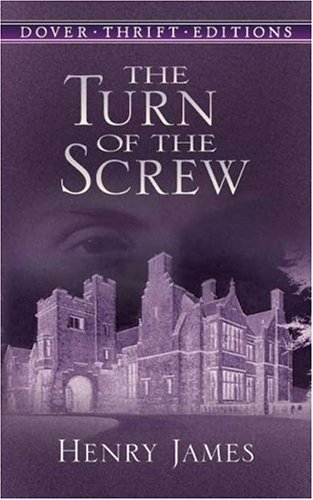
Henry James' "The Turn of the Screw": a ghost story that stands out

Christine, a blogger at Find New York, writes exclusively for Bianca's Book Blog on her own engagement with Henry James' "The Turn of the Screw", and talks about why, for her, it is one of the greatest ghost stories ever told.

‘The Turn of the Screw’ was regarded as “one of the most appalling ghost stories ever told” in the December 8, 1898 issue of 'The Nation'. Probably there are many people who still agree with this statement, myself included. So why is that? What contributes the most to making this story not only one of the most appalling, but also one of the most complex and outstanding ghost stories of all time?

We have to figure out what differentiates this ghost story from the usual ones. Everything is set for the typical ghost story: the gathering at Christmas Eve, the big country home at Bly with the stairs, the candle lights that are mysteriously blown out, naturally the 2 ghosts and the governess who has to deal with the situation. These are all typical elements; however, the entire story cannot be labeled as a typical one.

When analyzing this work of fiction it is safe to say that this is yet another example of Henry James' prose which focuses more on the psychological insight of the characters than on what actually occurred. Conscious and unconscious, corruption and innocence, reality and fiction, certainty and doubt, ambiguity and suspense: all of these play an important role when it comes to 'The Turn of the Screw'.

Even such basic roles as that of the narrator are distorted in a way. Can we trust the narrators, and consider what they say to be true? How reliable are they … either of them? On one hand, Douglas was infatuated with the governess, and therefore wants the listeners to consider the story credible. He definitely does not want to give any thought to the possibility of considering the governess delusional. On the other hand, how reliable can the governess be, since she has a subjective point of view?
Yet again, we have the reliability of the written word, in the form of the manuscript that she left behind. Douglas insists upon reading it instead of telling the story himself. People tend to believe something that is written rather than something that is told.

As far as the character of the governess goes, contradiction is also a matter to be discussed. During the story, she herself admits that she has a vivid imagination and that she is easily carried away. The author intentionally creates her in a way in which she could be both: a delusional person, blinded by her inexperience and the looks of her employer and a heroine wannabe, who is sincerely concerned about the children and wants to do everything in her power to protect them. It is our job to decide whether she can be trusted or not, whether the ghosts really want to harm and possess the children or not, since both situations could be possible.

The open ending is why we have to deal with an untraditional and indeed appalling, gothic story, and is also what allows us to speculate … what happened to Flora? What about the others? Was the governess insane or was she the only person capable of saving the children? Did the ghosts really appear? The doubt, suspense and uncertainty do not stop, even after you finish reading – and this is why we have to deal with a different kind of ghost story.

The alignment of possible realities is a key element of this work. We only get pieces of the puzzle, but it is up to us to complete/finish it. In this sense, Henry James' work as an author is brilliant, because he does not lay down the exact story, but gives the opportunity of interpreting it on many different levels.

Tuesday, 30 June 2009

Flaubert's Parrot (Julian Barnes)

--The blurb--
"Which of two stuffed parrots was the inspiration for one of Flaubert's greatest stories? Why did the master keep changing the colour of Emma Bovary's eyes? And why should it matter so much to Geoffrey Braithwaite, a retired doctor haunted by a private secret? In "Flaubert's Parrot", Julian Barnes spins out a multiple mystery of obsession and betrayal (both scholarly and romantic) and creates an exuberant inquiry into the ways in which art mirrors life and then turns around to shape it."
from www.amazon.co.uk

--The review--
The lives of famous writers do not often take the stage in modern fiction; however, this does not mean that we are necessarily short of examples. Colm Toibin's The Master, for instance, adeptly covers the life of Henry James; Passionate Minds, by David Bodaris, fictionalises the life and loves of Voltaire; and finally, of course, the arguably most famous example presents itself in the form of Michael Cunningham's The Hours, which stars Virginia Woolf. However, none of these perhaps combine academic writing with fiction to quite the same extent as Barnes in his treatment of the life of Flaubert. Perhaps unfortunately for Barnes' readers - regular or otherwise - it swings more in the direction of academic writing. It is a clever novel, but there is 'clever' in the way that most people will identify with and enjoy and there is clever in a way that reaches out only to very few.

There is no denying that this novel is tight, well-researched, occasionally witty, makes subversive and intelligent use of language, and makes excellent use of quirkier details that other biographers would miss. Despite this, though, while the style of the novel is readable and accessible, the ideas perhaps are not, as well as at times only being of interest to the most die-hard of Flaubert fans (which cuts out a significant proportion of the reading population). This weakness is also perhaps augmented by the fact that the narrator is extraordinarily underdeveloped. The connections between his life and the life of Flaubert is only especially prominent in one chapter and is hardly detectable at all in the others. Being able to 'sense' the main character or narrator is important to most people when reading, even if actually liking the character is not; if you can barely even form a picture of said character or narrator, you are arguably in trouble.

This is therefore not the most enchanting start to Barnes' oeuvre; there are novels of his that are wittier and more crowd-pleasing. Do not start here: make a dash for his more digestible and amusing History of the World in 10 1/2 Chapters, or, for that matter, if you are not put off by the format of a novel chronicling the life of another author, opt for a tale based on the life of Sir Arthur Conan Doyle, Arthur and George.

Other works by Julian Barnes
Metroland (1980)
Before She Met Me (1982)
Staring at the Sun (1986)
A History of the World in 10 1/2 Chapters (1989)
Talking It Over (1991)
The Porcupine (1992)
England, England (1998)
Love, etc (2000)
Arthur and George (2005)