Showing posts with label literary fiction. Show all posts

Tuesday, 24 January 2012

Flight from the Enchanter (Iris Murdoch)

--The blurb--
"A group of people have elected ambiguous and fascinating Mischa Fox to be their god. But his alter ego, Calvin Blick, is inspiring fear, and Rosa Keepe is swept into the battle between sturdy common sense and dangerous enchantment."

--The review--
Having read and enjoyed several Iris Murdoch novels as a romantic eighteen-year-old (even to the point of writing whole assignments about the books), I was surprised to find one in my workplace library that I had not yet come across. The Flight of the Enchanter uses the enigmatic Mischa Fox as its hook, but I was more intrigued by the devil-may-care Annette, whose antics open the novel.

Annette's adventures are enough to amuse as she does things that others would always wish but never do. However, Murdoch then departs from the humorous into the realms of the bizarre, introducing us instead to characters who take themselves far too seriously, chase (with said seriousness) after completely unexpected, unrealistic and at times psychotic sexual relationships, and completely lack Annette's sense of fun.

Humour returns again later when Rosa is trying to convince legions of dotty old ladies to continue funding the leftist leaflet founded by her forebears. Their classic comedy, along with the emotion of dressmaker Nina's story, is enough to restore faith in Murdoch's work - but overall Flight From The Enchanter proved disappointing, and therefore certainly not a good introduction to the author's novels. The characters' fascination with Mischa Fox seemed completely unfounded and failed to draw in the reader. Frankly, the novel's other, stronger characters did not even need him to tie the whole thing together, and the 'enchanter' of the title is more conceivably the safer or more successful lives that the characters have available to them, as opposed to what they would really like. A less serious misdemeanour is the suspension of disbelief required for the plot. My eighteen-year-old self felt betrayed.

Overall entirely forgettable; if you want the 'real' Iris experience, I'd recommend going elsewhere - The Unicorn, The Bell, or The Sea, The Sea are all good places to begin.

Wednesday, 16 November 2011

Time Regained (Marcel Proust)

--The blurb--
""Time Regained" begins in the bleak and uncertain years of World War I. Years later, after the war's end, Proust's narrator returns to Paris and reflects on time, reality, jealousy, artistic creation, and the raw material of literature - his past life."

--The review--
I have often criticised throughout my reading of Proust's epic his frequently over-complicated and vague style which seems designed to tie our brains in knots. The final volume of the heptalogy, Time Regained, starts off much more clearly and lucidly, which makes us feel that the narrator has the benefit of hindsight at last - which, with it being set more towards the end of his life, seems fitting. At least initially, it is less furious and intense, and more thoughtful.

However, we are soon treated to a glut of the meaningless gossip that pervaded earlier volumes. While this gives us a clue as to the nature of the narrator's life and social circle, it is maddening at the same time - if you have no time for celebrity-type gossip in real life, you are unlikely to have much patience for it in literature. Some of it is perhaps intended to show characters up as being hypocritical, but the targets of their hypocrisy probably took place so long ago that the effect is lost. Proust's political commentary on the war is equally uninteresting and is clearly aimed at those who already have knowledge of or opinions on the subject at hand. 

There are even examples of bad style, such as the line "To return to Mr Charlus..." (it is surely an elementary rule of narrative writing that such transitioning phrases are not required), and the fact that the first-person narrator has access to conversations and information in this volume that simply would not be possible. Punctuation needs to be more varied (a person can only take so many commas, although thankfully a semi-colon does appear...on page 320), and the volume is also loosely or badly organised, to the degree that we risk missing key events. But then again, are all of our own thoughts beautifully organised? Probably not.

To go on: we do not end up caring much for the death of one of the recurring characters due to the estrangement between himself and the narrator. The narrator's self-deprecation and false modesty is extremely annoying (especially when in the same breath he then goes on to talk as if he were an expert), and yet we must admit that it is natural for even the hugely talented to have doubts from time to time.

Plenty of the novel, however, still rings true today. Narcissistic though they may be, it is the narrator's thoughts and relationships that are of interest, not the author's attempts at political comment (it should be noted that supreme effort is apparently required to divorce narrator and author in this work of autobiographical-fiction-meets-history-and-philosophy). There is great irony in the author's recognition that all we do, or are, is so insignificant against the world's might.

The passages of memory after the narrator's return from convalescence are truly beautiful and testify to the author's powers of description. Despite certain episodes seeming contrived, the author's ability to still be relevant and appreciated today is staggering: his comments on pop art (how far is it truly enjoyed by 'laymen' and how far is it still a middle-class hobby?) are as accurate now as when they were written. He is correct that things from our childhood reawaken in us a sense of hope and wonder, and he posits ideas that still give us plenty to consider (for instance: is something still real if only we experience it, or does it have to be shared or common in order to qualify? Does truth go beyond fact?).

While a new edition is perhaps needed in order to increase mass appeal (Lydia Davis' looks promising), this does not mean that Time Regained (or even the heptalogy as a whole) is not worth pursuing in its current form. Proust has the ability to make us laugh (with his caustic descriptions of characters) and to make us cry (with his moving descriptions of landscapes and feelings). By the end of the seven volumes, most people have probably spent a year or more with Proust, and by then he's like an annoying family member: he's eccentric, digressive, annoying, boring at some moments, confusing at others; but he's also incisive, witty, intelligent, thought-provoking, sensitive and deeply poetic. In short, in spite of his shortcomings, we love him anyway.

Other works by Marcel Proust
Swann's Way (volume 1)
Within a Budding Grove (volume 2)
The Guermantes Way (volume 3)
Sodom and Gomorrah (volume 4)
The Captive/The Fugitive (volume 5/6)

Sunday, 26 June 2011

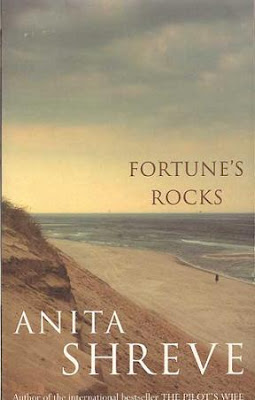
Fortune's Rocks (Anita Shreve)

--The blurb--
"In turn-of-the-century New England 15-year-old Olympia Biddeford is spending the summer with her parents at their seasonal house at Fortune's Rocks. She is swiftly despatched to Boston when it's discovered she has embarked on an affair with a friend of her father's, but Olympia is already pregnant."

--The review--
Teaching high school for the past three years has only consolidated my belief that there is no child of this age who is mentally/emotionally capable of adequate parenthood. Children of this age, even the very mature ones, are naturally still in a very difficult emotional stage and state; although I am sure many would try to make the best of teenage parenthood, they still have many things to sort out in their minds and hearts, and so many things to enjoy while young and childless that are difficult or impossible to do once you have a little person in tow.

Anita Shreve is the only person who has ever come close to changing my mind about this through the character of Olympia Biddeford. Whether this is because Olympia is not a realistic character, or whether this is because the author has shown the full maturity of certain young people, the impression we have as readers at least is that Shreve deftly combines the emotional and physical innocence of a flowering young lady with the emotional and intellectual maturity of someone really quite advanced. While there is a certain amount of idealism, though, the author does not keep us under any illusions: this is heading for trouble, and fast.

The antagonist, John Haskell, is guaranteed to polarise audiences: you will either understand him and empathise with him, and be on the side of his and Olympia's romance, or hate and revile him and side with his wife and children. But although the initial decisions of Olympia and John provide the book's kick-start, it is the decisions of others that prove the catalyst and make us want to keep reading, as their futures are repeatedly taken out of their hands. 

But there is more to Fortune's Rocks than mere romance and dalliance: the legal aspects of the novel are simultaneously well-researched and accessible, and this legacy is carried, albeit to a lesser degree, by the next generation of romantic novelists, including Jodi Picoult and Sophie Kinsella. But the difference between these novelists and Anita Shreve is not only to be found in the depth of research and character but also in the lack of vacuousness and the beauty of the prose provided by the author. This is not only romantic fiction - this is literary fiction of the highest order, and perhaps something that Shreve's inheritors have not been able to carry the torch for.

Although it takes a long time to reach the story's conclusion, we are not bored for a moment on the journey, and when we do get to the end, we are not only satisfied, but even a little disappointed to be leaving Olympia behind, having followed her for five important years of her life and seen her develop and grow while still remaining the same person. And so it is to readers' delight to find that Fortune's Rocks is only the first in a quartet set at the same beach house (with the following three being, in order, Sea Glass, The Pilot's Wife, and Body Surfing) - and when you have this reaction to knowing that in fact, there is more to come from this dream-like setting, that can only be a good sign.

Other works by Anita Shreve
Past The Island, Drifting (1975)
Eden Close (1989)
Strange Fits of Passion (1991)
Where Or When (1993)
Resistance (1995)
The Weight Of Water (1997)
The Pilot's Wife (1998)
The Last Time They Met (2001)
Sea Glass (2002)
All He Ever Wanted (2003)
Light On Snow (2004)
A Wedding In December (2005)
Body Surfing (2007)
Testimony (2008)
A Change in Altitude (2009)
Rescue (2010)

Sunday, 29 May 2011

Let The Great World Spin (Colum McCann)

--The blurb--
"In the dawning light of the late summer morning, the people of lower Manhattan stand hushed, staring up in disbelief at the Twin Towers. . . . It is August, 1974, and a tightrope walker is running, dancing, leaping between the towers, suspended a quarter-mile in the sky. In the streets below, ordinary lives become extraordinary. Corrigan, a radical young Irish monk, struggles with his own demons as he lives among prostitutes in the Bronx. A group of mothers, gathered in a Park Avenue apartment to mourn the sons who died in Vietnam, discovers how much divides them even in their grief. Further uptown, Tillie, a thirty-eight-year-old grandmother, turns tricks alongside her teenaged daughter, determined not only to take care of her 'babies' but to prove her own worth."

--The review--
At first sight, Colum McCann's latest offering, entitled Let The Great World Spin, has a very different and arguably less appealing face than the only other novel of his that I have read, Dancer (2003). Six years after Dancer's publication, would Let The Great World Spin prove equally enjoyable? Initially it would appear not, with the first parts of the book consisting of little more than a catalogue of substance abuse that were of little or no interest, similarly to Jon McGregor's Even The Dogs (a book which I have tried and failed to finish of late). Also like Even The Dogs, it is fabulous in its level of detail, and the fact of it being so graphic means that it is certainly not for the weak. But while Even The Dogs is a depressing and miserable collision almost of Eastenders and Skins on the page, Let The Great World Spin is more intriguing, changing scene totally from chaos to calmness and taking us from blood and screams to camomile and lace, making readers question just how all of this will fit together.

The novel's rhythmic qualities mean that although it is long we seem almost automatically carried along by the strength of the thing. The skill with which its characters are drawn is such that it would transfer successfully, in my mind, to the silver screen, and its potent mix of tragedy and gallows humour adds extra poignancy to the spliced moments that make up individual lives. Its illfatedness is almost Gatsbyish and makes it part of a great literary tradition, with its car crash being reminiscent of several famous others. We ultimately want to know what will happen to these poor souls; we know it will end badly and yet keep reading anyway.

Let The Great World Spin also very closely replicates the work of Don DeLillo and Marcel Proust in so uncannily mirroring how we think and how things prey on our minds. Although I have read Don DeLillo's Falling Man recently, and so be making links that are not really there, it seems too to be a portrait of a post-9/11 world, by showing how we are affected by such significant events, whether or not we realise it. The long chapters and stream-of-consciousness style are also features that are reminiscent of Proust, perhaps further cementing my earlier assertion that McCann is truly part of a long and successful literary heritage. He encourages us to see ourselves in art and art in ourselves, which has an inspiring effect in spite of the novel being so deeply suffused with tragedy. This is further compounded by the fact that the small children at the end of the novel are the only ones who have the chance to escape their doomed background, environment and parentage. We are given hope by them, but equally made to feel sorry for those in the story who were deprived of the same chance.

In spite of the non-chronological order of events, which does not always make the storyline easy to follow, Let The Great World Spin is nonetheless relevant and full of impact. It is not only about where we choose to direct meaning, but how and why, and this lends it an absurdist slant: we fill in our lives with meaning in the only ways that we know how, and this does not always involve colouring inside the lines. Although the novel can be disorienting due to the number of characters that it concerns, this is one reason why it merits multiple reads, and it is arguably a grand achievement that in spite of this sense of disorientation, the whole thing pulls together wonderfully, reflecting the world in which we live through a never clear-cut prism of broken dreams.

Other works by Colum McCann
Fishing the Sloe-Black River (1994)
Songdogs (1995)
This Side of Brightness (1998)
Everything in this Country Must (2000)
Dancer (2003)
Zoli (2006)

Wednesday, 23 February 2011

The Guermantes Way (Marcel Proust)


--The blurb--
"After the relative intimacy of the first two volumes of In Search of Lost Time, The Guermantes Way opens up a vast, dazzling landscape of fashionable Parisian life in the late nineteenth century, as the narrator enters the brilliant, shallow world of the literary and aristocratic salons. Both a salute to and a devastating satire of a time, place, and culture, The Guermantes Way defines the great tradition of novels that follow the initiation of a young man into the ways of the world."

--The review--

By this point in Proust's six-volume epic novel, the reader has already quashed around 1300 pages of prose. It being fair to say that these 1300 pages have not been especially accessible or easy to read, it is therefore also fair to say that the reader’s hopes are raised by the comparatively accessible beginning of The Guermantes Way. However, this effect sadly tapers.

This is reinforced by the volume's "War and Peace" quality, in the respect that the military and political discussion will be more enjoyable for some than for others. This aspect relies on prior knowledge and could inhibit understanding or enjoyment of this volume of the novel for those not in the know (including myself). Proust consequently risks losing his readers’ attention as a result.

However, there are some gleams in the night. Proust is masterful of the dry insult and witty comeback; even today, anyone with this power at their disposal is likely to be able to muddle through any situation life throws at them. The dialogue in this volume is also much more enjoyable than it has been in previous volumes, tension is managed well, and Mr Charlus also comes into his own as a great, amusing character. Could this prove to be some of the character development we have longed for during the reading of the past nearly two thousand pages?!

Alas, the author does not sustain this skilful depiction of character. The timing of the appearance of the grandfather for just about the first time in the entire novel means that he is unconvincing in his grief: Proust has not invested the time or energy in making us care about him by building up his character more. The author also continues to tell rather than show, with places remaining easy to visualise while people are not always so; this suggests that the author can describe well but chooses not to, which seems a highly bizarre trait to be attached to such a highly acclaimed novel.

There are other, more academic, points which make this volume interesting, perhaps as redemption for the above. Proust is metacritical, talking about the skills of authorship frequently. We have the fun of trying to work out if he is making Marcel deliberately ironic or just pretentious, and the deeper enjoyment of the volume being more like a work of philosophy in places than a work of fiction. The first slightly strange translation is also seen in this volume, with the word ‘formed’ being used for ‘educated’ or ‘trained’, as a sign of the translator or editor taking the French ‘former’ (to train or educate) or ‘formation’ (education or training) a little too literally.

By the end of this volume we are more or less halfway through the opus; we should be rolling along by now but to the contrary are still having to work hard. However, Proust still knows how to throw in a few details that mean we don’t just give up here. Is the doctor incompetent, or just wrong? And is the ending as predictable as the final sentences lead us to believe, or is there a massive twist coming? Here’s hoping for the latter.

Within A Budding Grove (Marcel Proust)


--The blurb--
"In this second volume of In Search of Lost Time, the narrator turns from the childhood reminiscences of Swann's Way to memories of his adolescence. Having gradually become indifferent to Swann's daughter Gilberte, the narrator visits the seaside resort of Balbec with his grandmother and meets a new object of attention—Albertine, "a girl with brilliant, laughing eyes and plump, matt cheeks.""

--The review--
As with volumes 1 and 3 of In Search of Lost Time, the second, Within A Budding Grove, is not without its merits and, in addition to the sheer beauty of the language used, again toys with some interesting semantic issues in the second part of the volume and confirms previous suspicions that Proust makes it easier for us to visualise places than people.

What is clear, though, is the growing irritation at Marcel's behaviour and personality that steadily increases throughout the volume. For want of a better phrase, the man acts like a total pansy; this act wears thin after several hundred pages. However, it could be argued that Proust cleverly replicates the maddening temperament that overtakes us all when in the sights of unrequited love. This makes the volume become quite blurry in its similarity, and while this dreamlike quality is perhaps Proust's trademark, it can make it difficult for the motivation to continue to be consistently maintained.

The politics of France at this time and of the high society that Marcel is beginning to be aware of and to inhabit are not laid on so heavily in this volume as in volume three; this is a blessing rather than a curse, as it, in its own special way, probably helps to render this volume more accessible.
Proust also successfully chronicles the nature of teenage obsession with certain interests and people; upon reading, we too are transported back to those same feelings of intensity, which are more important to us than Marcel’s specific situation. The word “Berma” could be replaced with any other word; this, if you like, is another in the sequence of the reader's own madeleine moments. Equally, there is relevance to be found in Marcel’s meeting with Bergotte, the author that he idolises; the idea that perhaps we should never meet our heroes is arguably ever truer in an increasingly celebrity-obsessed Western world.
Although Proust has had accusations of anti-Semitism levelled at him for his portrayal of Bloch and his family, this to me is unfounded; the impressions and opinions expressed here are likely an honest social portrait of the time, rather than setting out to be deliberately malicious. He, along with other authors such as Enid Blyton and Hergé, are to be valued rather than condemned for such representations; rather than making their work into nothing more than museum pieces, they are important living parts of history.
But in spite of all of these various positive aspects, the reader still longs for more movement in terms of characterisation and momentum in the plot, to match in some small way the massive voyage of self-discovery and mapping of history that is taking place. Really all that the reader has is the image of a character who is not enamoured with any specific female but whose attentions constantly flicker; in love with the idea of being in love, he comes across as little more than fickle and silly.
And yet it is perhaps this interior evolution of character which encourages the reader to continue; in spite of the volume's deep flaws, it is not enough to be completely off-putting.


I selected this post to be featured on my blog’s page at Book Blogs.

Saturday, 7 August 2010

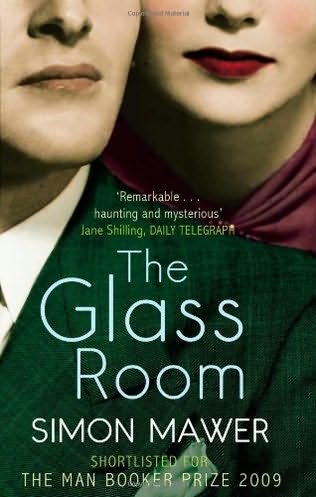
The Glass Room (Simon Mawer)


--The blurb--
"High on a Czechoslovak hill, the Landauer House shines as a wonder of steel and glass and onyx built specially for newlyweds Viktor and Liesel Landauer, a Jew married to a gentile. But the radiant honesty of 1930 that the house, with its unique Glass Room, seems to engender quickly tarnishes as the storm clouds of WW2 gather, and eventually the family must flee, accompanied by Viktor's lover and her child. But the house's story is far from over, and as it passes from hand to hand, from Czech to Russian, both the best and the worst of the history of Eastern Europe becomes somehow embodied and perhaps emboldened within the beautiful and austere surfaces and planes so carefully designed, until events become full-circle."

--The review--
Simon Mawer's The Glass Room perhaps did not capture the attention of Booker Prize judges as the ultimate winner of the prize last year, despite making the shortlist, due to its focus on World War Two - a subject on which the cup truly runneth over in British history books and fiction books alike. However, its mass popular appeal is surely instant as a result; not only is the story framed in a context that is very familiar to the majority of the great British public, but it also centres on an elegant, sad, and yet strangely cold love story.

From the very beginning of the novel, we do not have the impression that the relationship between Viktor and Liesel is a happy one. Viktor is a Landauer, of the family who makes cars of the same name, so a marriage to him is surely a good marriage in terms of social status, and it illustrates starkly how a return to traditional values, as so often demanded by the UK's right-wing press and politicians in particular, may not be all it's cracked up to be. Viktor's infidelity in the end also means that we do not much care what happens to him; readers are not as saddened or affected by his demise as they should or could be. This is, however, likely a deliberate device by Mawer to draw Liesel as the heroine.

Another strong character is Hana, but the sexual undercurrent in the relationship between her and Liesel is not entirely realistic, although their strong friendship is. Happily, this weakness is easily ignored as Mawer draws us in to the ever-tightening complexity of the family's relationships, which eventually expand to include Viktor's lover and her child from a previous relationship. The impending doom of wartime Europe creeps up on readers slowly and authentically and provides an effective and dark backdrop, making this more than just a love story.

The setting of the glass room itself is undoubtedly stunning, and while Mawer says in a short foreword that the location on which it is based will be obvious to anyone who has ever visited it, other readers who are unfamiliar with it may well be able to call to mind other similar locations that also fit the bill. For me, it was the house of art dealer Louis Carré, which is located in the French village of Bazoches-sur-Guyonne and was built by Finnish architect Aalvar Alto. The image of the glass room in the novel is compelling and symbolic in itself, quite aside from the positive momentum of the rest of the story. A weaker version of this is the line of music that Mawer repeatedly incorporates, which is delightfully Proustian but does not quite imitate the success of its literary progenitor.

Utterly absorbing, the novel is a superb introduction to Mawer's work, and to my mind is proof that even if the Booker jury do not get it right all the time, they are still achieving their aim of bringing perhaps undiscovered great modern literature to a wider audience, and honouring it.

Other works by Simon Mawer
Chimera (1989)
A Place in Italy (1992)
The Bitter Cross (1992)
A Jealous God (1996)
Mendel's Dwarf (1997)
The Gospel of Judas (2000)
The Fall (2003)
Swimming to Ithaca (2006)

Wednesday, 30 June 2010

See Under: Love (David Grossman)

--The blurb--
"Momik, the protagonist of the book, is the only child of survivors of the Holocaust. He grows up in the shadow of their history, determined to understand the nature of the Nazi "beast" and to prepare for a holocaust he knows is still to come."

--The review--
Languorous reading of See Under: Love is enjoyable but not advisable; it is not the ideal book to take months over. This is because Grossman's work is many of the things that contemporary literature almost shouldn't be - it is risky almost to the point of being unsellable due to its sheer ambition, complexity and convolution (and not always in a good way). Still, I suppose that never stopped James Joyce or Joseph Heller. It is all of these things in a way that makes the book almost bewildering (thankfully without being totally incomprehensible); as a reader you sometimes ask yourself why you are continuing with this. And yet you do, because it is utterly compelling.

In fact, there are many reasons to continue with this book. Its slightly wacky and yet always eloquent style makes it intriguing, original and beautiful in a way that nearly makes aspiring authors want to stop writing because they'll never be able to make anything as good as this. Utterly poetic, it still simultaneously manages to reach out to humanity in a way they will understand; it is significant historically, culturally and literarily, reminding us in more ways than one that whether we like it or not we are our history, we are what has gone before us. It has an interdisciplinary, learned and highly intelligent quality to it, which makes it both wonderful and somewhat intimidating. The title becomes apparent in its meaning only towards the novel's end, but when it does, it's highly fitting and it becomes abundantly clear.

Most interestingly, it manages to cross cultures and genres and voices and times while still remaining distinctly Jewish. It confronts the issue of the Holocaust and the history of the Jewish people in an entirely new and breathtaking way, and while perhaps not all of it is initially understandable, in many ways it almost doesn't matter; it is a pleasure simply to sit and allow words and images to wash over you. My advice is therefore not to borrow this book off anyone: it is an intense and complicated experience, and you need your own copy with you along the way, so that you can peel back the layers and unwrap the emotional and historical complexes indicated here in your own personal way.

Other works by David Grossman*
The Yellow Wind (1988; non-fiction)
The Smile of the Lamb (1990)
Sleeping on a Wire (1993; non-fiction)
The Book of Intimate Grammar (1994)
The Zigzag Kid (1997)
Duel (1998)
Be My Knife (2001)
Death as a Way of Life (2003; non-fiction)
Someone To Run With (2003)
Her Body Knows (2005)
Lion's Honey (2006)

*the dates given are the dates of translation into English

Monday, 15 March 2010

Special Topics in Calamity Physics (Marisha Pessl)

--The blurb--
""Special Topics in Calamity Physics" is a mesmerizing debut. As teenager Blue van Meer tells her story, we are hurled into a dizzying world of murder and butterflies, womanizing and wandering, American McCulture, The Western Canon, political radicalism and juvenile crushisms. Structured around a syllabus for a Great Works of Literature class (with hand-drawn Visual Aids), Blue's wickedly funny yet poignant tale reveals how the imagination finds meaning in the most bewildering times, the ways people of all ages strive for connection, and how the darkest of secrets can set us free."

--The review--
Picking up a book just on the basis of a wacky or intriguing title doesn't always work. Richard Brautigan's Trout Fishing in America, for instance, was one of the weirdest and most incomprehensible things that I have ever had the pleasure of trying to get my head around. However, sometimes the golden goose lays the proverbial egg: the eerily similarly-titled Salmon Fishing in the Yemen, by Paul Torday, was one of the most original, funny and innovative books I've read, and Marisha Pessl's Special Topics in Calamity Physics also did not leave me disappointed.

Pessl has been accused by other reviewers of having a bit of a tin ear for prose. I can see how this accusation can be made: Pessl is overly fond, for example, of the simile as a writing device. In moderation this works fine (as the works of Stella Gibbons show us), but when it ends up being literally a simile per page at some points, it begins to wear a little thin. However, this does not make her a bad writer (and believe me, as someone who tries to teach English for a living, I see plenty of bad writing pass under my eyes). Her characters are intriguing and well-crafted even if the chances of meeting people like this all in one place are slim; starting with the murder/suicide and then trying to unravel the mystery is a nice technique; and a further dimension to the novel is added by the use of famous novel titles as the headings for each chapter. Again, the formatting of the novel meant that this was not always appreciated (if you don't format it so that the chapter titles are at the top of each page, you can't expect your readers to always follow the thread and see the parallels), but it was an interesting extra; and, furthermore, another advantage of it was that you didn't necessarily need to have read the books by which the chapters were titled in order to have a full understanding of the novel as a whole.

Blue van Meer is a personable character, if a little insipid, and is made by the author to seem like the only normal one compared to all of the nutters that she falls in with. Hannah Schneider is also made to be suitably enigmatic. Blue's father is likeable, and readers are given the impression that he has a good, solid relationship with him, which means that her outburst at him later on in the book does not seem at all in keeping with how we have been led to perceive them thus far. What is more realistic, though, is the novel's ending. The mystery may not be solved, but ultimately this is how it so often is in life. While a mystery novel without a solution may initially seem to be a copout, the crafting of this epic project does at least achieve one thing in hooking the reader onto Pessl's idiosyncratic work. The fact that she was only 29 when this novel was published may account for a few of its weaknesses, and her unique voice can surely only develop more, and positively, with time.

Other works by Marisha Pessl
Night Film (2010)

Monday, 11 January 2010

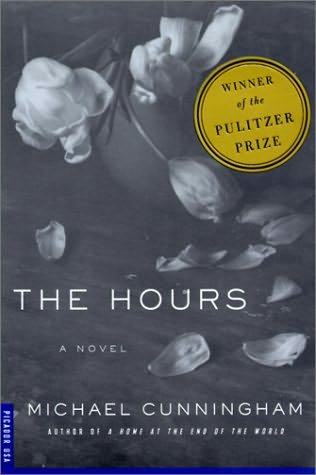
The Hours (Michael Cunningham)

--The blurb--
"Exiled in Richmond in the 1920s, Virginia Woolf struggles to tame her rebellious mind and make a start on her new novel. In 1990s New York, Clarissa Vaughan goes shopping for flowers for a party for her AIDS-suffering poet-friend. This novel meditates on artistic behaviour, love and madness."

--The review--
Reputation can be a superficial and perilous thing, but having never been a huge fan of Woolf's work, I picked this up on the basis of reputation alone. Something that won the Pulitzer and was made into an award-winning film must have something going for it, I thought, and surely people don't go on about Virginia Woolf for nothing?

However, as one begins to read, it quickly becomes clear that it is Michael Cunningham, rather than Virginia Woolf or Mrs Dalloway (the novel on which The Hours is based) that is the real star of the show. Even though it is occasionally difficult to see the links that Cunningham makes at times (which makes me think, for once, that this is one of those rare occasions where extrinsic knowledge when reading a novel may be of value), with the final chapter, where all three main characters meet, perhaps being the most bewildering of these, all three women's stories are compelling and realistic. Each are hypnotic in their own very human ways, and these qualities are further drawn out by the qualities of the peripheral characters, especially Richard.

Cunningham's prose is utterly poetic, serving as a real cornerstone for the standard of fine fiction. This, however, should not put it out of readers' reach: the novel contains plenty of the standard themes of shock, love, friendship and frustration, as well as examining madness in a way that is simultaneously critical and faithful, without being overly romantic. Consequently, even if you finish the novel without wanting to know anything more about Virginia Woolf, you will be wanting to know more of the works of Michael Cunningham.

Other works by Michael Cunningham
Golden States (1984)
A Home at the End of the World (1990)
Flesh and Blood (1995)
Specimen Days (2005)
Olympia (2010)

Saturday, 10 October 2009

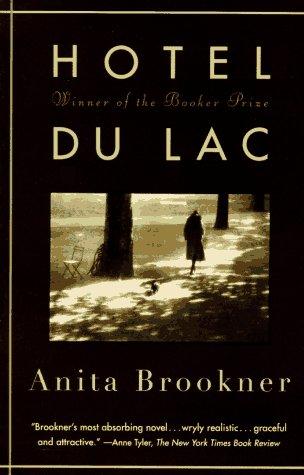
Hotel du Lac (Anita Brookner)

--The blurb--
"Edith Hope (a.k.a. romance author Veronica Wilde) has been banished by her friends to a stately hotel in Switzerland. During her stay she befriends some of the other guests, each of whom has his or her own tale. Edith struggles to come to terms with her career and love--the lack, the benefits, and the meaning thereof."

--The review--
The Booker Prize judges don't always get it right - they're only human, after all - but after reading the frankly insipid The Rules of Engagement, also by Brookner, I was very much hoping that the Booker judges hadn't put the prize's name on something similarly forgettable in Hotel du Lac.

They admittedly had a very tough decision ahead of them in 1984, with the prize's shortlist exclusively containing big names (JG Ballard, Anita Desai, David Lodge, Julian Barnes, and Penelope Lively) with proven track records. Some might argue straight off that the wildly successful Empire of the Sun (Ballard) and the accomplished Flaubert's Parrot ought to have won over Brookner's efforts; both of these have perhaps won the public's hearts to a greater degree and enjoyed a more enduring or obvious legacy. But the election of Hotel du Lac to the winner's post for that year is not so abstruse; there are a great many positives to this short novel.

As well as being well-structured (having any novel divided into readable chunks is always a plus point), Brookner's characterisation and her setup of the scenario is immediately more intriguing than in The Rules of Engagement. The characters are not numerous, but they are colourful and eccentric, contrasting well with the serenity of the accompanying landscape, and there is plenty in them to both attract and anger the reader. Edith's purpose in being there is gracefully unfolded and Brookner sets up a deft twist by leading readers to expect Edith's time at the hotel to end predictably, before sending them in another direction completely. This surprising volte-face shows another side to Brookner's prose that makes her work instantly more appealing, and while her characters are not the most immediately comprehensible or likeable, the combination of such personages along with an almost paradisiacal setting and a precise plot is certainly a winning package with, one could posit, a far more universal allure than the other novels in the 1984 shortlist.

Thursday, 23 July 2009

The Bell Jar (Sylvia Plath)

--The blurb--
"A student from Boston wins a guest editorship on a national magazine, and finds a new world at her feet. Her New York life is crowded with possibilities, so the choice of future is overwhelming. She is faced with the perennial problems of morality, behaviour and identity."

--The review--
Upon reaching university, I quickly found that I was an intrinsic reader: being only mildly interested in background information, I much preferred the sounds of the words in my mouth and ears, the look of them on the page, and the overall beauty of the work itself. By the end of my degree, my patience with symbolism (whether imagined by overzealous lecturers, or real) was wearing thin. It was this lack of tolerance for extrinsic reading that partly stopped me from pursuing postgraduate studies in English literature.

However, for some authors and their respective works, extrinsic reading simply cannot be helped. It is extremely difficult to read the works of Sylvia Plath (and, by default, those of Ted Hughes) without deferring to the experiences and circumstances which inspired them. However, this is perhaps more applicable to their poetry, with it being quite possible to read The Bell Jar without knowing any of Plath's history. Knowing it, though, means that it is no surprise that the main character's descent into mental illness is realistically painted, being gradual and speckled with very real paranoia and depression.

While the novel is overall rather pretentious, and perhaps would have been better without the inclusion of Doreen, Esther's sexually liberated best friend, as it seemed like Plath was trying too hard to reinforce cultural elements that would have been more of a novelty at the time, there are still plenty of reasons why The Bell Jar is worth attention. As well as Plath successfully sustaining the novel's intensity in a very controlled way, the ending is also sublime and appropriate, as is her strikingly poetic description of the landscape, which is utilised from the very beginning.

This novel is certainly not perfect - as well as the above criticisms, I would have preferred it if Plath had left the reader to decipher her reasons for choosing the title by themselves (as Rossetti does for her poems), rather than name-dropping it at every opportunity. However, it offers a rare and realistic insight into mental illness - though it is perhaps the imagery and eloquence used by Plath that make the book a classic.

Other works by Sylvia Plath
The Colossus and other Poems (1960)
Ariel (1965)
Three Women: A Monologue for Three Voices (1968)
Crossing the Water (1971)
Winter Trees (1972)
Letters Home (1975)
Johnny Panic and the Bible of Dreams (1977)

Tuesday, 30 June 2009

Flaubert's Parrot (Julian Barnes)

--The blurb--
"Which of two stuffed parrots was the inspiration for one of Flaubert's greatest stories? Why did the master keep changing the colour of Emma Bovary's eyes? And why should it matter so much to Geoffrey Braithwaite, a retired doctor haunted by a private secret? In "Flaubert's Parrot", Julian Barnes spins out a multiple mystery of obsession and betrayal (both scholarly and romantic) and creates an exuberant inquiry into the ways in which art mirrors life and then turns around to shape it."
from www.amazon.co.uk

--The review--
The lives of famous writers do not often take the stage in modern fiction; however, this does not mean that we are necessarily short of examples. Colm Toibin's The Master, for instance, adeptly covers the life of Henry James; Passionate Minds, by David Bodaris, fictionalises the life and loves of Voltaire; and finally, of course, the arguably most famous example presents itself in the form of Michael Cunningham's The Hours, which stars Virginia Woolf. However, none of these perhaps combine academic writing with fiction to quite the same extent as Barnes in his treatment of the life of Flaubert. Perhaps unfortunately for Barnes' readers - regular or otherwise - it swings more in the direction of academic writing. It is a clever novel, but there is 'clever' in the way that most people will identify with and enjoy and there is clever in a way that reaches out only to very few.

There is no denying that this novel is tight, well-researched, occasionally witty, makes subversive and intelligent use of language, and makes excellent use of quirkier details that other biographers would miss. Despite this, though, while the style of the novel is readable and accessible, the ideas perhaps are not, as well as at times only being of interest to the most die-hard of Flaubert fans (which cuts out a significant proportion of the reading population). This weakness is also perhaps augmented by the fact that the narrator is extraordinarily underdeveloped. The connections between his life and the life of Flaubert is only especially prominent in one chapter and is hardly detectable at all in the others. Being able to 'sense' the main character or narrator is important to most people when reading, even if actually liking the character is not; if you can barely even form a picture of said character or narrator, you are arguably in trouble.

This is therefore not the most enchanting start to Barnes' oeuvre; there are novels of his that are wittier and more crowd-pleasing. Do not start here: make a dash for his more digestible and amusing History of the World in 10 1/2 Chapters, or, for that matter, if you are not put off by the format of a novel chronicling the life of another author, opt for a tale based on the life of Sir Arthur Conan Doyle, Arthur and George.

Other works by Julian Barnes
Metroland (1980)
Before She Met Me (1982)
Staring at the Sun (1986)
A History of the World in 10 1/2 Chapters (1989)
Talking It Over (1991)
The Porcupine (1992)
England, England (1998)
Love, etc (2000)
Arthur and George (2005)

Wednesday, 20 May 2009

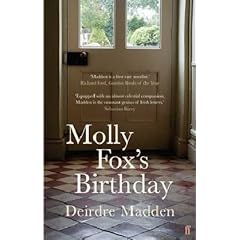
Molly Fox's Birthday (Deirdre Madden)

--The blurb--
"Dublin, Midsummer: While absent in New York, the celebrated actor Molly Fox has loaned her house to a playwright friend, who is struggling to write a new work. Over the course of this, the longest day of the year, the playwright reflects upon her own life, Molly's, and that of their mutual friend Andrew, whom she has known since university. Why does Molly never celebrate her own birthday, which falls upon this day? What does it mean to be a playwright or an actor? How have their relationships evolved over the course of many years? Molly Fox's Birthday calls into question the ideas that we hold about who we are; and shows how the past informs the present in ways we might never have imagined."
blurb from www.amazon.com

--The review--
It can sometimes feel as if the days of true literary fiction are long past: while there are plenty of authors on the contemporary scene writing novels that are funny, sad, political, or just plain silly, they can often lack the certain elegance and timelessness that comes with many modern literary fiction books (think AS Byatt or Iris Murdoch for the kind of eloquence I mean). While the Booker list can bring up a few good reference points each year, it also drops some mighty clangers (even leaving aside the fact that pinpointing and spotlighting literary fiction is perhaps not its specific intent); plus, to use the Booker as a reference point in this way feels a little populist. What about the authors who (for whatever reason) don't make the cut?

Deirdre Madden is, perhaps, one of these authors. Despite writing prominently about Ireland (to the point of being shortlisted for the Orange Prize one year, and winning the Somerset Maugham Award), she didn't even manage to sneak onto the reading list for the Irish Literature module I took at university (and she would have been a welcome relief from Synge, I can tell you). It is an undeserved omission, and Molly Fox's Birthday proved a welcome inauguration into her oeuvre. While mildly artificial at times in terms of the novel's construction, the minimalism of the cast, the composite set of Molly Fox's house, and the parallel patchwork of dialogue between friends and the lone voice of thoughts of Molly Fox's playwright friend (whose name we never find out, and who narrates the entire story almost singlehandedly) is for the most part very naturally crafted. Dialogue and thoughts and scenes and events are woven together well, and the juxtaposition of the usually vibrant Molly with her elusiveness in this novel pervades the entire atmosphere. We know so little about each character and yet we know so much; Madden's writing is a prime example of showing, rather than telling, with characterisation largely constructed through dialogue, thoughts, movements and details.

Madden's work (or at least as far as I can tell from this virginal experience) also exemplifies what the newly-appointed Poet Laureate, Carol Ann Duffy, calls "using simple words in a complicated way". Madden's vocabulary is largely extremely accessible, and yet she uses it dextrously in order to create complex characters, scenes and back stories. In addition to this, however, she also throws in a few fancier words from time to time ('reliquary', anyone?), demonstrating how good writers can truly reach people without compromising on the richness of the language in which they write.

All of these aspects make reading Madden's work a haunting and eloquent experience that stays with you long-term; while no writer is perfect, her work is something for other writers to aspire to, and for readers to not delay the experience of.

Other works by Deirdre Madden
Hidden Symptoms (1986)
The Birds of the Innocent Wood (1988)
Remembering Light and Stone (1993)
Nothing is Black (1994)
One by One in the Darkness (1996)
Authenticity (2002)
Snake's Elbows (2005)
Thanks for Telling Me, Emily (2007)