Showing posts with label non-fiction. Show all posts

Sunday, 29 December 2013

Love Is A Mixtape (Rob Sheffield)

 --The blurb--
"Mix tapes: Stick one into a deck and you’re transported to another time in your life. For Rob Sheffield, author of Turn Around Bright Eyes, that time was one of miraculous love and unbearable grief. A time that spanned seven years, it started when he met the girl of his dreams, and ended when he watched her die in his arms. Using the listings of fifteen of his favourite mix tapes, Rob shows that the power of music to build a bridge between people is stronger than death."

 --The review--

Writers from Nick Hornby to Jonathan Coe have reminisced on the music of days gone by, invoking images of vintage records, past romances, and even political landscapes. Rob Sheffield has now joined the ranks of these British authors by producing an American rival in the form of Love is a Mix Tape, published in 2007. By capitalising on the 80s and 90s nostalgia of a mix tape, this iconography is set to draw in a whole new generation of music lovers’ ruminations on the tracks they treasure(d).

Such books are arguably better suited to life as audiobooks due to their hybrid nature. By giving each chapter the title of a mix tape that he has made, Sheffield makes the reader want, while they read, to be able to hear the music that each chapter is set to. However, the book’s interdisciplinary nature is even more layered than this, making its genre even more difficult to categorise: it crosses the borders of fiction, non-fiction, autobiography and popular history, to name but a few. This makes its appeal very broad, and this is further emphasised by the accessible style in which it is written.

Accessibility, though, should not be read as debased. Despite the narrator’s matter-of-fact personality, he can also be heartbreakingly poignant in what is also one of the greatest love stories (or should that be songs?) ever told, effectively making the book a paean to his first love, Renée, without putting her up onto too much of a pedestal. The reason for this becomes apparent as we read, adding further to the narrative's pathos.

Nonetheless, this does not result in depressing the reader: by the end of Love Is A Mix Tape, we not only want to go out and discover the unknown tracks recommended to us by the author, but we also feel even more grateful for our lives, giving us the urge to pass on Sheffield's story to others, in a way that even Nick Hornby is perhaps unable to do.

other works by Rob Sheffield
Talking to Girls About Duran Duran (2010)
Turn Around, Bright Eyes (2013)  

Monday, 26 August 2013

The Diving Bell and the Butterfly (Jean-Dominique Bauby)

--The blurb--
"In 1995, Jean-Dominique Bauby, the witty, gregarious editor of French "Elle", suffered a stroke that left him totally paralyzed, able to communicate only by blinking his left eye. By doing so, he was able to compose this book - at once a record of appalling suffering and a testament to the endurance of the human spirit."

--The review--
Occasionally cases of locked-in syndrome and paralysis make the news. In 2005 it was British man Tony Nicklinson, who campaigned tirelessly in the press for the right to die with assistance (he died naturally mere months after losing his case in the High Court). In 2010, Times journalist Melanie Reid fell from her horse, making her an instant tetraplegic. Her position as a writer for one of Britain's most respected broadsheets has enabled her to not only raise awareness of tetraplegia but also to chronicle her day-to-day existence with humour and pathos. In the late 1990s, memoir The Diving Bell and The Butterfly served a similar purpose, drawing the public's attention to locked-in syndrome as experienced by former ELLE editor Jean-Dominique Bauby. Through painstaking blinks of his eyelid, he was able to describe his days in hospital near Berck-sur-Mer thanks to the dedication of Claude Mendibil, who took down Bauby's story letter by letter after he had memorised each pithy chapter in his head.

Bauby certainly takes pithiness to extremes in this tiny volume, which barely attains 140 small pages, with wide margins. However, this is no bad thing, as the concision of his writing enhances its artistry and poignancy. This combination of brevity and beauty makes the book a portable masterclass for anyone wishing to know how to write well. In spite of the devastating position in which Bauby finds himself, his unique view of the world he now inhabits and his voyage through memory is simultaneously accessible and elegant - a feat in itself considering how despairing such a text could be.

Naturally, though, Bauby does acknowledge the most painful aspects of his new existence, including getting used to feeling like he has a diving bell for a head, not being able to communicate even his most basic needs without someone patient enough to sit through his blinking, managing the vast quantities of saliva that his mouth now suddenly produces, and trying to rebuild his relationship with his children. Readers are buoyed, though, by the fact that he is still so lucid and descriptive, and the butterfly of the book's title seems to represent not only the freedom that he still has in his mind, but also the delicately dancing beauty of his prose and the ever-increasing acuity of other senses (such as his hearing - at one point he marvels "I must have the ear of a butterfly!"). This instils us with the belief that in spite of his near-total immobility and lack of physical independence, he still has so much to live for - and, furthermore, gives us hope that he may recover, which is fuelled by small signs of progress in his physical condition.

Thanks to the dense layering of stunning images and very real emotion with which The Diving Bell And The Butterfly is packed, Bauby leaves a stunning literary legacy which is already rightly remembered even more than his successful career as a magazine editor. While this degree of physical limitation is not what anyone would choose for themselves, Bauby's memoir - which neatly flits, like a butterfly, between his past life and his present experiences - is an inspiring reminder of the fortitude of the human mind and spirit, which is indeed a legacy that writers like Melanie Reid can take even further strength from.

Sunday, 25 August 2013

How To Survive Your First Year In Teaching (Sue Cowley)

--The blurb--
"So you've finished your teacher training and found yourself a job . . . the hard bit is over right? But, hold on, how do you actually survive your FIRST YEAR in teaching?! The NQT year is notoriously difficult and hard work. Challenges include meeting your new colleagues and making the right first impression, preparing and planning your lessons, managing the mountain of marking and most scary of all . . . being in charge of a whole class by yourself for the first time! But don't panic - help is at hand from expert teacher and education writer Sue Cowley. In this new edition of her bestselling book, she supports new teachers through the stresses and strains, and the highs and lows of their first year in teaching. She's there to guide you right from the start of day one, lesson one, with the acknowledgement that 'your stomach feels like lead and your mouth feels as dry as the Sahara desert'. She's there through each term advising on time-saving lesson plans, easy to implement behavior management tips and how to help children who have special educational needs. She's there right until the end of the year when she ensures that you feel triumphantly on top of report writing and your first parents' evening. All of her methods are tried-and-tested and real life case studies exemplify how (and how not) to put them in to practice. This new edition has been fully updated with new diagrams and checklists to boost your organisational and time management skills. It also includes refreshed and up-to-date case studies and extra examples for primary school teachers. Written in Sue Cowley's honest, accessible and down to earth style, How to Survive your First Year in Teaching is a must have for all new teachers embarking on their NQT year."

--The review--
Embarking on your career can arguably be likened - albeit on a lesser scale - to becoming a parent. You are given a bucketload of small tasks which, as soon as they are over, need to be done again; tasks which at times can get a little bit messy and emotional. And all of these tasks need to somehow come together to make one big thing. And just as soon as you've achieved that one big thing - or helped others to achieve it - you can see that there's another BIG THING off in the distance which you feel no more prepared for and which you are under equal pressure to see through without the whole enterprise going off the rails. Such, I'm led to believe, is parenting. 

Teaching also often feels a lot like this. Sue Cowley, the author of How To Survive Your First Year In Teaching, know this, and thankfully is there to take newly-qualified teachers by the hand and lead them through the wilderness. The overall approach taken is practical and positive, while remaining realistic and aware that it's easy to give advice, but not always so easy to take it on board. Equally, Cowley's tone is friendly without being patronising: readers want to benefit from her experience, and so she recognises that she has a delicate balance to strike. This is carried off successfully and maintained throughout the volume, whose readable chapters make it easy to absorb the information being given.

This information is given in a variety of formats, including lists and exemplar dialogues. (The dialogues are, however, perhaps a little too goody-two-shoes at times: not all Year 7s cower when faced with the prospect of a detention, for instance, but instead mouth off with the equivalent of "stfu" and then throw a chair.) It's also organised in a linear, logical format, beginning with the first day with colleagues and first lesson with students, and progressing through to getting involved in extra-curriculars as a teacher, as well as knowing when to say 'no' and when to move on to another job. This all helps to temper the idealism that can sometimes crop up: while I know that NQTs are not supposed to be placed in special-measures or otherwise weak schools, Cowley's book does assume that certain facilities will exist or procedures will be in place to make NQTs' lives easier (a quick scan of the TES fora alone reveals that this is not always the case). Nevertheless, even if the teachers reading find that not everything within applies to their school, How To Survive Your First Year In Teaching still contains many valuable nuggets that are of practical use even to those who have progressed beyond the first year of this profession (she says, from the vantage point of her fifth year).  

This book's reassuring and humorous - yet pragmatic - nature therefore makes it indispensable to all beginning teachers. In the same way that UK children receive a Bookstart pack at birth, new pedagogues should receive a tin that looks like this...
...containing spare red pens (a valuable commodity), emergency biscuits, a rubber ball (don't ask), a pack of playing cards (brilliantly diversionary for both you and the kids), and - of course - a copy of this book.
other works by Sue Cowley
The Seven Ts of Practical Differentiation (2013)
The Seven Cs of Positive Behaviour Management (2013)
The Seven Ps of Brilliant Voice Usage (2013)
The Calm Classroom (2012)
The Road To Writing (2012)
Getting The Buggers To Write (2011)
Getting The Buggers To Behave (2010; 4th ed.)
Teaching Skills For Dummies (2009)
You Can Have A Creative Classroom (2008)
Getting The Buggers Into Drama (2007)
Getting The Buggers To Think (2007)
Guerilla Guide To Teaching (2007)
You Can Create A Thinking Classroom (2006)
Getting Your Little Darlings To Behave (2006)
Letting The Buggers Be Creative (2005)
You Can Create A Calm Classroom (2005)
Sue Cowley's A-Z of Teaching (2004)
Sue Cowley's Teaching Clinic (2003)
Getting The Buggers To Behave 2 (2002)
Starting Teaching (1999)

Saturday, 10 August 2013

The Rest Is Noise (Alex Ross)

 --The blurb--
"The Rest Is Noise is a sweeping musical history from pre-war Vienna to the Velvet Underground. In this comprehensive tour, Alex Ross, music critic for the 'New Yorker', explores the people and places that shaped musical development: Adams to Zweig, Brahms to Bjork, pre-First World War Vienna to 'Nixon in China'. Winner of the Guardian First Book Award, this portrait of an exceptional era weaves together art, politics and cultural history to show how twentieth-century classical music was both a symptom and a source of immense social change."

--The review--
When it comes to works of art, the critical world is frequently split between the separate values of intrinsic and extrinsic reading. Just how vital are the contexts of an artist's personal life and the historical and political scenes in which they grew up to interpretation of their work? Alex Ross' The Rest Is Noise is a firm supporter of extrinsic interpretation, but combines both beautifully to add pace, engagement and a multitude of colours to an already interesting cultural mosaic.

Ross treads the fine line between academics and accessibility largely with skill, although some readers may feel lost by the more detailed discussions relating to key signatures and so on. On the other hand, people whose interest is such that they're reading such an in-depth book on the subject will likely already have a good grasp of the meanings of technical terms (even if 'knowing meanings' and 'listening, identifying and analysing' are two very different skills). The interdisciplinary nature of Ross' work is also appealing, with topics as diverse as Stalin, Disney, and John Donne being discussed. The author handles the jumps between topics and countries well, with the possible exception of dwelling too much on Britten (a whole chapter on one composer seems excessive, especially when a good proportion of it was devoted to a long-winded synopsis of Peter Grimes). However, the tome is mostly inspiring and urges us to listen: even though the chapters appear long, these are happily split into smaller chunks.

As the length of the book suggests, Ross covers an impressive range of music. One could argue that the depth of examples given is so great that The Rest Is Noise would be better as an audiobook: a soundtrack list is provided at the end of the book, but to listen and read simultaneously is not always practical, whereas an audiobook could interject with excerpts or even full works appropriately. Despite the limitations of the book's format, though, Ross does an excellent job of proving the present-day relevance of various twentieth-century works, including several by Kurt Weill (think Pirate Jenny and Mack The Knife), and the significance of a number of little-known artists from this century (such as Marian Anderson). Through this historical approach, Ross shows us the value of interpreting music extrinsically, even if at times he delivers his opinions in a manner that dresses them up as fact (which can add expertise and authority, but also takes a text into risky territory).

Contemporary observations from other musical spheres also increase the relevance of classical music to fans of other forms of music, or to those who know little about the classical genre. Comparing Copland's Fanfare For The Common Man to Queen's We Will Rock You in terms of rhythm and melody is an astute remark, and on further inspection, readers will find such comparisons wherever they look in the world of music: Puccini's Humming Chorus compares closely melodically to Les Misérables' Bring Him Home, for example.

In light of such insightful assertions, then, the occasional sloppiness in terms of formatting is disappointing. Part Three of the book, which encompasses the years 1945-2000, also seems to cover far too great a passage of time compared to the previous parts, which made more sense in their division (effectively World War Two and the years preceding this conflict). The book's glossary also only seems to be available online, which is a shame: an extensive glossary and cycle of fifths in the paper edition would be most helpful. Syntax is clumsy at times, too, and Ross occasionally generalises or makes ill-considered statements (for example, dubbing the BBC the finest purveyor of classical radio programming in the world, without considering other stations such as Italy's Rai Radio Tre, which plays complete works without adverts). However, none of this detracts too significantly from Ross' apparent belief that music cannot achieve complete autonomy from the society around it, and the convincingness with which he backs this up - naturally composers are not only influenced by and are part of their culture, but also influence what comes after them.

This arena of influence is largely described by Ross as being heavily centred around Europe and America, and it seems difficult to believe that there was really nothing musically significant going on in Australia, Asia and so on during the twentieth century. The closest the author comes to this is mentioning traditional music fro the Andes, Bali, India and Japan in relation to Messaien in Chapter 13. Film music also gets a look-in here, although it (and musicals) arguably deserve more airtime. The link between contemporary and classical is cleverly reinforced in Chapter 14, with Ross highlighting the Beatles' admiration for Stockhausen, Stravinsky's influence on Charlie Parker, and Coltrane's love of Bartok. Naturally, though, we all have different notions of importance and it would have been impossible for Ross to include every even remotely influential figure in The Rest Is Noise: although it doesn't stop the reader from feeling that a few have been unjustly left out, such as Ludovico Einaudi and Joe Hisaishi, who have both been hugely popular since the 1980s. Equally, the impact of the Cultural Revolution on China's ability to have real influence could have been given more attention.

So what is the 'noise' and the 'rest' of Ross' title? Several possibilities can be inferred. What some listeners may consider 'noise' is often used to show off composers' and performers' virtuosity as part of quite lyrical works, rather than acting ostensibly and primarily as a source of pleasure. Composers, as 'invisible' men, often had to become visible (i.e., they had to make some noise), as their future depended on it. Even conversation (also 'noise') has lyrical and musical qualities thanks to phonetics, and conversation can take the form of opposition, which too could seem like 'noise', with the controversy of some classical music at the time of its release perhaps being perceived as 'noise' compared to 'approved' music. Classical music can also be deliberately and literally noise, with Ross pointing out not just the most famous example of John Cage's 4'33", but also the lesser-known examples of Imaginary Landscape #4 (also by Cage) and Cinq Etudes de Bruits (by Pierre Schaeffer). Conversely, classical music could be thought of as something pure and to be revered, with 'the rest' being 'noise' (although the positive links Ross makes between classical, folk, film and rock music make this a more tenuous hypothesis). Finally, all that is going on around composers historically and politically is noise, and as Ross is keen to point out, such noise is influential.

Ross also considers the influence of all this 'noise' in the twenty-first century, depicting a mixed future for the art, although perhaps without fully considering the impact of crossover music (through groups such as All Angels) and publications (such as the Classic FM magazine). Nevertheless, the breadth of his work means that virtually everyone will find something they're familiar with, whether it's the Velvet Underground, David Bowie, Missy Elliott, Public Enemy, Philip Glass, or Michael Nyman. This all-encompassing influence of classical music is nicely summed up by Ross, who simultaneously recognises the role of composition today by way of conclusion, neatly demonstrating its continued relevance in our "decentered culture". And with the formation of history and culture as active and vital today as they ever were, it's crucial that composers continue to tell that story for future generations. With luck, Ross will continue to do the same through his writings.

other works by Alex Ross
Listen To This (2011)

Thursday, 8 August 2013

Islamophilia (Douglas Murray)

--The blurb--
"As the country tries to make sense of the slaughter of British soldier Lee Rigby on the streets of London, Douglas Murray delivers an analysis in Islamophilia of how many prominent individuals have, at some point chosen to abandon any hope or wish to criticize Islam. Instead, they have decided to profess some degree of irrational or misguided love for it and make strategic cultural efforts to rewrite history and promote Islam." 
(adapted from Amazon.co.uk)

--The review--
In the wake of the September 11th attacks and others, the rise and rise of Islamophobia has been simultaneously understandable and yet preventable, with it arguably never being right to tar all members of a particular group with the same brush. However, Douglas Murray argues in Islamophilia that too many public figures have gone too far the other way in an attempt to avoid being accused of being 'Islamophobic'. In this short yet well-researched and succinctly-argued ebook, he makes a convincing and thought-provoking case.

This is supplemented well by links to videos and newspaper articles online thanks to the virtues of the ebook format. However, one wonders what will happen if these links become outdated or the publisher ever wants to release the book as a paperback: such supplementary materials are not so easily linked to in this latter case and their availability, as mentioned, can be transient. However, in the current format there's no denying that these sources are helpful (although they are perhaps best read on an iPad or Kindle Fire rather than on a traditional black-and-white ebook reader with a small screen). The sources, too, are well-chosen and complement Murray's argument well.

However, while Murray is frequently convincing, he is also at times borderline aggressive in making his points and is prone to generalization, which may alienate his readers rather than rally them round. Nonetheless, his caustically witty exposé is clever enough to engage and to inspire critical thought, as he brings to the fore examples to support his theory that have hitherto remained largely off the public radar.

The main criticism of this readable treatise is that Murray offers no real solution to the problem of Islamophilia. His conclusion seems rushed and trite, with no practical offering in terms of how readers or public figures ought to be moving forward in the midst of the cultural unrest being experienced in the UK. People feel ill at ease with both Islamophobia and Islamophilia - and quite rightly so. However, just saying the equivalent of "calm down, guys" and "we need to find a middle ground" is insufficient by way of a resolution. This proved a disappointing end to an otherwise intelligent book, and while Murray's other books are worthy of consideration if his methodical and humorous approach is anything to go by, one has to hope that in exploring neoconservatism and the Saville Inquiry, he comes to more pragmatic conclusions than in Islamophilia.

other works by Douglas Murray
Neoconservatism: Why We Need It (2012)
Bloody Sunday: Truth, Lies, and the Saville Inquiry (2011)

Sunday, 4 August 2013

Things I Didn't Expect (Monica Dux)

--The blurb--
"Pregnancy is natural, healthy and fun, right? Sure it is, if you're lucky. For others, it's an adventure in physical discomfort, unachievable ideals, kooky classes and meddling experts. When Monica Dux found herself pregnant with her first child, she was dismayed to find she belonged firmly in the second category. For her, pregnancy could only be described as a medium-level catastrophe. So, three years later and about to birth her second child, Monica went on a quest: to figure out what's really going on when we incubate. Things I Didn't Expect is one woman's journey to make sense of the absurdities, the harsh realities, the myths and the downright lies about making babies. Monica explores the aspects of baby-making that we all want to talk about, but which are too embarrassing, unsettling or downright confronting. She also looks at the powerful forces that shape women's experiences of being pregnant in the west, the exploitative industries, and the medical and physical realities behind it all. Along the way, she fends off sadistic maternal health nurses, attempts to expand then contract her vagina, and struggles to keep her baby's placenta off her hippy brother's lunch menu."

--The review--
The presentation of the process of pregnancy and birth, particularly on the internet, tends to veer from an obsessively-photographed state of Zen-like bliss to a graphic portrayal of physical and mental decline. However, it is the former that is particularly pushed onto women, particularly through the popular media of television and magazines. Monica Dux's aim in Things I Didn't Expect is to debunk this perception using some of the latter (which, frankly, you'll only find online if you start digging deeper, as your friends who have had babies tend to only sing when they're winning), thankfully mixed liberally with a good sense of humour.

Dux is a great humorist who will have readers laughing out loud. Her relatively recent arrival in the publishing world means that there have not been many opportunities to see this yet, especially given that her work has mainly been publicised in Australia, and much less in other countries. Nevertheless, her cheerful and frank approach augurs well for the future and acts as a breath of fresh air in the arena of pregnancy and birth (she's like Helen Austin, but in prose form). The book is generally well-organized in the first half, exploring everything from the appearance of the vagina and getting your sex life back post-partum, to the perils of core stability exercises (although not everything in the blurb, strangely, seems to be explored in the book itself, although perhaps that has something to do with my copy being a free one from NetGalley - it's possible that these are abridged).

However, in the second half, while Dux addresses many interesting points regarding the feminist implications of the media's overly positive and pressurising presentation of pregnancy and birth, this is done in a far less snappy and organized way. Readers risk feeling a little bogged down and like Dux has diverted from her original purpose - i.e., to confront the realities of pregnancy and birth in a humorous way. Instead, we are taken on an ideological ramble that feels closer to her interests from her first book (The Great Feminist Denial, published in 2008). This all leads to the book ending in a rather abrupt and solemn way which again feels at odds with the project's original purpose, which does genuinely have value in today's society given the very valid problems that Dux presents. (This is not to say that the second half does not also have value - but the content and tone perhaps mean it would be better off saved for another book.)

Overall, though, Things I Didn't Expect is a worthy acquisition for anyone with an interest in birth and pregnancy - its laugh-out-loud moments, generally accessible style, short chapters and well-chosen anecdotes make it a volume to dip into at any time for a bit of Dux's characteristically cavalier humour and wisdom. One hopes that a similar book on parenting is in the pipeline - even if parenting doesn't suffer the same problems in the media as preparing to become one.

also by Monica Dux
The Great Feminist Denial (2008) 

Tuesday, 11 June 2013

Incomplete and Utter History of Classical Music (Stephen Fry and Tim Lihoreau)

--The blurb--
"In his Incomplete & Utter History of Classical Music, Stephen Fry presents a potted and [...] rambling 700-year history of classical music and the world as we know it. Along this musical journey he casually throws in references to pretty much whatever takes his fancy, from the Mongol invasion of Russia and Mr Khan (Genghis to his friends), the founding of the MCC, the Black Death (which once again became the new black in England), to the heady revolutionary atmosphere of Mozart's Don Giovanni and the deep doo-doo that Louis XVI got into (or 'du-du' as the French would say).
It's all here - Ambrose and early English plainsong, Bach, Mozart (beloved of mobile phones everywhere), Beethoven, Debussy, Wagner (the old romantic), right up to the present day."

--The review--
"Stephen Fry...national treasure...", opens a certain Weebl video. And certainly very few could argue with that. Beloved by many, he frequently graces our television screens, not least as part of legendary comedies Blackadder and Jeeves and Wooster, as well as (more recently) on intellectual TV pop quizzes such as QI and Never Mind The Buzzcocks. He also regularly graces the nation's bookshelves thanks to his autobiographies and books on poetry. In 2004, he released his Incomplete and Utter History of Classical Music in partnership with Tim Lihoreau, a musician who works closely with radio station Classic FM. Although the book is ghostwritten by Lihoreau, Fry's inimitable style and humour comes through strongly, and the idiosyncratic and at times paradoxical nature of this is also encapsulated in the book's title, which combines modesty and deliberately gross exaggeration in equal measure.

This Lihoreau-Fry lovechild has many merits, presenting the history of classical music in a concise and accessible manner. As Fry rightly points out on multiple occasions in the tome, there's nothing wrong with accessibility. So what if someone only knows Grieg's Hall Of The Mountain King from the Alton Towers advert? It's better than not knowing it at all. However, one could also argue that it's a little like reading Harry Potter or Twilight: great if you're reading, but not so great if you never move on to anything else. One of the many joys of classical music (and indeed almost any music) is the seemingly endless scope for the analysis of different interpretations, and just as many of us have multiple copies of Cry Me A River, Summertime, Blackbird or Somewhere Over The Rainbow kicking around, we fulfil different needs by having several recordings of, say, Handel's Giulio Cesare, and infinitely exploring its various nuances and emphases. This is something that is little mentioned (if at all) by the Fry-Lihoreau team - but then again, this book is only billed as being an introduction to classical music.

The introduction is eased all the more by Fry's signature sense of humour, which of course has been a key element in marketing this book to draw his fans in. Be that as it may, though, some might consider that Fry's particular brand of humour rests significantly on tone of voice and comic timing, making this book better as a radio series (which is, incidentally, how it originated) or even as a television series (we are still waiting). Nevertheless, this is not to say that the pages never raise a chuckle, and they are packed with brilliantly British puns throughout, referring to everything from Jim'll Fix It (perhaps not so politically correct in these times, but never mind) to The Beano. The authors also do cover a vast period of history in a relatively short space without skimping on detail, but some of this space is meaningless filler (which would arguably be cut out for TV or radio) and some of the space is devoted disproportionately to the composers that Fry just happens to like best (but then again, I would say that, as I'm a devotee of Ancient Greek music and will always feel that it deserves more attention).

To end such an ambitious project was always going to be awkward, and Fry's observations towards the end of the book (that the focus has shifted more towards artists and reality TV now than towards composers themselves, and that film music is perhaps the new classical music) are perfectly salient, leaving the reader with plenty to contemplate. While he has tried to end the book on a contemporary note, the danger of this was always that his conclusion would date quickly - some of the groups he mentions, such as Amici Forever, who were busily popularizing classical music at the time of the book's publication nearly ten years ago, have already disbanded. Future edits should probably take account of this by offering up a more general conclusion, perhaps without mentioning specific names unless their place in history is safely assured (mentioning Pavarotti, for instance, is probably not too big a risk). Ultimately, though, despite these pernickety criticisms, a totally unscientific experiment perhaps proves that the book has achieved its aim of popular appeal: when offered up to a class of twenty fifteen-year-olds for free, alongside an autobiography of Bagpuss' creator and two CS Lewis books, this was the only one to be snatched up instantly.

other works by Stephen Fry
The Liar (1992)
Paperweight (1992)
The Hippopotamus (1994)
Making History (1996)
Moab is my Washpot (1997)
The Stars' Tennis Balls (2000)
Rescuing The Spectacled Bear (2002)
The Ode Less Travelled (2005)
Stephen Fry in America (2008)
The Fry Chronicles (2010) 

Sunday, 11 November 2012

Delirium: The Politics of Sex in America (Nancy L Cohen)

 
--The blurb--
"The 2012 election was supposed to be about the economy, but over the last few months it turned into a debate about sex and women’s rights. In Delirium, Cohen takes us on a [...] journey through the confounding and mysterious episodes of [...] recent politics to explain how we and why we got to this place. Along the way she explores such topics as why Bill Clinton was impeached over a private sexual affair; how George W. Bush won the presidency by stealth; why Hillary lost to Obama; why John McCain chose Sarah Palin to be his running mate; and what the 2012 presidential contest tells us about America today. She exposes the surprising role of right-wing women in undermining women’s rights, as well as explains how liberal men were complicit in letting it happen. Cohen uncovers the hidden history of an orchestrated, well-financed, ideologically powered shadow movement to turn back the clock on matters of gender equality and sexual freedom and how it has played a leading role in fueling America’s political wars. Delirium tells the story of this shadow movement and how we can restore common sense and sanity in our nation’s politics."

--The review-- 
As previously mentioned on this blog, Tudor history and American history are given arguably disproportionate importance in Britain's history curriculum, meaning that 18-year-olds often leave school with knowledge of little else in spite of having studied history until the moment of their leaving. However, this emphasis does not mean that everything about American history is covered - and it is clear from Nancy L Cohen's latest book, Delirium, that even those who think they know plenty about American history have only scratched the surface.

Delirium is the title, and madness in various guises is certainly what readers get an alarming insight into throughout this history of the sexual counterrevolution in American politics. In describing how different views on sex and gender in the United States have affected the nation, Cohen is both wide-ranging and detailed, covering topics such as birth control, marriage, and homosexuals in the military. Equally, she keeps the text engaging and readable, condensing what has clearly been long and complex research into accessible chapters without dumbing down. 

The fact that Delirium was written in the midst of the recently-terminated 2012 presidential campaign may mean that this version of the text ages quickly. However, with President Barack Obama having won a second term for the Democrats just days ago, this also leaves the door wide open for future editions and revisions. Full of interesting and little-known facts, Delirium is also concise and well-explained, with plenty of fascinating and largely relevant diversions (although occasionally goes so complicatedly off-topic that the original aim seems distant). 

Some necessary background is given, but at the same time, Cohen does assume that her audience is American and fails to define some key terms from the outset, which would make a glossary handy. However, the author makes up for this with her meticulous research and citations elsewhere in the text, and continually proves herself to be intelligently tolerant and aware of difficulties. Cohen contextualises the issues at hand in a highly distilled manner and gives the reader plenty of food for thought thanks to various jaw-dropping moments and the notion that religion has so much to do with this as to almost be worth a book in itself.

Delirium was an ambitious project, and Cohen has every right to be proud of her achievement. She has spanned a vast time period with dignity, clarity, and concision, and the reader can be left in no doubt of her expert standing. Her other books are certainly worth seeking out, and Delirium itself definitely merits rereads.  

other works by Nancy L Cohen
The Reconstruction of American Liberalism 1865-1914 (2002) 
The 1990s: A Social History of the United States (2009)

Friday, 30 March 2012

The Bottom Billion (Paul Collier)

--The blurb--
"Although nearly five billion of the world's people are beginning to climb from desperate poverty and to benefit from globalization's reach to developing countries, there is a “bottom billion” of the world's poor whose countries, largely immune to the forces of global economy, are falling farther behind and are in danger of falling apart, separating permanently [...] from the rest of the world. [...] Collier identifies and explains the four traps that prevent the homelands of the world's billion poorest people from growing and joining in the benefits of globalization. [...] Collier addresses the fact that conventional aid has been unable to tackle these problems and puts forward a radical new plan of action."

--The review--
Having approached this book on the recommendation of others after finding that teaching a course on development studies may be on the cards as part of my work, it was certainly with trepidation. Even though our household takes The Economist, I mainly only look at it for the articles on books, the arts, languages and education. I never had the chance to study economics in school and am not really inclined towards business, politics, world affairs and the like in general. It's fairly safe to say, then, that I'm not too knowledgeable about such weighty subjects as world poverty. I needed to be introduced, then, to the main problems and potential solutions in a gentle yet accessible way that still hammered home all of the facts in an unemotional way.

Paul Collier's "The Bottom Billion" does all of these things and more. He recognises that the facts themselves are emotive and so is careful to not embellish them further in this regard. Setting out the basic economic concepts behind poverty and giving key statistics, he talks the reader through them patiently without being patronising. Soon even previously completely unfamiliar concepts are clear enough to the reader that they can even explain them to others without difficulty (anyone for my explanation of Dutch disease?). Once the groundwork has been done, we're able to get into the really tough stuff.

This, too, is handled sensitively yet with all the necessary details. Collier doesn't rein in the intensity of any of the examples he gives, whether they are gruesome, terrifying, tragic, or funny-if-they-weren't-based-on-real-events. Gradually a picture is built up of the complexity of the problems faced in the third world, as well as some of the solutions that have been posited in the past. The author assesses the pros and cons of each situation and solution, and suggests his own ideas based on what has and has not worked before. 

Evidently it's not as simple as one relatively slim tome; while Collier's ideas seem realistic, it's equally evident that his research (carried out with the help of several doctoral and post-doctoral researchers) is detailed, time-consumin and even at times frustrating. In light of this, it's remarkable that he has been able to distil his work into such a concise volume. Ultimately, the readability of it combined with the shock factor of the facts means its impact stays with the reader and makes them want to know more. Even though the development studies plans toted at my workplace didn't go through, the benefits of reading Collier's research are immeasurable and long-lasting. Anyone with any awareness of the world around them should look into this book - even if they don't realise that they want, and need, to know more.

Other works by Paul Collier
The Plundered Planet (2011)
Catching Up: What LDCs Can Do and How Others Can Help (2011)
Conflict, Political Accountability and Aid (2010)
Wars, Guns and Votes (2009)
Living Down The Past (1998)
Trade Shocks (1994)
Labour and Poverty in Rural Tanzania (1989)
Labour and Poverty in Kenya (1986)

Research papers by Paul Collier can also be read here.

Sunday, 11 March 2012

This Mobius Strip of Ifs (Mathias Freese)

--The blurb--
"In this [...]collection of [...]essays, Mathias B. Freese jousts with American culture. A mixture of the author's reminiscences, insights, observations, and criticism, the book examines the use and misuse of psychotherapy, childhood trauma, complicated family relationships, his frustration as a teacher, and the enduring value of tenaciously writing through it all. Freese [...]describes the conditioning society imposes upon artists [...Freese writes] about the spiritual teacher, Krishnamurti, poet and novelist, Nikos Kazantzakis, or film giants such as Orson Welles and Buster Keaton, [...] while examining Existentialism, alternative education, and Jewish values. [...]At the core of these essays is the author's struggle to authentically express his unique perspective, to unflinchingly reveal a profound visceral truth, along with a passionate desire to be completely alive and aware."

--The review--
With 2012 being an Olympic year, it seems fitting in this year to have a book released featuring the idea of a Mobius strip as its base (in case you didn't know, an Olympic medal's ribbon is a Mobius strip - a twisted ribbon). Mobius strips have a mysterious quality; they look unusual yet simple from the outset, but when you begin to look at the maths behind them, it's clear that there is so much more about them to be unravelled. It's clear that this notion of something simple, yet complex in its beauty, with so much to be unravelled, has inspired the author greatly - and it's true that this does serve as a useful metaphor for the journey we all go through in our lives, in attempting to interpret ourselves as well as the world around us.

While this kind of philosophical problem-solving is something that can probably never be truly completed by any of us, I'm not sure either that Freese fully achieves his aim in This Mobius Strip of Ifs. Firstly, on a superficial level, the book does not have an entirely professional finish (something that's perhaps symptomatic of its self-published nature): editing is sloppy, the blurb is overly laudatory when it should be purely summative (this, along with the length of it, is the reason for my editing of the blurb in this post) with perhaps one tantalising hook, and it seems strange that his wife should not only write the introduction but also refer to her husband by his/their last name (this is unorthodox, and not in a positive way).

Freese also seems to have plenty of erroneous ideas about professions of which he has experience (namely, teaching), and of which he does not (blogging). His collection of essays was of interest to me primarily as a teacher who also aspires to write full-time, but in spite of my own aspirations it was still disappointing to find that he was so derisive of teaching and teachers, while at the same time not portraying himself in the most positive light. To say outright that "teaching was a waste of [his] time and talent" not only betrays Freese's own arrogance but also indicates his lack of understanding of what the profession can be: in my experience, you can still be autonomous as a teacher (I have had little to no interference in the formulation of my syllabi, which has allowed tremendously satisfying bursts of creativity and freedom) while still adhering to and being receptive to the authority and regime that you agree to follow the day you sign a contract. Despite the freedom I mention above, it is also important to realise that total freedom, except perhaps in our own minds, is an illusion; Freese does not seem to have realised this, and if he hoped to find total freedom through any profession where you sign a contract and work for someone else, he was always bound to be disappointed.

It is equally dangerous to include a chapter lambasting bloggers and the reviews you have been given by them when you are sending that same book out to them for yet more reviews. Reviewers do not have to agree with you in order to be right, and it seems absurd to bite the hand that (at least partly) feeds you. The author is also mistaken about the purpose of blogging; a caveat stating that there are always exceptions does little to pour oil on the troubled waters of this chapter. 

It seems a great shame that the author seems intent on damaging himself in this way, but unfortunately the flaws of this collection do not stop here. Freese comes across as having a superiority complex, even while he states the obvious. He is seemingly deliberately vague at times, perhaps to mask his faults (it is a relief to find that "In First Person" he acknowledges some of them); there is a tone of false self-deprecation in parts; and he seems to be at cross-purposes throughout the collection, preaching rather than partaking in a confidential conversation. His mode of address to the reader - "dear reader" - is annoying, unoriginal and patronising. Thankfully he drops it after about the first quarter of the book - but really, if he were going to copy anyone, why did it have to be someone as high-profile as Bronte? Equally curious is that he claims he does not write for fame or praise and seems keen to emphasis the anonymity of his writing. While I agree with him that everything we write is important for our own self-development, why not then just keep a diary? Why resort to self-publishing something that in all honesty needs a red pen taking to it before it can be truly suitable for publication?

The essays start off well, but quickly deteriorate. They have potential, but are either too dramatic or mawkish to take seriously, need clarifying or refining (Freese often digresses), or are self-indulgent in general, lacking in sensitivity and tact (but perhaps this is a generational thing; the author has fifty years on me). The collection of essays would have been more interesting by far if the writer had focused on his teaching experiences: Teachers Have No Chance is among the strongest essays in the book and contained material I could relate to well. Jefferson is also another essay with greater meaning. The rest, though, require serious tidying up, and Freese could start by removing the hyperbolic, unnecessary, and frankly insulting similes and metaphors that pepper the book in description of his own life: calling your own life a Holocaust and saying your experiences are like being tortured by a Nazi are disrespectful and do a great disservice to survivors of genocide. Blogs such as The Spohrs Are Multiplying explores the emotions relating to bereavement in a much more articulate and sensitive way.

So what are the positive points of this collection? As I believe I mentioned, there are definitely some and it is for this as well that it seems a shame for the author to do damage to himself in this way (why detract so severely from the good points of what you have created, after all?). It may not merit an Olympic gold, but perhaps a bronze can still be salvaged. 

The idea of exploring our imperfections and life's infinite circle of "what ifs" is certainly appealing and is discussed by Freese to a degree. For what Freese lacks in reflective writing, he compensates for more than adequately in his descriptive writing. There is some promising material in his life story (teacher, psychotherapist and writer is, I'm guessing, far from the usual trajectory of most lives, and that's before you even get to the patchwork of his life's loves and losses), even if it would have been better expressed in the form of a third-person narrative. Some essays have many strengths ("On The Holocaust" is possibly the best one for its intelligence and perception) and I believe past and present members of the teaching profession would find Freese's experiences in this regard to be of interest, as well as being something they can identify with themselves.

The author's advice to therapists is equally applicable to many other professions - and, in addition, his enthusiasm for some of his interests is infectious: reading his views on writers as diverse as Freud, Hitchens and Krishnamurti makes me want to go and read their works myself too. Freese is a far better poet than first-person writer and it is my belief that he should explore and exploit this avenue more fully if possible. He recommends a range of interesting books and films towards the end of the collection, which deserve to be investigated by others, even if the list should be formatted as just that - a list - as it doesn't merit a full essay in itself.

My final, and perhaps most important comment, is that the enjoyment of this collection of essays is, in all probability, highly dependent on the reader's nationality and cultural background. I am British, and this essay collection consists of several long outpourings of emotion that do not generally sit well with our traditional stiff-upper-lip approach. It is not something that we are used to, in spite of the massive influx of American self-help literature into British bookshops. It is a collection that would have perhaps appealed more to me in its entirety when I was younger and had only just discovered the self-help genre. Nonetheless, the wide range of topics covered means that I challenge anyone to read this collection and not find one single thing that is relevant to their life. It is a collection that can be picked up by anyone, and from which anyone may gain something - no matter how small.

Other works by Mathias B Freese
The I Tetralogy (2005)
Down to a Sunless Sea (2008)

Saturday, 18 February 2012

Along The Cherry Lane (Richard Sparks)

--The blurb--
"At the height of Milton Okun's career, a critic wrote, "Of all producers, Milton Okun's range is the widest, from Placido Domingo to the Muppets". Conductor for Harry Belafonte, arranger and producer of Peter, Paul and Mary, and the man who brought John Denver to stardom and produced his most loved hits, Okun also founded Cherry Lane Music, publisher of Elvis and Dreamworks, among many other household names. He achieved great success in many different fields - often, as he tells it, almost by accident. And yet he expected to spend his entire working life as a music teacher in New York City public schools. From the Weaves to will.i.am and the Black Eyed Peas, Milton Okun has been a central figure in the continuing story of our musical heritage, his career ranging from the folk revival to the new technological landscapes of the twenty-first century. Along The Cherry Lane is a portrait of a unique career, told in stories by Okun himself and those who have been a part of his remarkable life in music."

--The review--
As a lover of all kinds of music (my iTunes library goes from Aaron Copland and Abba to Yann Tiersen and Yes, stopping via Mozart and Morcheeba), I was keen and curious to read a memoir of someone who'd had the honour of working with Placido Domingo AND the Muppets. In addition, I'm also a huge fan of "behind-the-scenes" type topics (only the other day I was scouring blog entries by those who'd participated in reality TV show Come Dine With Me), so to have the curtain lifted, allowing us to see the tough everyday details of the music industry, was equally appealing. As an aspiring writer, Milt Okun also epitomises what I consider to be the ideal kind of fame: people know who you are and respect you and your work, but don't mob you every time you go to the supermarket. In short, his autobiography, told with the help of his son-in-law Richard Sparks, ticked a lot of boxes.

Furthermore, I was not disappointed by this highly readable oeuvre. While the 'interview' style in which it is written, with its frequent interjections from co-workers and family members, takes some getting used to, it also marks Along The Cherry Lane as a unique form of memoir - rather than being ghostwritten by a desperate hack, Richard Sparks not only knows Okun as a family member but is also sensitive to the industry in which the great man works, having worked himself in TV, theatre, and the writing of lyrics, which combines to create a tautly-told tale of Okun's life.

As well as containing touching anecdotes from his personal life (such as his encounters with former students who remember him fondly, or the moment at the end of the book, when Milt realises that his wife is the one for him through their shared feeling of being underwhelmed by Maria Callas' musical abilities), the interviews are full of stories about the personalities of well-loved stars such as Harry Belafonte, without being gossippy or bitchy. It also brings to light surprises about the industry itself that, on reflection, are not really that surprising (that, for instance, some of his successful acts in fact could not sing that well, or that some singers worm their way into being credited with writing songs, alongside the real songwriters, just to receive more royalties) but help to give us a more honest view nonetheless, in a way that I suspect to be rare in autobiographies by other music moguls (can you see Simon Cowell being this honest about the likes of his Autotuned protégés?).

Even if you had not heard of all of Milton Okun's acts, or are not impressed or intrigued by them once you do know of them (I can't say I'll be checking out the apparently limited Peter, Paul and Mary anytime soon), there will be something in there for you, whether you're an Elvis fan or a Dreamworks aficionado (yes, he has really worked with these big names). But what really gives the book its heart is Milt Okun's modesty - despite his clear success, he feels it is just down to knowing the right people, and being in the right place at the right time, almost more than his manifest talent. The warmth exuded by his family members, artists on his books, and former students is also testament to the impact he has made on others through his patient personality. 

It also can't have been the easiest book to write; to write about someone while they are still alive, and to make an assessment of their career, life and personality, and to do it well, is no mean feat. This is not to mention the hybrid format of something that is not quite biography and not quite autobiography, as well as an interview. But Richard Sparks fulfils his brief more than successfully, and Along The Cherry Lane, by its end, fills its readers with a greater knowledge of and (in some cases) passion for the music industry and its artists than they had at the start - and encourages them to check out even more of Sparks' and Okun's work and achievements.

Other work by Richard Sparks
Diary of a Mad Poker Player (2005)

Sunday, 9 October 2011

Branded Beauty: How Marketing Changed The Way We Look (Mark Tungate)

--The blurb--
"Beauty is a multi-billion dollar global industry embracing makeup, skincare, hair care, fragrances, cosmetic surgery, and even tattooing and piercing. Over the years it has used flattery, seduction, science and shame to persuade consumers that they have to invest if they want to look their best. In Branded Beauty, Mark Tungate delves into the history and evolution of the beauty business. From luxury boutiques in Paris to tattoo parlours in Brooklyn, he talks to the people who've made skin their trade."

--The review--
This book blog is only really starting to take off, with requests for me to review hard copies of books being few and far between, so I was naturally pleased to receive the request from Kogan Page to review a complimentary copy. As a long-time beauty blogger, I was also pleased to receive it, as I don't tend to be asked to review many books on my site (the last was an American coffee-table style publication, Be...A Woman, back in 2008). I was wary, though, of the "self-published" impression I had of the publisher, as I feel that this industry still has a lot of work to do to build its credibility (although as it turned out I was mistaken - Kogan Page is a small independent publishing house, not a company for those wishing to self-publish). Nonetheless, the author's credentials (work published in The Times, Stratégies, and The Independent, among others), filled me with enough confidence to pick up the book and begin reading. 

In spite of its initially specialist-seeming premises and topic, the style in which the book is written is extremely accessible without being patronising, meaning that marketing professionals and beauty aficionados alike should have no difficulty in enjoying it (although the summary of each chapter at its end - Beauty Tips - seems a little too dumbed-down in its style, even for amateurs). The stories from times past, anecdotes from industry insiders and peeks behind the scenes, alongside history and statistics, all contribute to making Branded Beauty an enjoyable and intriguing read. Illustrations would have been nice, but the reality is that the majority of the stories are sufficiently compelling on their own.

The writer's chronological approach makes it clear how the rise and rise of marketing has changed the way we not only look, but also look at ourselves. From this point of view, too, he is at risk of being led astray from his original purpose: from about halfway through the book, it is less and less about analysing how marketing has changed our appearance but more about exposing the controversies behind brands, such as the airbrushing scandals that have plagued certain very large brands, and the fact that not all brands marketing themselves as ethical are as squeaky clean as they may first appear. Nevertheless, even if Tungate does not perhaps 100% achieve his original goal, it makes interesting reading as we try to get past the suspiciously small samples of women on which products have been tested, and get back to the personal histories of what can now all too often seem like faceless global corporations.

But there was one deviation I could not tolerate. Part of Tungate's digression consists of repeatedly taking cheap swipes at the integrity of beauty bloggers. It is suggested and stated strongly throughout that beauty bloggers (along with beauty ediotrs) are traitors, propagandiists, straitjacketed, commercial, and untrustworthy. While I can see how Tungate may have reached this conclusion - I know that I for one have been frustrated at far too many magazines where features on products are as far from honest reviews as possible and are closer to being infomercials - it is far too sweeping to speak of beauty bloggers in the same breath as the magazines that do this. Equally, even though I cannot speak for other beauty bloggers, I wonder how many Tungate himself has actually spoken to: as well as trying to do this myself, I have met many other beauty bloggers who are concerned primarily with transparency, providing honest opinions, and allowing readers to make informed choices - not with glossily providing perfect impressions of a brand or product (regardless of how much the free products we are sent may happen to be worth). Such statements cast gross slurs on community journalists who are just trying to do a good job - and, more to the point, often do it voluntarily alongside more mundane day jobs. In addition, alongside the various assumptions delineated above, there are blatant errors, such as saying that Stri-Vectin SD is a Sephora own-brand product (it isn't).

As mentioned, the book is enthralling for its highly visual sense of history, its amusing and well-chosen anecdotes, and its extremely ambitious and up-to-date scope. Exploring the positives and negatives of the beauty industry, it is bound to be of interest to many. However, it fundamentally fails in its mission thanks to its deviations from its original topic, occasional factual errors, and near-libellous slurs against people like myself, whom the book's publishers so badly want good reviews from in approaching us. Should Tungate wish for this book to be published by a mainstream publisher, I fear that it would lamentably require significant revisions in order to be up to standard (a shame; I was hoping that this book would restore my faith in the credulity of independent/self-publishing houses). For Tungate's intriguing content, I could possibly forgive him and delve into his other books on this subject. For certain aspects of his professional conduct within these pages, though, I may need to think twice.

Other works by Mark Tungate
Luxury World: The Past, Present and Future of Luxury Brands (2009)
Branded Male: Marketing to Men (2008)
Fashion Brands: Branding Style from Armani to Zara (2008)
Adland: A Global History of Advertising (2007)
Media Monoliths: How Great Media Brands Thrive and Survive (2005)

cross-posted to Bianca's Beauty Blog

Wednesday, 31 August 2011

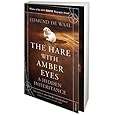
The Hare With Amber Eyes: A Hidden Inheritance (Edmund de Waal)

--The blurb--
"264 wood and ivory carvings, none of them larger than a matchbox: potter Edmund de Waal was entranced when he first encountered the collection in the Tokyo apartment of his great uncle Iggie. Later, when Edmund inherited the ‘netsuke’, they unlocked a story far larger than he could ever have imagined…"

--The review--
Moved to read this tome for its mentions of Proust (due to working through the big guy's opus as we speak - last volume now!), I was left upon finishing with a sense and knowledge of so much more. Edmund de Waal's work received an award for biography, but it is not quite a memoir - it is more than this. Having received recommendations of the book from my mother and sister, and gone on to enjoy it myself, proves via our different spectra of abilities and interests that it is readable, accessible, and interesting to very many. The author therefore does what many in the past have failed to do by bringing history and art history to the masses, binding these interests together perfectly with political and personal histories.

Skilled and sensitive, The Hare With Amber Eyes is driven by the sheer dedication of its author, and the depth of research that has gone into it is of clearly phenomenal levels. Images are used carefully to gently enhance enjoyment, rather than bombarding the reader, and the concision of the prose is equally commendable. The choice of the hare in the title is perhaps not necessarily apparent (after all, there are 264 netsuke to choose from, so why pick that one?), but this does not seem to matter. The book is also a travel book, in that it compels you to want to visit the places described - Odessa, Paris, Vienna and other locations are brought to life with vivacity and tenacity.

That the main themes in the book should be the nature of memory, storytelling and oral tradition (not AURAL, I'm afraid, Edmund), art, the making of things, and passing things down make it no surprise that the story's principal message should be that it's how you tell the story that matters - it's no good simply having these objects without knowing where they have come from, and certainly in the hands of a lesser author the story itself may have become devalued by being passed down to us as a readers in an inferior manner. It is perhaps here that the choice of a hare with amber eyes comes into significance - the use of amber as a way to preserve something old within something new exemplifies the purpose of the writer's story, which he states is to encase the story in something new for his children.

The inheritance referred to on the cover of the book is naturally not only the physical inheritance of the netsuke but the legacy of the family history, and it is told in such a way as to be pleasantly cyclical. Further strengths include the honesty, detail and humour with which family members are portrayed, and the accessibility with which various complex issues are approached. Familiarities such as Impressionism and Nazi Europe are made new for us, and de Waal's arguably overambitious scope is approached and fulfilled with deftness and modesty. 

De Waal's mastery of all aspects of storytelling is what makes this true tale what it is; a rich fiction, but in the most positive possible way. Determined and moving without being slushy, it is practically perfect in every way - absorbing, intellectual, down-to-earth, humorous, and written with real feeling.

Friday, 20 May 2011

Our Street: East End Life In The Second World War (Gilda O'Neill)

--The blurb--
"Our Street is the perfect companion to Gilda O'Neill's bestselling My East End. This book focuses on the lives of Londoners in the East End during the Second World War. Showing the concerns, hopes and fears of these so-called 'ordinary people' Our Street illustrates these times by looking at the every day rituals which marked the patterns of daily life during WWII. It is an important book and also an affectionate record of an often fondly remembered, more communal, way of life that has all but disappeared."

--The review--
As a 1990s kid, it's understandable that I and some of my academic interests should be a product of the restrictions of the UK education system at this time. One of these interests stems from my study of history; in spite of many years of study, the Second World War is one of only a few periods that I know much about and which continues to hold my interest, as well as that of a significant proportion of the British public. Thanks to the ageing combattant and non-combattant survivors of the war, and the younger generation who have had the war's history thrust upon them, WWII-related books and products continue to thrive in today's market.

The aforementioned survivors naturally want to tell the stories of their experiences, and Gilda O'Neill is one of these people, having inhabited the East End of London during the war period. However, Our Street tells relatively little about her own experiences, consisting of a patchwork of testimonials from others, which are of readable lengths and captivate the reader immediately with tidbits of tales which make our jaws drop due to the complete improbability of their occurrence today. This awareness of incidents that are totally outside our span of experience as younger readers also triggers the sobering thought of how different the world will be when we are of pensionable age to the 1990s world we inhabited as children.

For the older generation, in spite of the horrifying experiences that some of the interviewees have gone through, a sense of nostalgia and feeling of the 'Dunkirk spirit' is reawakened, and this aspect of community and strength and familial ties is equally palpable to younger readers. O'Neill ties together the testimonies reasonably successfully, although at times it feels a little forced. The flavour of the East End is equally alive, distributed with vigour through the use of dialect and descriptions of the cityscape and housing estates, and readability is enhanced by the splitting of the book into themed chapters such as evacuation and food. This also enables a 'pick and mix' approach, as it is therefore unnecessary to read the book in chronological order.

To assume the dual role of author and editor, as Gilda O'Neill has done in this book, is surely no easy task, and while she arguably does not completely succeed, the result is still an accessible tome that appeals to those that were there just as much as to those who were not. Her passion for her own personal past and for the history of her past in general is clear, and incites the reader to seek out more of her books - fictional as well as non-fictional.

Other works by Gilda O'Neill
The Cockney Girl (1993)
Whitechapel Girl (1994)
Dream On (1998)
The Lights of London (1999)
The Bells of Bow (1999)
My East End: Memories of Life in Cockney London (2000)
Playing Around (2000)
Just Around The Corner (2001)
Getting There (2002)
The Sins of their Fathers (2003)
Make Us Traitors (2004)
Of Woman Born (2005)
Lost Voices: Memories of a Vanished Way of Life (2006)
The Good Old Days: Crime, Murder and Mayhem in Victorian London (2006)
East End Tales (2008)
Rough Justice (2008)
Secrets of the Heart (2008)