Showing posts with label romance. Show all posts

Monday, 30 December 2013

Beloved Stranger (Clare Boylan)

 --The blurb--
"Dick and Lily have been married for fifty years, and Lily finally believes that marriage is like an old tune you take for granted but find yourself whistling when you're happy. Until the night she wakes to find her husband's pyjamaed bottom poking out from under the bed. He claims there's an intruder and he's got him in his sights. When she turns on the light he backs out, holding a shotgun. 'Bugger got away when you created a diversion,' he says. The comic incident marks the start of Dick's terrifying plunge into insanity. He enters a world of imaginary enemies, fantastic opportunities, and sexual rivals. For an old-fashioned wife who accepted her partner for better or worse, there is nowhere left to turn except to her only daughter. Ruth, who has turned her back on emotional commitment in favour of good sex with good friends, is now forced to penetrate the conspiratorial and chaotic web of her parents' marriage."

--The review--


Elizabeth Taylor’s novella Blaming - posthumously published in 1976 - gave a terrifying insight into the life of those left behind when a spouse dies. Perhaps even more striking than the sudden death of Amy’s husband in this story, however, is the horrifying descent towards life’s end as experienced by Lily's husband Dick in Clare Boylan's Beloved Stranger, set in Ireland and published a little over twenty years later.

Despite a slow start to this ultimately readable novel, Boylan manages to deftly balance Dick’s dementia not only from his viewpoint but also from the receiving end of wannabe feminist Lily and their put-upon daughter Ruth. This, in turn, is interwoven skilfully with the subplot of Ruth’s own life, in which she tries to overcompensate for her parents’ suffocating relationship by choosing short-term sexual liaisons instead of long-term commitment, and focusing on her career and personal independence. These multiple plot lines allow the pace to be successfully controlled, and are dexterously decorated with carefully chosen similes and beautiful imagery.

Although the final months of Dick’s life are naturally of interest to the reader given his erratic behaviour and the reactions to this by others, we are equally interested in what appears to be a tale of identity: Lily is chasing her real self through old photographs and feminist tracts, while Ruth tries to do the same by grieving for the relationship that she wanted (but never had) with her parents, and by chasing a potential non-starter of a new relationship of her own. These evolutions also track generational differences and ensure that there will be something to resonate with every reader, or for every reader to react against.

Beloved Stranger also reiterates, in a non-religious way, the message that death is not necessarily the end, as indicated by the last line of the story, which is spoken by Lily. This makes the reader wonder if Ruth – and, indeed, Lily herself, as well as other family members - can ever truly escape Dick's influence, adding an even slightly sinister meaning to the 'Beloved' of the book’s title.

However, an equally disquieting theme that is not fully addressed by Beloved Stranger is the notion that even the most beloved will eventually become strangers. While this is partly achieved by some due to their dementia, it is a sad truth that most of us, in three generations, will be forgotten by our descendants, no matter how much we are loved. Beloved Stranger is perhaps, as well as being a thought-provoking work that shows how far Boylan ought to be better-known, therefore also a call to all of us to ensure, as far as possible, that those we love never do become strangers. 

other novels by Clare Boylan
Holy Pictures (1983)
Last Resorts (1984)
Black Baby (1988)
Home Rule (1992)
Room for a Single Lady (1997)
Emma Brown (2003) 

Sunday, 29 December 2013

Love Is A Mixtape (Rob Sheffield)

 --The blurb--
"Mix tapes: Stick one into a deck and you’re transported to another time in your life. For Rob Sheffield, author of Turn Around Bright Eyes, that time was one of miraculous love and unbearable grief. A time that spanned seven years, it started when he met the girl of his dreams, and ended when he watched her die in his arms. Using the listings of fifteen of his favourite mix tapes, Rob shows that the power of music to build a bridge between people is stronger than death."

 --The review--

Writers from Nick Hornby to Jonathan Coe have reminisced on the music of days gone by, invoking images of vintage records, past romances, and even political landscapes. Rob Sheffield has now joined the ranks of these British authors by producing an American rival in the form of Love is a Mix Tape, published in 2007. By capitalising on the 80s and 90s nostalgia of a mix tape, this iconography is set to draw in a whole new generation of music lovers’ ruminations on the tracks they treasure(d).

Such books are arguably better suited to life as audiobooks due to their hybrid nature. By giving each chapter the title of a mix tape that he has made, Sheffield makes the reader want, while they read, to be able to hear the music that each chapter is set to. However, the book’s interdisciplinary nature is even more layered than this, making its genre even more difficult to categorise: it crosses the borders of fiction, non-fiction, autobiography and popular history, to name but a few. This makes its appeal very broad, and this is further emphasised by the accessible style in which it is written.

Accessibility, though, should not be read as debased. Despite the narrator’s matter-of-fact personality, he can also be heartbreakingly poignant in what is also one of the greatest love stories (or should that be songs?) ever told, effectively making the book a paean to his first love, RenĂ©e, without putting her up onto too much of a pedestal. The reason for this becomes apparent as we read, adding further to the narrative's pathos.

Nonetheless, this does not result in depressing the reader: by the end of Love Is A Mix Tape, we not only want to go out and discover the unknown tracks recommended to us by the author, but we also feel even more grateful for our lives, giving us the urge to pass on Sheffield's story to others, in a way that even Nick Hornby is perhaps unable to do.

other works by Rob Sheffield
Talking to Girls About Duran Duran (2010)
Turn Around, Bright Eyes (2013)  

Sunday, 17 November 2013

A Little Love Song (Michelle Magorian)

--The blurb--
"It is the summer of 1943 and war continues to rage. For Rose and her sister Diana, it’s a time of independence and self-discovery as they find first loves. But when Rose unearths a love story from another war, she realises that wartime intensifies emotions, and maybe she isn’t in love with Derry as she first thought she was. Rose is about to discover a secret that will change everything..."

--The review--
With the centenary of World War One's beginning now less than twelve months away at the time of writing, it can at times be difficult to believe that something that still seems so close, in that it affected the lives of many of our grandparents, is yet so far back in the past. Michelle Magorian's 1991 novel A Little Love Song helps to revive certain aspects of how life was for young people at this time - pivotal not only for being in the synapse between childhood and adulthood, but also pivotal due to taking an important place in a changing world.

This wartime setting is typical of Magorian's novels, and here it plays a background rather than mainstream role, while still not being without significance: as a result of the difficulties of the mid-war period, young people are reflected in the novel as more independent, down-to-earth and capable. Even when confronted with challenges, Magorian's characters are still prepared to rise to these and to do their best, even when they are finding these moments tough. Even if this is not an accurate reflection of how adolescents actually were during the early 1940s, this depiction serves not only to give the book's teenage audience an example of good character, but also to inspire readers to admire the characters' resilience.   

Equally, though, there is much in A Little Love Song to resonate with today's readers - not just in terms of burgeoning independence and sexual awakening, but also in terms of feelings of hopelessness and inadequacy, which are perennially adolescent problems. Magorian is a master at building up sympathy and revulsion in equal measure: in our heads, we rebuke characters for being silly, recoil at arrogant and misogynist behaviour, relate to their feelings, and rejoice in their triumphs. The pace at which this is done is carefully constructed and concise, and we will the characters to cope and to move towards the outcomes that we hope for. 

All of this shows just why Michelle Magorian has been one of the most successful children's writers of the past forty years, thanks to her reach not only across present generations but also her ability to extend a hand into the hearts of the past.

other works by Michelle Magorian
Goodnight Mister Tom (1981)

Back Home (1984)

Waiting for My Shorts to Dry (1989) 
Who's Going to Take Care of Me? (1990) 
Orange Paw Marks (1991)   
In Deep Water (1992) 
Jump (1992) 
A Cuckoo in the Nest (1994) 
A Spoonful of Jam (1998) 
Be Yourself (2003) 
Just Henry (2008)

Wednesday, 30 October 2013

The Flight of the Maidens (Jane Gardam)

  --The blurb--
"This [...] novel describes the post-war summer of 1946 - and follows the growing-up of three young women in the months between leaving school and taking up their scholarships at university. Una Vane, whose widowed mother runs a hairdressing salon in her front room ('Maison Vane Glory - Where Permanent Waves are Permanent'), goes bicycling with Ray, the boy who delivers the fish and milk. Hetty Fallowes struggles to become independent of her possessive, loving, tactless mother. And Lieselotte Klein, who had arrived in 1939 on a train from Hamburg, uncovers tragedy in the past and magic in the present."

--The review--
With today's teens glued to their smartphones and with more material privilege (in many cases) than their parents had, it can be difficult to remind oneself at times that in fact not everything has changed so drastically for present-day youths. With students in their final year of school now in the thick of university applications and interviews, and wondering what to do with the rest of their lives, their emotional locus is, in many ways, in much the same place as the female protagonists of Jane Gardam's 2000 novel, The Flight of the Maidens, which sees seventeen-year-olds Una, Hetty and Lieselotte making pivotal choices as they stand on the cusp of adulthood.

Through these characters, Gardam puts paid to the idea that is perhaps held by many young people today: that all teens in the immediately post-war years were obedient, non-rebellious and totally responsible. While the girls are stoic in the face of adversity, they are also feisty, engage in passionate relationships, and disagree vehemently with their parents. This is all set against the backdrop of the Second World War's consequences on everyday people, but it is the protagonists, not the historical context, that take centre stage, making the teens' exploits relevant to today's readers. 

Enhancing all of this are Gardam's witty turns of phrase and the very human characteristics of the personages inhabiting The Flight of the Maidens. In all of these characters we recognise less-than-pretty aspects of ourselves or of our acquaintances, and we are encouraged by turns both to celebrate and to change these attributes. By placing our faults as human beings under the microscope, Gardam arguably creates the novel's most important message: of being kind to others, as we have no idea what they are going through, or of what will happen to all of us next. This applies perhaps most significantly and equally to Lieselotte and to Hetty's mother.

This could suggest that Gardam's main reason for writing is didacticism, but the novel's sheer readability and lack of a nagging tone implies that the primary purpose is escapism and nostalgia. In indulging in Una, Hetty and Lieselotte's various exploits, we are reminded of ourselves and of how crucial a time being seventeen is. Light yet soul-searching, The Flight of the Maidens is therefore essential bedtime reading not just for today's seventeen-year-old girls but also those who are still seventeen at heart.

other novels by Jane Gardam*
Bilgewater (1977)
God on the Rocks (1978)
Crusoe's Daughter (1985)
The Queen of the Tambourine (1991)
Black Woolly Pony (1993)
Faith Fox (1996)
Old Filth (2004)
The Man in the Wooden Hat (2009)
Last Friends (2013)

*Jane Gardam has also written a number of short story collections, as well as books for children.  

Saturday, 17 August 2013

The Great Lover (Jill Dawson)

--The blurb--
"In the summer of 1909, seventeen-year-old Nell Golightly is the new maid at the Orchard Tea Gardens in Cambridgeshire when Rupert Brooke moves in as a lodger. Famed for his looks and flouting of convention, the young poet captures the hearts of men and women alike, yet his own seems to stay intact. Even Nell, despite her good sense, begins to fall for him. What is his secret?"

--The review--
Historical and biographical fiction is a grey area requiring great sensitivity on the part of the author thanks to the great balancing act involved between poetic licence and past facts. Respect for history and the need to create a convincing story is never an easy combination to pull off - and thankfully, in The Great Lover, Jill Dawson largely executes this fusion of fact and fiction with finesse.

 One of the established rules of writing historical fiction is to not overburden the reader with history lessons. By 'framing' the story of The Great Lover with a letter from Rupert Brooke's real-life Tahitian daughter, Arlice Rapoto, Dawson doubtlessly hoped to introduce yet another nugget of fact to the reader. However, this aspect of Rupert Brooke's biography seems shoehorned in messily and in contrast to the rest of the book's succinct yet languorous style, as does the fact that the woman to whom Arlice is writing (Nell Sanderson) encloses Brooke's letters (the sections of the story voiced by Brooke are effective, but do not read in any way like letters). Simply splicing together Brooke's and Nell's versions of the same events is both compelling and competent without the needless addition of these extra elements. The only real narrative boost this opening could provide is to allow the reader to infer the course Nell's life took romantically - but this, too, is revealed by the end of the novel anyway.

Nonetheless, none of this stops The Great Lover from being a thoroughly enjoyable read, couched comfortably between literary fiction and romance. Beyond the more superficial yet still vital aspects of character and plot development, which are generally skilfully done, Dawson gives us much more to be impressed by and to contemplate. Aside from playing ironical mind games with readers regarding the true 'greatness' of the lover of the title, F Scott Fitzgerald-style, and deftly weaving history and poetry through the narrative, Dawson places us in the role of Nell and gradually erodes away at our own resolve. Along with the female protagonist, we begin as cynical stalwarts who are eventually reduced to vulnerable romantics, borne back into our own pasts by the immortal tale of 'the one that got away'. 

The anonymity provided by this classic plotline - which is presented by Dawson in a most original way by bringing together the famous poet and the indeterminate member of the public at his service - means that no prior knowledge of Robert Brooke or his poetry is required. While fans will almost certainly enjoy it, the story is less about Brooke than about the human condition, and the perennial questions of whether it is always right to reveal our true feelings, how far we should put others before ourselves, and if there really is just one person for each of us.

This golden combination of ethical probing, historical portrayal, literary artistry and gripping narrative is all done without resorting to mawkishness, and surely secures Dawson as a key player among today's elite novelists - and that can be said on the strength of The Great Lover alone, before even considering the author's other writings. The interplay between realism and romance as presented in The Great Lover provides ageless appeal, whether one is seventeen - as Nell is in the body of the story - or ninety - as she is at the beginning.

other works by Jill Dawson
White Fish with Painted Nails (1990)
How Do I Look? (1990)
Kisses on Paper (1994)
Trick of the Light (1997)
Magpie (1998)
Fred and Edie (2000)
Wild Boy (2003)
Watch Me Disappear (2006)
Lucky Bunny (2011)

Sunday, 26 May 2013

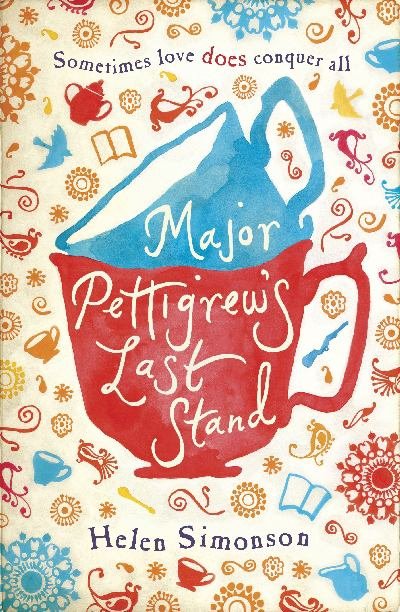
Major Pettigrew's Last Stand (Helen Simonson)

--The blurb--
"Major Ernest Pettigrew is perfectly content to lead a quiet life in the sleepy village of Edgecombe St Mary, away from the meddling of the locals and his overbearing son. But when his brother dies, the Major finds himself seeking companionship with the village shopkeeper, Mrs Ali. Drawn together by a love of books and the loss of their partners, they are soon forced to contend with irate relatives and gossiping villagers. The perfect gentleman, but the most unlikely hero, the Major must ask himself what matters most: family obligation, tradition or love?"

--The review--
Despite the various threats of pollution, globalization and urbanization, the quaint English village does still exist, and as such continues to hold a special place in the hearts of many - even expats who have long been away from this environment, such as the author of Major Pettigrew's Last Stand, Helen Simonson, who has lived in the United States for many years and chose the fictional village of Edgecombe St Mary as the setting for her début. However, while the setting is crucial to the gentle satire of Middle England's at times narrow-minded yet well-meaning attitudes, it is not the main focus of this excellent first novel - it is the pathos, humanity and humour of the characters involved that truly drive the plot forward.

Pettigrew himself narrowly avoids the cliché of the old English gentleman thanks to his dry, sprightly, and extremely British sense of humour. The characters around him are equally fleshed out in slightly clichéd yet very human ways, and the characteristically British reticence with which many of them act only adds to the novel's charm. This, combined with dashes of daring at appropriate moments, is what keeps the reader turning the pages, rather than the novel's clear end point, towards which Major Pettigrew and Mrs Ali are hurtling at speed.

However, novels are about more than just getting from point A to point B. As Edward Monkton's Zen Dog aptly puts it:
As readers, we more or less already know how Major Pettigrew's Last Stand will end; what we are interested in is how Helen Simonson will take us there as all of the story's various minutiae are played out and resolved. The rich cast of characters means that Simonson is able to take us, to varying degrees, on their individual journeys in tandem with the two protagonists, allowing everything to tie up (but not too neatly). 

Why this story's odyssey is the major's "last" stand is never quite clear; while perhaps a reference to his advanced age, it's not as if he's on the brink of death (so those seeking a happy ending need not worry about this possibility). However, this concern is secondary in the face of the novel's strengths: love swells against all obstacles, and it proves a comedy in the very best sense of the word. As many other readers have pointed out, it follows gracefully and wittily in the footsteps of many of English literature's greatest comedians, including Shakespeare and Jane Austen, thanks to its skilful use of wordplay, blisteringly dry humour, and the tracking of lovers' escapades. The perfect gift for expats who secretly still miss England, fans will be delighted to hear that a second novel by Simonson is already in the works.

Monday, 11 March 2013

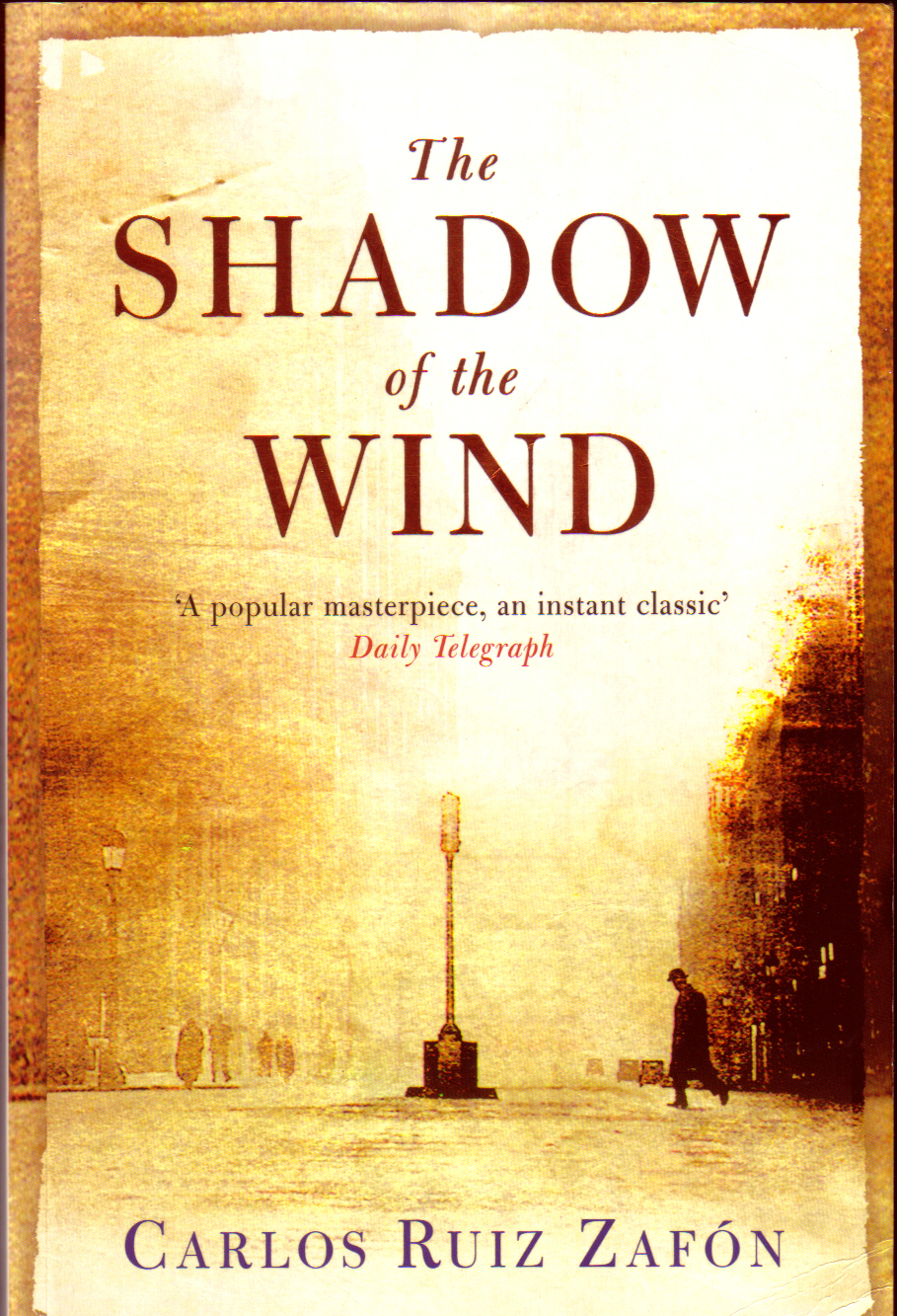
The Shadow of the Wind (Carlos Ruiz Zafon)

--The blurb--
"Hidden in the heart of the old city of Barcelona is the 'cemetery of lost books', a labyrinthine library of obscure and forgotten titles that have long gone out of print. To this library, a man brings his 10-year-old son Daniel one cold morning in 1945. Daniel is allowed to choose one book from the shelves and pulls out 'The Shadow of the Wind' by Julian Carax. But as he grows up, several people seem inordinately interested in his find. Then, one night, as he is wandering the old streets once more, Daniel is approached by a figure who reminds him of a character from the novel, a character who turns out to be the devil. This man is tracking down every last copy of Carax's work in order to burn them. What begins as a case of literary curiosity turns into a race to find out the truth behind the life and death of Julian Carax and to save those he left behind."

--The review--
A myth persists that ranks Paris, France, as the city of light and romance. However, other cities (European ones, in particular) would also be able to stake a legitimate claim on this title, such as Venice, San Francisco, and Barcelona, with the potential of the latter specifically being heightened by Carlos Ruiz Zafon's The Shadow of the Wind, published in 2001 and being celebrated to great fanfare ever since. Can such a spotlighted book really live up to the hype and dethrone Paris as the city of love?

Those who have visited Barcelona will be able to visualize its imprinted walls, twisting path designs and hidden passages as they read; those who have not will be surely incited to visit. The sweeping setting, combined with the novel's secret trysts, haunted houses and curses that stretch across the years, make for a heart-racing read as readers follow the teenaged narrator, Daniel, through the streets of this Catalan city. Any book lover will surely, after reading, wish to roam Barcelona's alleyways searching for the entrance to the cemetery of lost books, wondering if there is a real-life guardian at the door as in The Shadow of the Wind. While it is not a fully realistic novel, with there being too many coincidences and fanciful occurrences for that, Ruiz Zafon's grasp of poetic description and fast-paced action makes this seem less significant. The length of the book may appear off-putting, but needn't be: the author's ability to build suspense and keep us turning the pages means that the sheer volume of it seems to disappear beneath our fingertips.

Another appeal of the novel is its imperfect protagonist, Daniel, and the company he keeps: all are very human and thus are moody and do make mistakes (at best), or harbour murderous instincts (at worst). In spite of this, they fit well into the adventurous setting, allowing readers to lose themselves completely in the story's waves of description, exciting plot, and dramatic turn of phrase. Occasionally concision is lost, meaning that there is a risk of forgetting why certain events occurred, but this does not detract from overall enjoyment of the story, meaning that there is without doubt scope for future rereads, whether alone or in conjunction with the rest of the series (Zafon has so far released two subsequent books, intending the series to eventually have four parts).

The novel's ending is nicely cyclical, with the end scene being a mirror of the first, right down to the dialogue. This, too, demonstrates superb planning and execution, and contributes to the reader's desire to turn right back to the beginning and start reading again, preferably while on a trip to Barcelona. Now, find me a book about Paris that does that...

other works by Carlos Ruiz Zafon
The Prince of Mist (1993)
The Midnight Palace (1994)
The Watcher in the Shadows (1995)
Marina (1999)
The Angel's Game (2008)* 
The Prisoner of Heaven (2011)*

*part of The Shadow of the Wind series

Saturday, 28 April 2012

Helen Keller In Love (Rosie Sultan)

--The blurb--
"Helen Keller has long been a towering figure in the pantheon of world heroines. Yet [...] Rosie Sultan’s debut novel imagines a part of Keller’s life she rarely spoke of or wrote about: the man she once loved. When Helen is in her thirties and Annie Sullivan is diagnosed with tuberculosis, a young man steps in as a private secretary. Peter Fagan opens a new world to Helen, and their sensual interactions—signing and lip-reading with hands and fingers—quickly set in motion a liberating, passionate, and clandestine affair. It’s not long before Helen’s secret is discovered and met with stern disapproval from her family and Annie. As pressure mounts, the lovers plot to elope, and Helen is caught between the expectations of the people who love her and her most intimate desires."

--The review--
It is easy to see what inspires generations of people about Helen Keller: the stoicism, grace, modesty and talent that pervades her writing would be nothing short of remarkable even in someone 'ordinary', let alone in someone living with Keller's disabilities today - and even more so given the limitations in treating someone who was blind and deaf during Keller's lifetime. But naturally this places expectations on someone to say that they are coping well, and so to seize upon a time in Keller's life where she more ostensibly did not cope well is arguably a bold move. But this is what Sultan does in her first novel, Helen Keller In Love, by investigating a passionate love affair that took place between Keller and her private secretary which sadly did not come to the fruition that he allegedly promised her.

The two aspects of this work - history and fiction - are equally intriguing. Historically, Helen Keller In Love is clearly the result of hours and months (if not years) of diligent research by the author. With documentary evidence that this affair occurred, it brings new focus and perspective to Helen Keller's life. For a woman who was at pains to emphasise just how normal her life was, we are suddenly given part of her life which was not 'normal', and brings us to wonder whether it ever could have been. In addition, by highlighting this element of Keller's life, Sultan makes us reconsider the importance of other peripheral figures in history; the chances are that some of them had more impact than we may have previously realised.

The fictional factor is just as crucial, however. Even though there is some documentary evidence of the affair between Keller and Fagan, the author is honest in her endnotes about the fact that some other key documents have since been lost or destroyed. As with all historical writing, this has a significant effect on the end product - and in terms of historical fiction, it affects the degree to which the author is able and willing to put their own stamp on the basic storyline. Sultan's storytelling is believeable, intense and moving, allowing us to feel Helen's joy, pain and frustration across the story's entire trajectory. This also raises many interesting questions for the reader and makes them wonder how Fagan's side of the story would read.

Nevertheless, the result is an unputdownable debut which establishes Rosie Sultan as a blazing new figure on the historical fiction scene (which I'm sure the good people at Viking, who sent me this complimentary copy, will be glad to hear). This romantic yet serious novel, which is indulgent in some places yet minimalist in others, is suitable for any woman who has ever been in love (or lust) - it probably won't appeal much to men due to its highly romantic nature, but that shouldn't inhibit sales too much. Out this week, it comes highly recommended with the approach of summer. 

Sunday, 26 June 2011

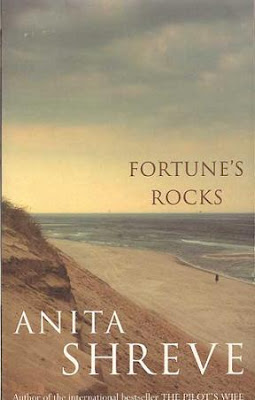
Fortune's Rocks (Anita Shreve)

--The blurb--
"In turn-of-the-century New England 15-year-old Olympia Biddeford is spending the summer with her parents at their seasonal house at Fortune's Rocks. She is swiftly despatched to Boston when it's discovered she has embarked on an affair with a friend of her father's, but Olympia is already pregnant."

--The review--
Teaching high school for the past three years has only consolidated my belief that there is no child of this age who is mentally/emotionally capable of adequate parenthood. Children of this age, even the very mature ones, are naturally still in a very difficult emotional stage and state; although I am sure many would try to make the best of teenage parenthood, they still have many things to sort out in their minds and hearts, and so many things to enjoy while young and childless that are difficult or impossible to do once you have a little person in tow.

Anita Shreve is the only person who has ever come close to changing my mind about this through the character of Olympia Biddeford. Whether this is because Olympia is not a realistic character, or whether this is because the author has shown the full maturity of certain young people, the impression we have as readers at least is that Shreve deftly combines the emotional and physical innocence of a flowering young lady with the emotional and intellectual maturity of someone really quite advanced. While there is a certain amount of idealism, though, the author does not keep us under any illusions: this is heading for trouble, and fast.

The antagonist, John Haskell, is guaranteed to polarise audiences: you will either understand him and empathise with him, and be on the side of his and Olympia's romance, or hate and revile him and side with his wife and children. But although the initial decisions of Olympia and John provide the book's kick-start, it is the decisions of others that prove the catalyst and make us want to keep reading, as their futures are repeatedly taken out of their hands. 

But there is more to Fortune's Rocks than mere romance and dalliance: the legal aspects of the novel are simultaneously well-researched and accessible, and this legacy is carried, albeit to a lesser degree, by the next generation of romantic novelists, including Jodi Picoult and Sophie Kinsella. But the difference between these novelists and Anita Shreve is not only to be found in the depth of research and character but also in the lack of vacuousness and the beauty of the prose provided by the author. This is not only romantic fiction - this is literary fiction of the highest order, and perhaps something that Shreve's inheritors have not been able to carry the torch for.

Although it takes a long time to reach the story's conclusion, we are not bored for a moment on the journey, and when we do get to the end, we are not only satisfied, but even a little disappointed to be leaving Olympia behind, having followed her for five important years of her life and seen her develop and grow while still remaining the same person. And so it is to readers' delight to find that Fortune's Rocks is only the first in a quartet set at the same beach house (with the following three being, in order, Sea Glass, The Pilot's Wife, and Body Surfing) - and when you have this reaction to knowing that in fact, there is more to come from this dream-like setting, that can only be a good sign.

Other works by Anita Shreve
Past The Island, Drifting (1975)
Eden Close (1989)
Strange Fits of Passion (1991)
Where Or When (1993)
Resistance (1995)
The Weight Of Water (1997)
The Pilot's Wife (1998)
The Last Time They Met (2001)
Sea Glass (2002)
All He Ever Wanted (2003)
Light On Snow (2004)
A Wedding In December (2005)
Body Surfing (2007)
Testimony (2008)
A Change in Altitude (2009)
Rescue (2010)

Sunday, 5 December 2010

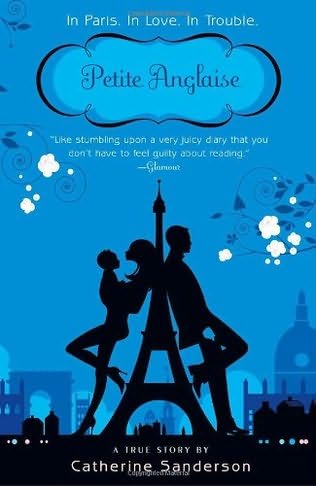
Petite Anglaise (Catherine Sanderson)


--The blurb--
"Living in Paris with her partner, the workaholic Mr Frog, and their adorable toddler, Tadpole, Catherine decides to alleviate the boredom of her metro-boulot-dodo routine by starting a blog under the name of Petite Anglaise. Writing with disarming honesty about Paris life, about the confines of her hollow relationship with Mr Frog and about the wonder and pain that comes with being a mother, she finds a new purpose to her day. As Petite Anglaise, Catherine regains her confidence and makes virtual friends, including one charismatic and single Englishman who lives in Brittany, James. And after meeting James one evening in a bar, Catherine feels she has regained her ability to fall in love, too."

--The review--
As with Catherine Sanderson's fictionalised effort, French Kissing, I was expecting feelings of satisfaction and derision in equal measure following my reading of Petite Anglaise. Happily, this was more on the side of entertainment this time. Sanderson continues to demonstrate her canny ability to seize on tiny details that really do accurately portray daily Parisian life, and the way she writes veers between schmaltziness and sheer beauty in equal measure, making this a very comforting and accessible read.

There were plenty of ways in which I felt totally unable to empathise with Catherine. It certainly confirmed for me the feeling of absolute disgust which permeates me even contemplating the logistics and deceit of an affair, and from me the cherry tomato incident elicited no sympathy (just why would you even consider giving your child something which, when left completely whole, could so easily cause them to choke, and then be so surprised and annoyed when they throw them all up all over you?). However, there were many more ways in which I could empathise: she eloquently expresses the feeling of only living alongside French people, rather than living as part of them and being part of their landscape. Her writing reassured me that this can take many years to establish, and that not having a social life or (m)any friends at this stage of my life in France is not abnormal. Although I could not feel familiarity with her success as a blogger (given my quite frequent feeling when blogging that I am just shooting these words into a cyberspace equivalent of a black hole), I did not feel jealous either. Sanderson's familiar style invites you to take a seat beside her and enjoy the ride.
Consequently, Petite Anglaise proves a very quick read, which is never for a moment dull or sluggish: Sanderson keeps readers engaged and on their toes with ease. However, Petite Anglaise and French Kissing are both in a very similar vein in terms of their subject matter, and so while the advice to budding writers to write what they know is sound, I would issue a word of caution: Sanderson may wish to diversify her repertoire if she wishes to keep her readers on the hook. While the expat-lit market is popular, it is not insatiable.

Other works by Catherine Sanderson
French Kissing (2009)