Sunday, 9 June 2013

On the death of Iain Banks

The death of Iain M Banks today, at the age of 59, has rocked the literary world, who loved him equally for his science fiction as for his more general fiction. The death of a young personality is always shocking, but sadly not increasing in rarity, and will particularly resonate not only with his fans but also with anyone who is of this age themselves or has a close relative of this age, as they are confronted with mortality on a closer level (as someone in their mid-twenties with a father in his mid-fifties, I cannot imagine losing my father at this age - and yet I know those who have lost theirs at this age, and even younger). However, to lose a personality with such universal appeal is perhaps even rarer. Banks was a writer of extraordinary breadth, covering dystopia, crime, economic crisis, materialism, terrorism, war, substance abuse, God, science, dreams and more - and all with a touch of irreverence and wit.

Unsurprisingly, he also covered the subject of death, and was set to do so again in The Quarry, which will be released in June 2013. Despite Banks' pleas to his publishers to bring the release date forward in the hope that he would see The Quarry's publication, his terminal cancer diagnosis was unsparing and all-pervasive. A sixth sense perhaps lured him to begin his final novel - which, ironically, has a hero dying of cancer, even though Banks was unaware of his own diagnosis until he was 10,000 words off finishing The Quarry. In it, he appears to have broadened his horizons yet again as a swan-song, this time featuring a young narrator on the autistic spectrum whose father is staring death in the face thanks to the Big C. Given my interest in both fictional and non-fictional books based on autism, and particular Asperger's Syndrome, I await the publication of The Quarry with bated breath - not only to indulge personal interest, but also to see Banks' final masterstroke.

So what do fans treasure as Iain Banks' legacy? A quick sweep of his website proves that they prize his imagination, innovation, humour, ability to apply himself to whatever genre he chose, energy and intelligence. Perhaps most importantly, his "[refusal] to allow his fame and success to compromise his principles" is something that we can all take as an example - not just great writers. However, in the pattern of so many great writers, Banks will perhaps achieve even greater fame after death, with his work reaching even more readers. I know I'll be there buying The Quarry in June - and looking into even more of his other books too.

Sunday, 2 June 2013

The Tragedy of Fidel Castro (Joao Cerqueira)

 --The blurb--
"When God receives a request from Fátima to help prevent a war between Fidel Castro and JFK, he asks his son, Jesus, to return to Earth and diffuse the conflict. On his island, Fidel Castro faces protests on the streets and realizes that he is about to be overthrown. Alone, surrounded, and aware that the end is fast approaching, he plays his last card. Meanwhile, Christ arrives on Earth and teams up with Fátima, who is convinced she can create a miracle to avoid the final battle between JFK and Fidel Castro and save the world as we know it."

--The review-- 
As the world becomes less religious and more irreverent, literature reflecting this attitude has become increasingly common, with Joao Cerqueira's novella, The Tragedy of Fidel Castro, fitting neatly into this category. However, there is no danger of Cerqueira being subversive for the sake of it; his mischievous and tongue-in-cheek style of writing is innovative and all his own, blending the mild blasphemy of Jean-Louis Fournier (author of God's CV) with the outright mockery of Joseph Heller (as manifested in his classic Catch-22). Cerqueira makes us think hard straight away thanks to his Chomsky-like strategy (informing us glibly that the Fidel Castro, JFK, Jesus and God characters bear no relation whatsoever to the real historical figures), making it difficult - in a fun way - for the reader to separate cultural associations from the words used.

While occasionally a little convoluted, and with more direct speech being a potentially positive addition, Cerqueira is by turns wryly funny, deeply ironic, and a provider of hugely effective descriptions and richly layered yet accessible metaphors. Equally, Cerqueira's focus on situations and events rather than on character development is a further masterstroke, making individuals seem like pawns at the plot's mercy. These aspects all combine to make The Tragedy of Fidel Castro highly competitive with the very best satires in its blackly humorous portrayal of a sobering reality.

In addition to this, Cerqueira owes another debt to Joseph Heller - his patchwork approach means that we cut between scenes rapidly and cannot always see immediately how they fit together. However, this is not necessarily something to take badly (whereas the author's intermittently patronising footnotes are). Ultimately, the story's iconoclastic and mildly atheistic standpoint makes the story deftly layered, making it merit rereads by all satire-lovers.

other works by Joao Cerqueira
Devil's Observations (2010)
Blame It On Too Much Freedom (2007)
Art and Literature in the Spanish Civil War (2005)

Sunday, 26 May 2013

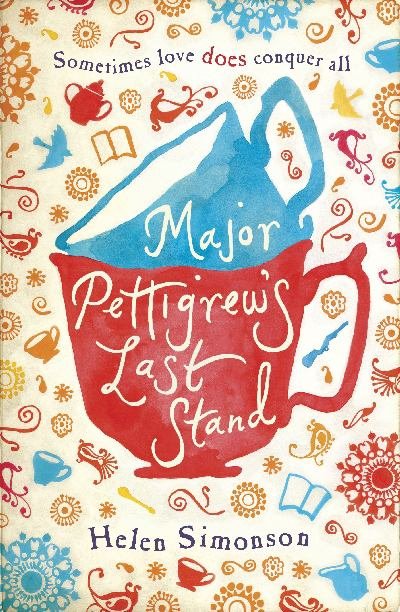
Major Pettigrew's Last Stand (Helen Simonson)

--The blurb--
"Major Ernest Pettigrew is perfectly content to lead a quiet life in the sleepy village of Edgecombe St Mary, away from the meddling of the locals and his overbearing son. But when his brother dies, the Major finds himself seeking companionship with the village shopkeeper, Mrs Ali. Drawn together by a love of books and the loss of their partners, they are soon forced to contend with irate relatives and gossiping villagers. The perfect gentleman, but the most unlikely hero, the Major must ask himself what matters most: family obligation, tradition or love?"

--The review--
Despite the various threats of pollution, globalization and urbanization, the quaint English village does still exist, and as such continues to hold a special place in the hearts of many - even expats who have long been away from this environment, such as the author of Major Pettigrew's Last Stand, Helen Simonson, who has lived in the United States for many years and chose the fictional village of Edgecombe St Mary as the setting for her début. However, while the setting is crucial to the gentle satire of Middle England's at times narrow-minded yet well-meaning attitudes, it is not the main focus of this excellent first novel - it is the pathos, humanity and humour of the characters involved that truly drive the plot forward.

Pettigrew himself narrowly avoids the cliché of the old English gentleman thanks to his dry, sprightly, and extremely British sense of humour. The characters around him are equally fleshed out in slightly clichéd yet very human ways, and the characteristically British reticence with which many of them act only adds to the novel's charm. This, combined with dashes of daring at appropriate moments, is what keeps the reader turning the pages, rather than the novel's clear end point, towards which Major Pettigrew and Mrs Ali are hurtling at speed.

However, novels are about more than just getting from point A to point B. As Edward Monkton's Zen Dog aptly puts it:
As readers, we more or less already know how Major Pettigrew's Last Stand will end; what we are interested in is how Helen Simonson will take us there as all of the story's various minutiae are played out and resolved. The rich cast of characters means that Simonson is able to take us, to varying degrees, on their individual journeys in tandem with the two protagonists, allowing everything to tie up (but not too neatly). 

Why this story's odyssey is the major's "last" stand is never quite clear; while perhaps a reference to his advanced age, it's not as if he's on the brink of death (so those seeking a happy ending need not worry about this possibility). However, this concern is secondary in the face of the novel's strengths: love swells against all obstacles, and it proves a comedy in the very best sense of the word. As many other readers have pointed out, it follows gracefully and wittily in the footsteps of many of English literature's greatest comedians, including Shakespeare and Jane Austen, thanks to its skilful use of wordplay, blisteringly dry humour, and the tracking of lovers' escapades. The perfect gift for expats who secretly still miss England, fans will be delighted to hear that a second novel by Simonson is already in the works.

Thursday, 23 May 2013

Film Review: The Great Gatsby

Students of English Literature IGCSEs perhaps recall their studies of F Scott Fitzgerald's The Great Gatsby with boredom and confusion - the eyes of Dr Eckleburg have been known to flummox even relatively capable students. However, depending on their teacher, there's also a chance that they may recall this slim volume with a sense of the glamour, beauty, intensity and tragedy that is provoked so easily by many of the author's sublimely concise and elegant phrases. 

Those who remember the book for its glamorous aspects will not have been disappointed by Baz Luhrmann's version of The Great Gatsby, which opened the Cannes Film Festival last week. While some viewers have described the sets as cardboardy, and while it's easy to see why others could consider the costuming garish, the glitter and bright lights more than contribute to the sense of hedonistic vibrancy that one could perceive as characterising the Roaring Twenties. Equally, the music - focused around present-day artists such as Lana del Rey, Beyoncé and Jay-Z - did a great deal to capture the characters' wild party moods and chaotic passions. However, inherent in the music was also the inevitably anachronistic quality, with some viewers perhaps preferring to hear a backdrop of music more typical of the time period in which the story is set.

And what of the story? The script only has one major addition that aficionados of the novel would class as a fault, and even this does not massively impact the plotline's overall trajectory. Lovers of Fitzgerald's prose will have also noted the lack of replication of lines of dialogue from the original novel - a significant difference between this version and the version directed by Jack Clayton in 1974, which stars Robert Redford. To those who are familiar with Redford's portrayal of the role of Gatsby, echoes of his characterisation are without doubt noticeable in Leonardo diCaprio's interpretation, although this does not detract in any way from the quality of his performance.

As the first major adaptation of Fitzgerald's classic since 1974, Luhrmann's version was also bound to draw other comparisons, including the choice of Carey Mulligan to play Daisy as an inheritor of Mia Farrow's representation. While Mulligan made for a sexier and less irritating Daisy, Farrow's conception of the character struck the heart of the matter more deeply: as readers or viewers we are not necessarily meant to understand exactly what Gatsby sees in Daisy, to make them both seem more eccentric and to make us feel more like Nick Carraway, like outsiders. With Mulligan in this leading female role, this is not quite achieved, even though aspects of the dumb blonde are played well.

Carraway himself is played well by Tobey Maguire, although the character whose role he performs is done a disservice thanks to his narration being framed as part of a device not imagined by Fitzgerald, with him telling his story to a doctor in a mental institution. With the story of The Great Gatsby already having so many layers to explore, this one seemed superfluous and thereby disappointing.

The film ends with the novel's famous final lines being etched across the screen, with this being one of the few times that we see Fitzgerald's dazzling prose being evoked in all its glory. By paring back the prose so much in this film, we are left principally with the brute force of the story's tragedy, and while the tragic aspects are not unimportant, there is more to The Great Gatsby than this. The focus on appealing to young audiences means that glitz and glamour, and the supposed depth of Gatsby and Daisy's relationship, are prioritized over the devastating beauty of the prose itself and the characters' ultimate shallowness, as well as that of the world they inhabit. The novel's undercurrent and climax of superficiality are not fully fulfilled in this movie version, making it obvious that all of the public relations officers currently extolling the virtues of 1920s fashion, makeup and homewares in order to cash in on the Gatsby theme clearly have little knowledge of the book's real message - making it perhaps unlikely that after watching this film, students of Fitzgerald's work will look beyond the adaptation's glamorous setting to the novel's intense beauty.

Monday, 20 May 2013

Print shop

I promise I have some book reviews coming up for you in the next few days (Fidel Castro, Helen Simonson and The Simpsons are all on the menu), but for tonight, here's a quick nugget of news to contribute to the debate of 'print versus digital'.

After publishing Riding The Bullet as an ebook only in the year 2000, Stephen King has pulled off a complete volte-face with the publication of his latest book, Joyland, which will be released only as a print copy. He hasn't ruled out the possibility of digital copies being available in future, but for now has said that he would prefer people to get off their backsides and go to an actual bookshop.

King's wishes may be a little desperate given the rise of e-tailing: many fans probably won't get off the sofa and go to the bookshop round the corner when they can still order the paper copy of the book online. However, King's polemical point about wanting people to appreciate the physicality of a print book is still strong and valid. I received a Kindle for Christmas in 2011, and while I greatly value the fact that I no longer have to cart a ton of books with me on my commute or on holiday, as well as the low price of certain ebooks, I do not feel that reading on an ebook reader is a comparable experience to reading physical books (and I think I'd say that regardless of what ebook reader I had).

Why? These reasons can seem superficial, but they all add up to a big part of the experience of reading 'real' books. Being unable to see the thickness of the book, or feel its weight, reduces my ability to perceive how much of the book I have read, which can lead to aimlessly skipping through pages to see where the next chapter starts. And no, having the percentage gauge at the bottom of the screen doesn't help. I also miss, to a degree, the cover art of a book, in the same way that vintage record fans find CDs inferior. (However, I used to have this problem with MP3s too, suggesting that my mourning for the loss of book cover art may decline over time.) There are also still several formatting issues with ebooks that are yet to be resolved and which just don't (or at least rarely do) occur in printed books. Finally, there's the lack of sensory experience in ebooks that is provided by regular publications - not just the feeling of the weight and the look of the illustrations, but also the smell of the pages, the sound that they make when you turn them, and the rough grain of their texture beneath your fingertips (although I'll grant you that the absence of papercuts incurred by reading ebooks is something to be grateful for).

I can therefore completely understand Stephen King's reticence when it comes to encouraging the digital revolution. But at least his success means that even if he does choose to eventually publish Joyland digitally, it is far likely to be for ideological reasons - and not for financial ones.

Sunday, 19 May 2013

Gatsby fever

POST SPONSORED BY POLYDOR
As a massive fan of F Scott Fitzgerald's classic novella The Great Gatsby, and much less of a fan of the Robert Redford movie version, I've been waiting with bated breath for Baz Luhrmann's latest filmic interpretation to be released (not least because I'm a bit of a Leo DiCaprio fan).
Hopefully, thanks not only to the inclusion of other big stars such as Carey Mulligan, my students should find the film attractive as well, as it features plenty of new music from contemporary heroes Jay-Z, Beyonce, Andre 3000, Lana Del Rey, and many more. Wednesday 22nd May signals the day that I'll be going to see it - a week after its release, crowds should (I hope) have died down a little. Rest assured you'll be hearing all about it once I get back - I'm eager to see how well Luhrmann has translated Fitzgerald's elegant prose, beautiful setting and his characters' sense of underlying despair into a screen context.

Saturday, 11 May 2013

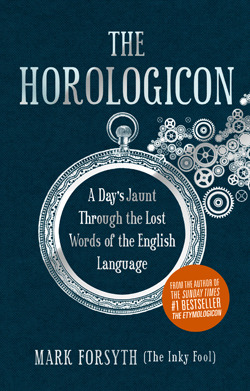
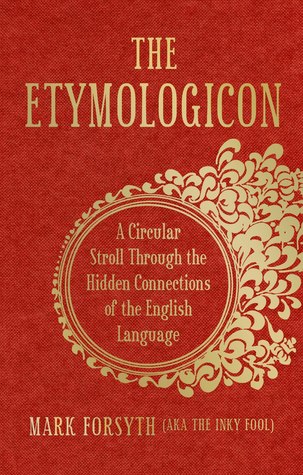
Dual Review: The Etymologicon and The Horologicon (both by Mark Forsyth)


--The blurb--
"The Horologicon (or book of hours) gives you the most extraordinary words in the English language, arranged according to the hour of the day when you really need them. Do you wake up feeling rough? Then you're philogrobolized. Pretending to work? That's fudgelling, which may lead to rizzling if you feel sleepy after lunch, though by dinner time you will have become a sparkling deipnosophist. From Mark Forsyth, author of the bestselling The Etymologicon, this is a book of weird words for familiar situations. From ante-jentacular to snudge by way of quafftide and wamblecropt, at last you can say, with utter accuracy, exactly what you mean."

"Do you know why...a mortgage is literally a death pledge? ...why guns have girls' names? ...why salt is related to soldier? You're about to find out... The Etymologicon is a completely unauthorized guide to the strange underpinnings of the English language. It explains: how you get from "gruntled" to "disgruntled"; why you are absolutely right to believe that your meagre salary barely covers "money for salt"; how the biggest chain of coffee shops in the world (hint: Seattle) connects to whaling in Nantucket; and what precisely the Rolling Stones have to do with gardening." 

--The review--
While not a particularly fashionable interest, there are many secret word-hoarders out there. Some of them are secret, merely reading books like Mark Forsyth's Etymologicon and Horologicon in their spare time (ideally on a Kindle so that even fewer people can guess what they are reading) and writing angry letters to newspapers about typos. Others are not-so-secret, boasting of their championship in Scrabble competitions and making their living as English teachers (where they get paid to point out the grammatical mistakes of others...cough).

Mark Forsyth, the author of these books, is clearly of the not-so-secret variety of logophile, having started blog The Inky Fool in 2008 and taken it to extreme heights - in the form of these two books and a TED lecture - before the age of 40. With these two books having been reviewed by such eminent journals as The Sunday Times and The Financial Times, Forsyth has certainly burst onto the scene in style. So how do these two volumes of word-based wandering pan out?

In truth, it seems amazing that (disregarding content for a moment) both texts can be by the same author. While The Etymologicon can be characterised by its awkward tone of voice, stream-of-consciousness mode, and general lack of organisation, The Horologicon is a work of far greater expertise: its sense of humour is more refined, and one has a far greater impression of the writer imparting fascinating and usable knowledge, rather than an impression of a socially maladroit dinner party guest leaving awkward silences in the wake of his ramblings. Forsyth also promises that The Horologicon could potentially be used as a reference book, and given the precision of its organisation (with chapters on everything from getting up in the morning to trying to get out of doing your work), this seems genuinely possible.

The Horologicon, thanks in part to its readable structure but also thanks to its concision, equally lends itself well to reading in one sitting - even though the author himself advises against this. Thankfully, dipping in and out of it is just as appealing and realistic a prospect. Conversely, dipping in and out of The Etymologicon is a necessity due to its monological flavour. The description of Financial Times reviewer Michael Skapinker, stating that "it is a plunge on a toboggan where the only way to stop is to fall off", seems apt, and not necessarily in a positive way - hence the apparent gulf in quality between these two volumes.

Thanks to the high standard of the Horologicon, though, Forsyth's place among wordsmiths such as David Crystal, Bill Bryson, and Stephen Fry - and thanks to its usefulness as a reference book as well as a source of great humour, even those secretive word-lovers should come out from behind their Kindles and purchase a copy for proud display at home, while eagerly awaiting his next offering. 

The Etymologicon and The Horologicon can be purchased separately, or in a boxed gift set.

Friday, 10 May 2013

Bookish Bits and Bobs: Café Culture

Many lament the integration of bookshops and cafés, particularly when this involves a major chain such as Starbucks or Costa, as it can aggravate people's already existing indignation that bookshops are overly commercialized places that only focus on mainstream tastes. So I ask you: yay or nay?

This has been triggered by my visit today to the Kramer Afterwords Books and Café: an independent bookstore in Washington DC that has an eatery attached. It's a clear example of an independent bookstore and café that works well: it's been there since the 1970s and is a Washington institution. The selection of books integrates classics with modern bestsellers and more obscure choices, without jacking up the prices; the booksellers are friendly; and the café itself serves good honest food. These three things alone are good basic prerequisites. If all bookshops with cafés or coffee shops within them were this pleasant, I'd be all for them.

However, there was one of my prerequisites that this establishment did not meet: greater integration between the bookshop and the café itself. While some of the café's seats (I suspect for those customers simply having a coffee and a cake) are only just inside its entrance, giving a good view of the bookshop itself, those wishing to have a full meal are ushered through to the other side of the building, taking you away from the books completely and making you feel a little divorced from the outlet's purpose.

The flagship Blackwell's outlet in Oxford does better at this, with their small café providing more intimacy and better integration with their bookshop. However, this can perhaps only apply to the café format: anything beyond a cake (or perhaps a light meal at a push) surely produces enough noise and smells to potentially bother customers who have just come in to quietly browse. Restaurant-style atmospheres can become too lively to perhaps truly cooperate well with a bookshop environment - so in this respect I can understand why Afterwords separates its eating and shopping areas more distinctly. So is it really possible to achieve the holy grail of a truly well-integrated bookshop/café model that also offers space to relax and browse?

Happily, plenty of establishments exist along these lines, leaving plenty of room for experimentation for those of us wishing to answer this question. Jaffé and Neale, in Chipping Norton, have a café as part of its bookshop, but comments on its 'about us' page suggest that the eatery element may be outside, rather than being a place inside the shop to cosy up on rainy days. The same looks like it could be true of Wigtown's ReadingLasses shop. Foyles, situated in London, also has a café, but given that it's described as the largest bookshop in Europe, as it's spread over 5 floors, I wouldn't be surprised if it all feels rather distant from the books (especially given that it sells CDs, stationery etc also).

Customers in the Bookroom Café, Brighton
One place that does appear to have got the mix right is Brighton's Kemptown bookshop, with its Bookroom Café being right among the books, and serving everything from cakes to light meals. However, I'll be waiting to see what the café looks like after its renovations are complete this year, and hoping they won't have changed this aspect of it. Equally, while Main Street Books' café looks well-integrated, it also raises its own concerns: it could all be a little too noisy, and while it clearly serves proper meals, it doesn't look like there's much space for lounging around with a mocha and a McCall Smith. Some establishments possibly go too far the other way: while the Christian community is well-known for its expertise in quiet contemplation along with tea and sympathy, some may be a little too quiet: I can promise you that I've never stepped into a bustling religious bookshop. Still, at least there are plenty to choose from, and it's possible that actually, a café could provide just the right type of invigoration for this environment.

Mr B's Emporium in Bath offers a clever compromise between busy and quiet, café and home: for a mere £3.50, you can hire a private reading booth, complete with hot beverages, a comfy chair, biscuits, headphones, and a 'do not disturb' sign on the closed door. However, you'd be unlikely to know the service was available unless you already frequented the store (the same is true of Topping and Company in Ely - they offer free coffee to customers), whereas cafés have a more visible presence to draw customers in. It's this visibility, though, that some people seem to dislike, believing it a trite technique to get people through the doors. Even if this is true, it's my view that anything that gets people closer to books is a good thing (and yes, this means also admitting through gritted teeth that if people are reading Harry Potter and Twilight then it is better than nothing at all).

Some bookshops in the UK really seem to achieve this ultimate goal of simultaneous closeness to books and beverages in both sumptuous comfort and stunning elegance. Here are my top 3 to try:

Booka, Shropshire
3. Booka (Oswestry, Shropshire)
Its elegant tables and chairs sit right among the books without being an imposition, and perhaps the best bit? Themed cupcakes to tie in with their events. 
Booth's, Hereford

2. Richard Booth's Bookshop (Hay-on-Wye, Hereford)
This lush, luxuriant and skylit setting will make your jaw drop, as will its café menu (which includes brunch) and mixture of second-hand, new and antique books.
 
The Hours, Brecon
1. The Hours (Powys, Brecon)
Its wooden beams and cosy lighting basically mean that pub meets bookshop in this delightful Welsh setting. Light meals, sticky toffee apple pudding, and Fairtrade coffee await among books with a proud Welsh heritage.

And for your little ones? Get comics and cakes at Barefoot Books in Oxford. Meanwhile, all of this reading around (and eating in my mind) has got me wondering what bookshop cafés I can ferret out in Paris. Cafés in bookshops? Heck, I think Sartre would approve.

Monday, 22 April 2013

Bookish Bits and Bobs: National Stationery Week (April 22-28)

With the influx of modern technology, it's perhaps hardly surprising that the art of letter-writing is dying out. Why send a letter when it's quicker, cheaper and neater to write an email?

However, this doesn't make the demise of letter-writing any less saddening. The personality inherent in handwriting and the beauty of artisan writing-paper are too magical, in my view, to lose; plus, being a teacher, which is basically the same as being a professional stationery whore, means I am naturally interested. It appears that there are many others that feel the same way - hence the celebration of National Stationery Week (beginning today and ending Sunday).

The week will see several competitions (including the chance to win a £500 stationery hamper), stationery itineraries, and even the chance to download "I'm a stationery addict" badges from the National Stationery Week website. Plenty of national retailers are also participating, both online and offline, including The Stationery Box, The Paperie, Rymans, and Paperchase. National Stationery Week is also working in partnership with Words For Life and the National Literacy Trust to reach out to children in particular.

It's easy to see why today's children might not have a natural love of the physical act of writing. I clearly remember having the internet at home from the age of 12, in 1998 - and it's a little sobering to think that several of the students in my Year 11 class were born in 1997. Despite having the web at home in 1998, I also remember clearly in 1997 there being no computer-linked projectors in school, and having to give a presentation on precious stones using an overhead projector and acetates. Equally, a project on famous authors in 1996 was carried out with a joint reliance on Encarta and library resources (as in books!), with not a webpage to be seen. Many of my students, by contrast, run to Wikipedia at the first chance they get, have serious problems in citing any sources correctly, and will walk through fire to avoid hand-writing anything. My youngest students were born in the year 2000, which makes me feel hideously old even though I'm only 27 - and this provides clear context as to why many of them feel the way that they do about hand-writing assignments (their first question is often "can it be typed?").

However, more encouraging is the fact that a love of reading and writing itself has not died. Every year, alongside the students who require remedial help, and those who just don't care (even though they have already shown that they could write well if they wanted to enough), I have the privilege every year of teaching enthusiastic and talented students who bring extra-curricular reading to class, write perceptive, convincing and moving essays, and, furthermore, have beautiful handwriting (sometimes, at least).

It's true that handwriting has little place in my curriculum (even though my youngest students are 12-year-olds, who are potentially still impressionable in this regard), and that I spend the vast majority of the year honing vital skills such as synthesising information to create new pieces of writing, analysing texts, and distinguishing successfully between different formats, audiences, and purposes, as well as trying to foster a genuine love of reading and writing through the use of a variety of texts and activities. However, I do know that of course being able to do these things is all very well only if others are able to read what you have produced. If my students' handwriting is poor, I do try to call them on it and see what I can do to help - but currently resources for teenagers and adults to help improve handwriting are extremely scarce, and perhaps National Stationery Week could include improvement in this field among its goals. In the meantime, I will be supporting this special week - and perhaps making more room in my curriculum now and in future for the art of handwriting.

Favourite brands
Stabilo
Parker
Paperblanks
Moleskine
Kartos

Favourite shops (France)
Mélodies Graphiques, 75004 Paris
Neuilly Dessin, 75017 Paris
Galerie des Joueries, 78100 St-Germain-en-Laye  

Favourite shops (UK)
Anthropologie (various locations; London and Edinburgh)
Paperchase (various locations)
Monocle (Portman Square and 2A George Street, London)
Tinc (various UK locations)


Favourite shops (online)
http://www.thejournalshop.com/
http://www.cultpens.com
http://www.thewritingdesk.co.uk
http://www.winged-wheel.co.jp
http://www.blottshop.com/

Sunday, 21 April 2013

Don't Sleep, There Are Snakes (Daniel Everett)

--The blurb--
"Although Daniel Everett was a missionary, far from converting the Pirahas, they converted him. He shows the slow, meticulous steps by which he gradually mastered their language and his gradual realisation that its unusual nature closely reflected its speakers' startlingly original perceptions of the world. He describes how he began to realise that his discoveries about the Piraha language opened up a new way of understanding how language works in our minds and in our lives, and that this way was utterly at odds with Noam Chomsky's universally accepted linguistic theories."

--The review-- 
Those studying linguistics generally do it as part of a pre-meditated choice. They perhaps were good at languages at school and took an interest in this when visiting foreign countries before taking languages to an even higher level at university. However, Daniel Everett fell into this field almost accidentally via missionary work - and it is the story of this extraordinary accident that forms the interdisciplinary memoir Don't Sleep, There Are Snakes.

In spite of the many opportunities for sentimentality in this missionary basis, Everett is unabashedly frank: he acknowledges the errors he made in trying to impose Western values on the Piraha (pronounced Pir-ha-DAN) people and in putting his wife and children (as well as himself) into grave danger. He also avoids the temptation to make this more about himself than about the people that he meets along the Maici river - so while this is a memoir, it also forms a unique blend with social and anthropological research as well as linguistics, culture, geography and psychology.

Everett's wild yet believable anecdotes are seared onto the brain through his matter-of-fact style of storytelling, and while he could get easily carried away with technicalities of the Piraha language, he sensibly keeps up the pace. However, the story arguably doesn't go as far as it might, lacking a satisfying conclusion before proceeding to the more technical section, which is of more interest to serious linguists than to the general reader (and even the serious linguist might struggle to follow it late at night). Regardless of this, the colours, sounds and experiences of Everett's recount are indelible, and come highly recommended.

Other works by Daniel Everett
The Crucial Educational Fusion (2013)
Language: The Cultural Tool (2013)
Wisdom from Strangers (release date tba)