skip to main |
skip to sidebar
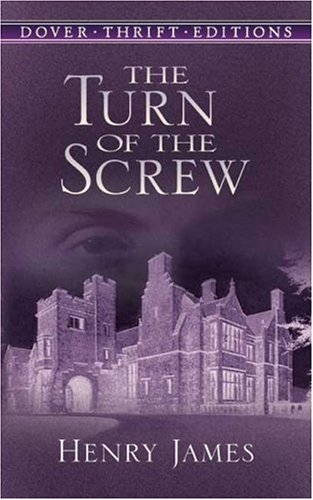
Christine, a blogger at Find New York, writes exclusively for Bianca's Book Blog on her own engagement with Henry James' "The Turn of the Screw", and talks about why, for her, it is one of the greatest ghost stories ever told.

‘The Turn of the Screw’ was regarded as “one of the most appalling ghost stories ever told” in the December 8, 1898 issue of 'The Nation'. Probably there are many people who still agree with this statement, myself included. So why is that? What contributes the most to making this story not only one of the most appalling, but also one of the most complex and outstanding ghost stories of all time?
We have to figure out what differentiates this ghost story from the usual ones. Everything is set for the typical ghost story: the gathering at Christmas Eve, the big country home at Bly with the stairs, the candle lights that are mysteriously blown out, naturally the 2 ghosts and the governess who has to deal with the situation. These are all typical elements; however, the entire story cannot be labeled as a typical one.
When analyzing this work of fiction it is safe to say that this is yet another example of Henry James' prose which focuses more on the psychological insight of the characters than on what actually occurred. Conscious and unconscious, corruption and innocence, reality and fiction, certainty and doubt, ambiguity and suspense: all of these play an important role when it comes to 'The Turn of the Screw'.
Even such basic roles as that of the narrator are distorted in a way. Can we trust the narrators, and consider what they say to be true? How reliable are they … either of them? On one hand, Douglas was infatuated with the governess, and therefore wants the listeners to consider the story credible. He definitely does not want to give any thought to the possibility of considering the governess delusional. On the other hand, how reliable can the governess be, since she has a subjective point of view?
Yet again, we have the reliability of the written word, in the form of the manuscript that she left behind. Douglas insists upon reading it instead of telling the story himself. People tend to believe something that is written rather than something that is told.
As far as the character of the governess goes, contradiction is also a matter to be discussed. During the story, she herself admits that she has a vivid imagination and that she is easily carried away. The author intentionally creates her in a way in which she could be both: a delusional person, blinded by her inexperience and the looks of her employer and a heroine wannabe, who is sincerely concerned about the children and wants to do everything in her power to protect them. It is our job to decide whether she can be trusted or not, whether the ghosts really want to harm and possess the children or not, since both situations could be possible.
The open ending is why we have to deal with an untraditional and indeed appalling, gothic story, and is also what allows us to speculate … what happened to Flora? What about the others? Was the governess insane or was she the only person capable of saving the children? Did the ghosts really appear? The doubt, suspense and uncertainty do not stop, even after you finish reading – and this is why we have to deal with a different kind of ghost story.
The alignment of possible realities is a key element of this work. We only get pieces of the puzzle, but it is up to us to complete/finish it. In this sense, Henry James' work as an author is brilliant, because he does not lay down the exact story, but gives the opportunity of interpreting it on many different levels.
--The blurb--
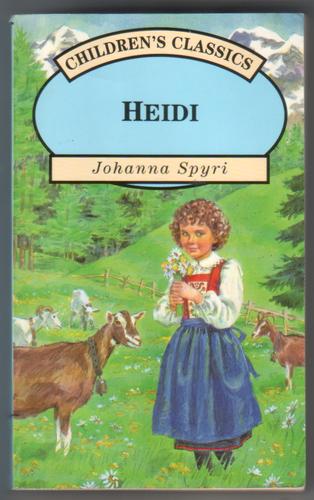
"the orphan child, Heidi, is sent to live with her embittered grandfather
high in the Swiss Alps. Heidi's innocent joy of life and genuine
concern and love for all living things become the old man's salvation.
From the goatherder Peter and his family to the sickly girl Clara and
her desperate father, Heidi's special charm enriches everyone she meets.
Unselfish to the core, Heidi's goodness overcomes all obstacles - even
those seemingly insurmountable."
--The review--
In the midst of work by modern children's authors such as JK Rowling, Suzanne Collins and Rick Riordan, it's easy to forget the classic works that appeal to children generation after generation.
Heidi is one such classic work, and in some ways it's easy to see why children pass it up in favour of Harry Potter, The Hunger Games, and Percy Jackson. It's not the traditional setting that's off-putting, but the strong religious values that Spyri presents in Heidi are not going to hold the same universal appeal as they did at the time of publication in 1880. Some adults reading it to their children may also find it a little twee - but this is arguably going to be of less concern to the target audience, and Enid Blyton regularly draws the same criticism.
However, the enjoyable aspects of Heidi outweigh the more dated elements, and make it clear why it is one of the best-selling books ever written. Beautifully-described landscapes gradually stretch children's vocabulary skills and the power of imagination, while simple yet powerful characters stick in the mind and drive the plot forward in a concise and energetic manner.
People of all ages are able to relate to the emotions expressed in Heidi, whether it's jealousy, anger, happiness or hope. Furthermore, the basic messages of the story can be taken as universal truths, and while some may be irritated by this didacticism, others may find it comforting, and a good basis for children's literature.
It therefore seems reasonable that while the works of JK Rowling et al continue to proliferate, there is no reason why works by classic children's authors such as E Nesbit, Susan Coolidge and Johanna Spyri cannot be enjoyed alongside them. Heidi is ultimately a joyful book containing many useful lessons about friendship, family and hope that deserves to be enjoyed still for many years to come.
A list of Johanna Spyri's other works can be consulted here.
--The blurb--
"The Perks of Being a Wallflower is a story about what it’s like
to travel that strange course through the uncharted territory of high
school. The world of first dates, family dramas, and new friends. Of
sex, drugs, and The Rocky Horror Picture Show. Of those wild and poignant roller-coaster days known as growing up."
--The review--
In order to simultaneously reassure teens that others out there feel as they do, and reassure themselves that they still remember how it feels to be there, several writers have chased adolescent angst through the media of novels and film, from American Pie to Adrian Mole. The worldwide success of Stephen Chbosky's The Perks of Being a Wallflower, which has been published in 31 languages, has added to this arsenal and yet also raised expectations. So, perhaps contrary to its 'wallflower' title, how does it fit in to this canon? And is the hyperbole surrounding it justified?
As a newcomer to the genre, Perks fits in perfectly - even if it lacks the humour of classic teen angst protagonist Adrian Mole. It combines trivial events with more serious incidents, has a somewhat quirky narrator go through the standard teenage experience of obtaining a driver's licence and engage in the clichéd rebellion of beginning to smoke cigarettes, and juxtaposes sex and drugs with the value of true friendships and relationships. It opens up issues that young people may otherwise feel afraid to discuss and is poignant and superficial by equal turns. It makes for compulsive reading as the reader waits to see how protagonist Charlie develops and gains in confidence, and compels one to root for him as he loses his friends, is put upon by siblings, and experiments as he searches for his true self. These are things that teenagers everywhere are doing, meaning that Perks offers a universality that justifies the hype. Despite the book's clearly American setting, Chbosky's depiction of this (even arguably slightly unhinged) teenage narrator evidently appeals to young people worldwide, which transcends the specifics of the United States laws and school system.
These qualities even transcend the book's major negatives. Due to all of the above, the Aunt Helen plotline is greatly superfluous. Teenagers don't need an excuse for their screwed-upness: it's just par for the course when it comes to adolescence. By adding a subconscious motive for Charlie's behaviour, Chbosky elevates Charlie's teenage quest for identity and acceptance to something more serious (and even clinical) than it needs to be. Furthermore, the 'wallflower' of the title seems contradictory to Charlie's personality and behaviour. While he is more introverted than extroverted and experiences dips of unpopularity, on the whole he is presented as living a rather wilder and more rebellious lifestyle involving underage smoking, drinking, and drug consumption, attending and enjoying all-night parties, participation in random Rocky Horror performances, and hanging out with students two or three years older than himself (incidentally, this represents one of Chbosky's weaknesses: the tendency to portray the teens in the story as older than they really are in terms of aspects of their behaviour). None of this screams 'wallflower' to people who expect wallflowers to not only be so unpopular as to rarely/never be invited to parties, but also people who dislike them on the rare occasions that they do have a chance to go.
Nonetheless, it is not unreasonable to assume that because of Charlie's clear blossoming before our eyes, and the elements with which many teens will be able to identify (even if they are genuine wallflowers), Perks will remain part of the 'adolescent angst' canon, alongside such classics as Catcher in the Rye, The Fault in our Stars, and yes - even Adrian Mole.
Pushing yourself in an arena that you love means that coming up with different, new challenges is par for the course. Over the years there have been plenty of them for me in terms of literature. At eleven, it was perhaps making the big leap from the Babysitters' Club series to Gone With The Wind. At fourteen, it was all about getting *that* level 8 in my English Sats despite my teacher thinking I was unable to do so, and about writing my first full-length novel. At eighteen, I was analysing work at university level for my Advanced Extension Award and praying for a Distinction. At university itself, it was about accepting the fact that I was just more of an intrinsic reader than others, and that this wouldn't necessarily fly very well in seminars (and that neither would dissing William Blake).
After this, it was more about creativity and more trivial challenges again, with me taking part in NaNoWriMo in 2010, running a junior book club, and (in multiple years) taking part in the 50 book challenge. But as my job as a teacher got busier and I focused on other new professional and personal challenges (such as maintaining two other blogs and working towards my translation certificate), these types of literary challenges gradually fell by the wayside.
Recently, however, I've had an epiphany. While I enjoy light reading, and believe it's important to relieve the mundanity of our days with some comic relief, I've also come to realise that this often delivers little beyond immediate satisfaction. After reading, I'm in a position to enthusiastically recommend the book to others if I enjoyed it myself. But will I be able to tell them why it was good? In most cases, no - not without thinking hard, at least. And will I be rereading those same books? Again, probably not in most cases. This is where classical literature often, in my experience, has the upper hand: it may be harder and take longer to read, but it ultimately has a much greater, more far-reaching impact on the way we see ourselves and live our lives. There are reasons why these books are still talked about hundreds of years after they were written. And yet there are still so many classical works on my bookshelf that remain unread in their entirety (ashamedly, even my university studies at times required me to only read extracts from certain texts).
So this, in essence, is my challenge for 2014: read 50 classical works, and see how I feel at the end of it.
To concretise this challenge, here is the list of the books I will be reading. It's left certain things out based on what I've read before, and included certain things based on what one could consider to be important. While it seems ambitious, I'm trying to tell myself that I have no excuse. I have a long commute (around 3 hours a day) and this seems like the perfect excuse to spend less time online (although I will of course be reporting back here with reviews). If I do not possess them, I can also borrow many of these books from my workplace, or read them for free online, so it doesn't have to be an expensive endeavour either. Who knows - maybe some of you will even read along:
- The Mill on the Floss (George Eliot)
- Mrs Dalloway (Virginia Woolf)
- The Rainbow (DH Lawrence)
- Tender is the Night (F Scott Fitzgerald)
- David Copperfield (Charles Dickens)
- The Sorrow of War (Bao Ninh)
- Death of a Salesman (Arthur Miller)
- Heart of Darkness; Lord Jim (Joseph Conrad)
- Les Misérables (Victor Hugo)
- Paradise Lost (John Milton)
- Northanger Abbey (Jane Austen)
- Waiting For Godot (Samuel Beckett)
- Rebecca (Daphne du Maurier)
- Vanity Fair (William Makepeace Thackeray)
- The Canterbury Tales (Chaucer)
- Ulysses (James Joyce)
- The Portrait of a Lady (Henry James)
- The Sun Also Rises (Ernest Hemingway)
- One Hundred Years of Solitude (Gabriel Garcia Marquez)
- All Quiet on the Western Front (Erich Maria Remarque)
- Slaughterhouse Five (Kurt Vonnegut)
- The Golden Notebook (Doris Lessing)
- The Time Machine (HG Wells)
- The Prince (Machiavelli)
- The Histories (Herodotus)
- Othello (Shakespeare)
- The Count of Monte Cristo (Alexandre Dumas)
- Uncle Tom's Cabin (Harriet Beecher Stowe)
- The Red and the Black (Stendhal)
- Germinal (Emile Zola)
- Chéri (Colette)
- The Trial (Kafka)
- The Man in the Iron Mask (Alexandre Dumas)
- Crime and Punishment (Dostoyevsky)
- Memoirs of Hadrian (Marguerite Yourcenar)
- The Scarlet Letter (Nathaniel Hawthorne)
- Around The World in Eighty Days (Jules Verne)
- Moby Dick (Herman Melville)
- Robinson Crusoe (Daniel Defoe)
- The Tenant of Wildfell Hall (Anne Bronte)
- The Pearl, The Grapes of Wrath (John Steinbeck)
- Eugene Onegin (Pushkin)
- The Three Sisters, The Seagull, The Cherry Orchard (Anton Chekhov)
- The First Circle (Solzhenitsyn)
- The Mother (Maxim Gorky)
- The Birthday Party, The Caretaker (Harold Pinter)
- Things Fall Apart (Chinua Achebe)
- Don Quixote (Cervantes)
- The Sound and the Fury (William Faulkner)
- Faust (Goethe)
Your views, as ever, are appreciated. What would you add or take away? Is the list too Eurocentric? Either way, I hope that by the end of 2014 I'll be a little less stupid and still have my game face on.
--The blurb--
"It is the summer of 1943 and war continues to rage. For Rose and her
sister Diana, it’s a time of independence and self-discovery as they
find first loves. But when Rose unearths a love story from another war,
she realises that wartime intensifies emotions, and maybe she isn’t in
love with Derry as she first thought she was. Rose is about to discover a
secret that will change everything..."
--The review--
With the centenary of World War One's beginning now less than twelve months away at the time of writing, it can at times be difficult to believe that something that still seems so close, in that it affected the lives of many of our grandparents, is yet so far back in the past. Michelle Magorian's 1991 novel A Little Love Song helps to revive certain aspects of how life was for young people at this time - pivotal not only for being in the synapse between childhood and adulthood, but also pivotal due to taking an important place in a changing world.
This wartime setting is typical of Magorian's novels, and here it plays a background rather than mainstream role, while still not being without significance: as a result of the difficulties of the mid-war period, young people are reflected in the novel as more independent, down-to-earth and capable. Even when confronted with challenges, Magorian's characters are still prepared to rise to these and to do their best, even when they are finding these moments tough. Even if this is not an accurate reflection of how adolescents actually were during the early 1940s, this depiction serves not only to give the book's teenage audience an example of good character, but also to inspire readers to admire the characters' resilience.
Equally, though, there is much in A Little Love Song to resonate with today's readers - not just in terms of burgeoning independence and sexual awakening, but also in terms of feelings of hopelessness and inadequacy, which are perennially adolescent problems. Magorian is a master at building up sympathy and revulsion in equal measure: in our heads, we rebuke characters for being silly, recoil at arrogant and misogynist behaviour, relate to their feelings, and rejoice in their triumphs. The pace at which this is done is carefully constructed and concise, and we will the characters to cope and to move towards the outcomes that we hope for.
All of this shows just why Michelle Magorian has been one of the most successful children's writers of the past forty years, thanks to her reach not only across present generations but also her ability to extend a hand into the hearts of the past.
other works by Michelle Magorian
Goodnight Mister Tom (1981)
Back Home (1984)
Waiting for My Shorts to Dry (1989)
Who's Going to Take Care of Me? (1990)
Orange Paw Marks (1991)
In Deep Water (1992)
Jump (1992)
A Cuckoo in the Nest (1994)
A Spoonful of Jam (1998)
Be Yourself (2003)
Just Henry (2008)
--The blurb--
"Adrian Mole's first love, Pandora, has left him; a neighbour, Mr. Lucas,
appears to be seducing his mother (and what does that mean for his
father?); the BBC refuses to publish his poetry; and his dog swallowed
the tree off the Christmas cake. "Why" indeed."
--The review--
Epistolary novels - such as, most popularly, Flowers for Algernon, the Bridget Jones series, and The Color Purple - have been enjoyed by the public for centuries, with Bram Stoker's Dracula arguably being one of the first. However, perhaps nobody could have estimated the explosive impact that Sue Townsend's Adrian Mole series would have when it first appeared on the market in the early 1980s. It was perhaps the first series to truly encapsulate teenage awkwardness and pretension, and it all kicked off with The Secret Diary of Adrian Mole, set during Margaret Thatcher's time as prime minister, when protagonist Adrian is approaching his fourteenth birthday.
Townsend convincingly portrays the naïveté and arrogance commonly associated with one's teenage years, using Adrian and his friends as conduits, while simultaneously showing adults as imperfect, with humour and panache. Despite this, though, there is also affection: we don't look down upon Adrian (too much - the rule of superiority still applies in Townsend's comedy), but rather sympathise with him in recognising elements of ourselves in his emergence from childhood's chrysalis.
The fictional diary format and inclusion of dialogue helps to keep up The Secret Diary's pace, and we are keen to know what will become of the book's burgeoning romances and characters' ambitions (both trivial and serious) against the background of the 1980s' familiar political landscape. Regardless of the reader's own feelings towards the Thatcher administration, it is possible to gain an insight into family life at that time, which is particularly valuable for those with no first-hand experience of Thatcher's Britain. Equally, though, this does not dominate to the point of exclusion: the stories of Adrian and his family and friends always come first.
By the end of The Secret Diary, readers want to continue following Adrian's life with earnest - and with over 20 million copies sold of this volume alone, it's clear that Townsend's germination of a successful epistolary series has worked better year on year than perhaps anyone could have imagined.
other novels by Sue Townsend
The Growing Pains of Adrian Mole (1984)
Rebuilding Coventry (1988)
The True Confessions of Adrian Albert Mole (1989)
The Queen and I (1992)
Adrian Mole: The Wilderness Years (1993)
Ghost Children (1997)
Adrian Mole: The Cappuccino Years (1999)
Number Ten (2002)
Adrian Mole and the Weapons of Mass Destruction (2004)
Queen Camilla (2006)
The Lost Diaries of Adrian Mole, 1999-2001 (2008)
Adrian Mole: The Prostrate Years (2009)
The Woman Who Went To Bed For A Year (2012)
Public Confessions of a Middle-Aged Woman (2012)
--The blurb--
"'If I turn out to be mentally deranged in adult life, it will be all my mother's fault.'
Adrian
Mole continues to struggle valiantly against the slings and arrows of
growing up and his own family's attempts to scar him for life in this
second volume of his secret diary."
--The review--
A question that dogs university students of literature everywhere is this: should we read literature intrinsically, or extrinsically? Is the time period in which a text was written important? Or do plot, characters and so on matter more? Is all literature reflective of the time period in which it was created, regardless of whether or not it deliberately set out to do this? Children of the 1980s may not have grown up with Sue Townsend's classic Adrian Mole series, but now that they are older, it is a shining example not only of comedic British literature, but also a good representation of life for many people throughout their early childhoods. And as protagonist Adrian ages, Townsend - who is renowned for her skilled social commentary - continues to do a sterling job of documenting the United Kingdom in which we have lived, and continue to live today.
Now, nearly thirty years on from the 1984 publication of the series' second volume, entitled The Growing Pains Of Adrian Mole, even those who are not fans of extrinsic reading must surely concur that it not only successfully encapsulates aspects of British life in the 1980s, as lived by their parents or even older siblings, but equally that it sums up the navel-gazing attitude that's particular to adolescence. Adrian Mole, though, is not a mere navel-gazer: his pseudo-intellectualism means that comedy is found at every turn from the fact that he is not as clever as he thinks he is. This approach to her protagonist makes Townsend's work highly reminiscent of that of the Grossmiths, with the latters' most famous main character (Mr Pooter in another British comedy classic, The Diary Of A Nobody) drawing many parallels with Master Mole.
However, the fifteen-year-old Mole's character assassination is done mainly in kind: we laugh with him, not at him, when we recognise signs of our adolescent selves, and Townsend regularly impels us to empathise with him as his family undergoes fundamental structural changes. As set up in the first volume of the series, Adrian remains an ultimately caring young man who strives for moral decency, and it is this carefully-controlled balance of tender moments and witty one-liners that creates an immensely readable sequel to the original Adrian Mole volume. While not all loose ends are tied up, this is easily forgivable, as many of life's problems are not easily resolved, and this is, after all, a record of Adrian Mole's life (and, indeed, a valuable social record and reflection of our own). It in the end makes for compulsive reading, and readers today need not even wait for the next volume to be delivered, as they can of course finish this volume and, in the next breath, download the next to their e-reader. One wonders what Adrian would say to that.
other novels by Sue Townsend
The Secret Diary of Adrian Mole, Aged 13 3/4 (1982)
Rebuilding Coventry (1988)
The True Confessions of Adrian Albert Mole (1989)
The Queen and I (1992)
Adrian Mole: The Wilderness Years (1993)
Ghost Children (1997)
Adrian Mole: The Cappuccino Years (1999)
Number Ten (2002)
Adrian Mole and the Weapons of Mass Destruction (2004)
Queen Camilla (2006)
The Lost Diaries of Adrian Mole, 1999-2001 (2008)
Adrian Mole: The Prostrate Years (2009)
The Woman Who Went To Bed For A Year (2012)
Public Confessions of a Middle-Aged Woman (2012)
--The blurb--
"Prize-winning novelist Mark Haddon, author of THE CURIOUS INCIDENT OF
THE DOG IN THE NIGHT-TIME and most recently THE RED HOUSE, explores his
childhood fear of swimming and his adult fear of flying in a[n..] essay that unfolds into [...] reflections about the craft of
writing and about life itself."
--The review--
A quick search on Amazon reveals a staggering choice of nearly 592,000 results in the field of biography - so you'd think that the market was saturated. However, in the midst of all the celebrity fluff and traditional chronological structures has come a breath of fresh air in the form of Mark Haddon's effort, entitled Swimming And Flying. While some cunning individuals have uploaded it to the web as a PDF, it is unfortunately only officially available as a Kindle Single, which is a shame, as this could potentially block out a significant number of Haddon's fans: those who don't own a Kindle, mainly, but also those who just prefer 'real' books.
This is also a great shame due to the fact that Swimming And Flying, as mentioned, truly refreshes the biography genre thanks to its clear yet 'patchwork' style: Haddon's structuring of the text into short passages, rather than chapters, allows for true pauses for thought, and the text's genesis as a series of speeches (or 'stand-up serious', as Haddon himself dubs it) lends this biography an especially intimate, down-to-earth aspect.
There is, equally, plenty of mileage not just in this autobiography's style but also in its premise of 'swimming and flying': while Haddon does address his fears of these two pursuits (as a child and as an adult respectively), the metaphorical translations of 'swimming' and 'flying' through life itself is also heavily implied thanks to Haddon's ability to overcome these fears and to deal with other good and bad times in his life so far. This wide basis of the memoir ensures that all readers will find something within it that they can identify with, and, moreover, repeatedly: the accessible method of using short passages means that rereads are merited, as readers can dip in and out, making further connections between different sections and between the author's life and theirs.
By laying his fears bare, Haddon shows that he is as flawed as anyone else. However, by also showing details of how he has overcome them, he is inspirational without being smug. Tales of determination are always of value - and it is simply to be hoped that this mini-memoir will eventually be published beyond the Kindle Single format, so that many more readers can benefit.
other works by Mark Haddon
The Curious Incident of the Dog in the Night-time (2003)
A Spot of Bother (2006)
The Red House (2012)
--The blurb--
"This [...] novel describes the post-war summer of 1946 - and
follows the growing-up of three young women in the months between
leaving school and taking up their scholarships at university. Una Vane,
whose widowed mother runs a hairdressing salon in her front room
('Maison Vane Glory - Where Permanent Waves are Permanent'), goes
bicycling with Ray, the boy who delivers the fish and milk. Hetty
Fallowes struggles to become independent of her possessive, loving,
tactless mother. And Lieselotte Klein, who had arrived in 1939 on a
train from Hamburg, uncovers tragedy in the past and magic in the
present."
--The review--
With today's teens glued to their smartphones and with more material privilege (in many cases) than their parents had, it can be difficult to remind oneself at times that in fact not everything has changed so drastically for present-day youths. With students in their final year of school now in the thick of university applications and interviews, and wondering what to do with the rest of their lives, their emotional locus is, in many ways, in much the same place as the female protagonists of Jane Gardam's 2000 novel, The Flight of the Maidens, which sees seventeen-year-olds Una, Hetty and Lieselotte making pivotal choices as they stand on the cusp of adulthood.
Through these characters, Gardam puts paid to the idea that is perhaps held by many young people today: that all teens in the immediately post-war years were obedient, non-rebellious and totally responsible. While the girls are stoic in the face of adversity, they are also feisty, engage in passionate relationships, and disagree vehemently with their parents. This is all set against the backdrop of the Second World War's consequences on everyday people, but it is the protagonists, not the historical context, that take centre stage, making the teens' exploits relevant to today's readers.
Enhancing all of this are Gardam's witty turns of phrase and the very human characteristics of the personages inhabiting The Flight of the Maidens. In all of these characters we recognise less-than-pretty aspects of ourselves or of our acquaintances, and we are encouraged by turns both to celebrate and to change these attributes. By placing our faults as human beings under the microscope, Gardam arguably creates the novel's most important message: of being kind to others, as we have no idea what they are going through, or of what will happen to all of us next. This applies perhaps most significantly and equally to Lieselotte and to Hetty's mother.
This could suggest that Gardam's main reason for writing is didacticism, but the novel's sheer readability and lack of a nagging tone implies that the primary purpose is escapism and nostalgia. In indulging in Una, Hetty and Lieselotte's various exploits, we are reminded of ourselves and of how crucial a time being seventeen is. Light yet soul-searching, The Flight of the Maidens is therefore essential bedtime reading not just for today's seventeen-year-old girls but also those who are still seventeen at heart.
other novels by Jane Gardam*
Bilgewater (1977)
God on the Rocks (1978)
Crusoe's Daughter (1985)
The Queen of the Tambourine (1991)
Black Woolly Pony (1993)
Faith Fox (1996)
Old Filth (2004)
The Man in the Wooden Hat (2009)
Last Friends (2013)
*Jane Gardam has also written a number of short story collections, as well as books for children.
It's been said by several, in one way or another, including by Paul Theroux, that "a day without writing is a wasted day". That could be true in more ways than one: as well as practically being a no-brainer for anyone who wishes to write professionally (even if this is easy to say and less easy to do), it's vital to do so for those who struggle with their feelings and their state of mind, as it could mean the difference between getting through the next day and not.

The form this could take, however, is becoming increasingly varied. While paper diaries themselves are still a popular format when it comes to expressive writing, the rise and rise of blogs, Facebook and Twitter naturally means that venting one's spleen online is also growing in popularity. The crucial difference between these formats is the public nature of the internet, and personal experience shows that this can do harm: keeping an online diary at the age of seventeen, in which I outlined in some detail my crush on my English teacher, meant that I was rumbled when classmates not only found it but then told the member of staff in question. One excuse for this could be that blogging was newer then, and that we as a generation were a little less schooled in keeping our details private when using the web.
 |
| Hannah Smith |
So, one could ask, why am I writing all of this down here, now, again in public? Partly because I believe that the subject of protecting oneself online needs to be discussed openly, particularly in schools where no social education classes are given, and particularly in the light of prolific cyberbullying cases such as that of Hannah Smith. Hannah was not writing a diary online - but anyone who chooses to have a presence online (which, in the Western world, is most people) exposes themselves to criticism by others, even without revealing their deepest feelings.
You'd think that this would be a vote for the traditional paper diary. But even those can be found and read by others - so it's worth remembering that you take a risk the second you commit your feelings to paper. But does that mean diary-writing (or 'journaling', as the Americans irritatingly call it) should be abandoned altogether?

Not at all. One study, conducted in 1986 by Professor Pennebaker, found that encouraging people to write expressively to vent their feelings was better for their mental health than bottling up traumatic experiences. This effect proves timeless, as found in subsequent research. However, research carried out this year in Israel by Professor Barak has uncovered an interesting twist: those who blog about their feelings in a way that is set up to invite comments benefited most from expressive writing compared to those who blogged privately, and those whose blogs were open to readers but closed to comments. This takes diary-writing in the direction of 'group therapy', even if this is carried out remotely when compared to traditional counselling: people are invited to comment and advise, which may lead to them sharing their own experiences, arguably allowing one's most intimate feelings to be directed in a more constructive manner than a private diary.

However, it would be naive to assume that the risks of the internet automatically disappear in this situation, with Professor Barak still advising caution. Anonymity is still possible online, but is growing increasingly difficult to maintain thanks to many websites using Facebook, Google, or OpenID as online 'passports'. Possible anonymity for the writer also means possible anonymity for bullies, and when bullies fear no repercussions, the results can be disastrous, as in the case of Hannah Smith. But these cases are unusual, and that is why they make the news: Professor Barak maintains that of the hundreds of online comments made during their study, only a few were deleted for being abusive - and that the very act of writing one's feelings down remained significantly therapeutic.
So whatever form your diary-writing takes, how can you be sure it will help and that you will get the most out of it? The positive use of writing as therapy will require individuals to vary their techniques in order to find a method that works for them. As a long-term diary-writer myself (1997 to 2005 was probably my most intensive period of it), I can only offer what's worked for me and hope that some of it may work for others:

- Public or private? Weigh up the benefits and consequences of both options. Publicly-accessible online diaries could attract positive and constructive comments, or negative and abusive ones. Private online diaries can be password-protected, meaning that people who you don't want to see your feelings can stumble on them less easily, while still providing you with therapeutic benefits. Finally, keeping private paper diaries, while less secure, can feel more 'real' thanks to the actual act of writing something down by hand, and later can prove valuable hard evidence of how far you've come if you ever feel a bit shaky again. I've done both and can see the benefits of both - even if I'd now use a different modus operandi to my seventeen-year-old self when proceeding online.
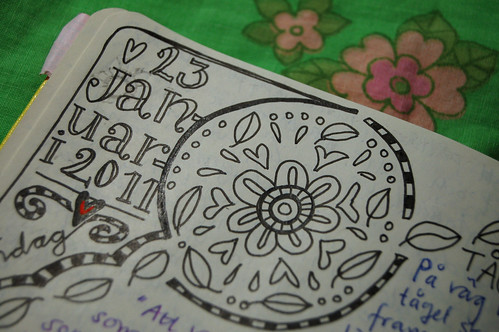
- Don't just stick with the usual 'Dear Diary' format when writing for therapy. Poems, lists, and drawings (even if you can't draw!) are all equally beneficial when trying to find a way through the muddle of your thoughts.
- Don't worry about spelling, punctuation, grammar or repetition. And I say that as an English teacher! Diaries aren't a school assignment - they're therapy. And repetition can actually be vital in helping you to sort through your feelings. It's not written to be an entertaining read, but to help you.
- Write whenever you like. Diaries don't have to be an everyday thing. You may find yourself writing every day (or even multiple times a day) if you are feeling particularly distressed, but there's no rule. Play it by ear and relax.
- Be patient. As with any therapy, you won't see results overnight. I won't go as far as to say that "time heals all wounds", as we all have aspects of our lives that have made us who we are today and that we won't forget. However, to say that "time is a healer" is closer to the mark, and to come back to one of the major pluses of paper diaries, it is greatly valuable to be able to look back over, say, six months' worth of entries, and to be able to see development and progress in your thought processes.