Showing posts with label translation. Show all posts

Thursday, 27 June 2013

Bookish Bits and Bobs: Lost in translation (2)

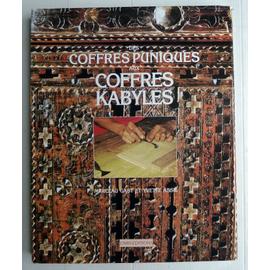
The book I translated for a friend studying at SOAS at the end of 2010
There's a reason why this blog's been on hiatus for a few weeks. Apart from the expected travails at this time of year - chiefly exam grading, both for my school and for one of the UK's national exam boards - I've also been grappling with something less expected and equally interesting. It doesn't happen often, but occasionally I do get some translation work in. This has taken me on a fascinating odyssey through all types of texts, from horoscopes and mobile phone contracts to academic texts on Kabylian woodwork. This time it was a legal transcription of proceedings, and while I have no training whatsoever in the law, it did make me see why people find this field exciting: the thrill of seeing all of these big companies at loggerheads with one another, combined with the intellectual challenge of wrangling with their weasel words and coded messages, means you're certainly unlikely to have a boring day in the office. But what is it that grips me about translation in general?

On a practical level, it enables me to put the theories learned in the translation module I took at university to good use. It also gives me the opportunity to further ameliorate my French. Having studied the language formally from the age of 11, and informally before that, I still constantly strive to improve. Living just outside of Paris since 2008, having a French husband (previously boyfriend) since 2005 (as well as the built-in French inlaws that came with him), and working in a bilingual environment all help - but I do not yet consider myself to be fluent. So anything that helps to increase fluency can only be a good thing. However, this has to go hand-in-hand with intellectual or emotional reward, otherwise I wouldn't continue to do it. Otherwise, it's the same as trying to get a reluctant child to do their piano practice: there's a clearly tangible goal involved, but if their heart's not in it, it's potentially of little use. So why else?

Being an English teacher, my first love naturally lies with the English language. And as I only translate with French as the source and English as the target language, translation also selfishly allows me to indulge my love of English. There's something challenging and beautiful about trying to equate exact meanings, craft an eloquent turn of phrase, and recreate the original text's tone and effects. While this is clearly a form of intellectual development, it's also, to me, a form of spiritual development, taking me to a higher plane of description and clarity. Striking a balance between these two elements is always tricky, but like any good brainteaser, it leaves you feeling immensely satisfied once you've solved the problem by unlocking meaning.

This all makes translation sound like a very solitary activity. While indeed it can be this, thanks to many translators working alone at home, it's also tremendously collaborative, which is particularly facilitated thanks to advances in technology. As well as being able to speak to colleagues through VOIP providers such as Skype, or hold conference calls through software such as Saba, emails and online discussion fora also enable translators to bounce ideas off each other in writing, in one space. In addition, thanks to my husband being French, it's occasionally useful to be able to pick his brains too! Less facetiously, though, this all means that you don't have to feel lonely while working alone, allowing you to know that wherever you and your colleagues are in the world, and whatever time zone you work to, you can still work successfully as a team on a project. This combination of teamwork and independent discipline has its own value, too, again when it comes to developing as a person.

Translation's intrinsic value also has roots in languages' natural variegation and humans' deeply-seated affinity with rhythm and musicality. Languages all have their own individual sounds and rhythms, and that's before you even get to tonal versus atonal languages. We all respond differently to these and tend to value variation in what we hear. For this reason, it naturally follows that reading (and being able to read) texts in their original languages also delivers satisfaction. However, translators equally recognize that being able to read texts in a translated form is better than not being able to read them at all, and so are able to feel that we deliver a practical service. Beyond this, comparing translations on a critical level also brings its own enjoyment, in much the same way as listening to different versions of the same song can (and, hey, look, I spoke about this recently too).

But with applications to sit foreign language exams continuing to fall in the UK (only 43% of students were entered for a foreign language GCSE in the UK in 2010, compared to 75% in 2002), is there a danger that translation could be a dying profession? Hopefully not: Michael Gove's new curriculum plan is set to make the study of languages compulsory from the age of seven, and on top of this, rising university tuition fees could also be in the translation profession's favour, as students turn towards more practical courses that stand a greater chance of being of real use post-graduation. A quick search on the website of university applications service UCAS turns up 15 providers of translation courses available for entry in 2014, including at such prestigious universities as Cardiff and UEA. Several of these courses involve practical placements in the workplace. Further to this, the world of translation is working hard to promote itself through events such as International Translation Day, which is celebrated at the end of September each year and is supported by several major bodies, including The British Council, The London Book Fair, and The Translators Association. Launched in 2010, it focuses on debates, translator residencies, mentoring schemes, among other projects. In addition, translation prizes such as the Stephen Spender Prize continue to thrive, while taking care to include categories for children in an attempt to hook the next generation.

All of this helps to improve accessibility not only to translation as a profession but also to translated works of literature. Even if you consider that you know little about languages, chances are that you have been touched by translation. Stieg Larsson, Paulo Coelho, Elie Wiesel all, apart from being men, have one thing in common: without translators, you'd have heard of none of them.
Monday, 11 March 2013

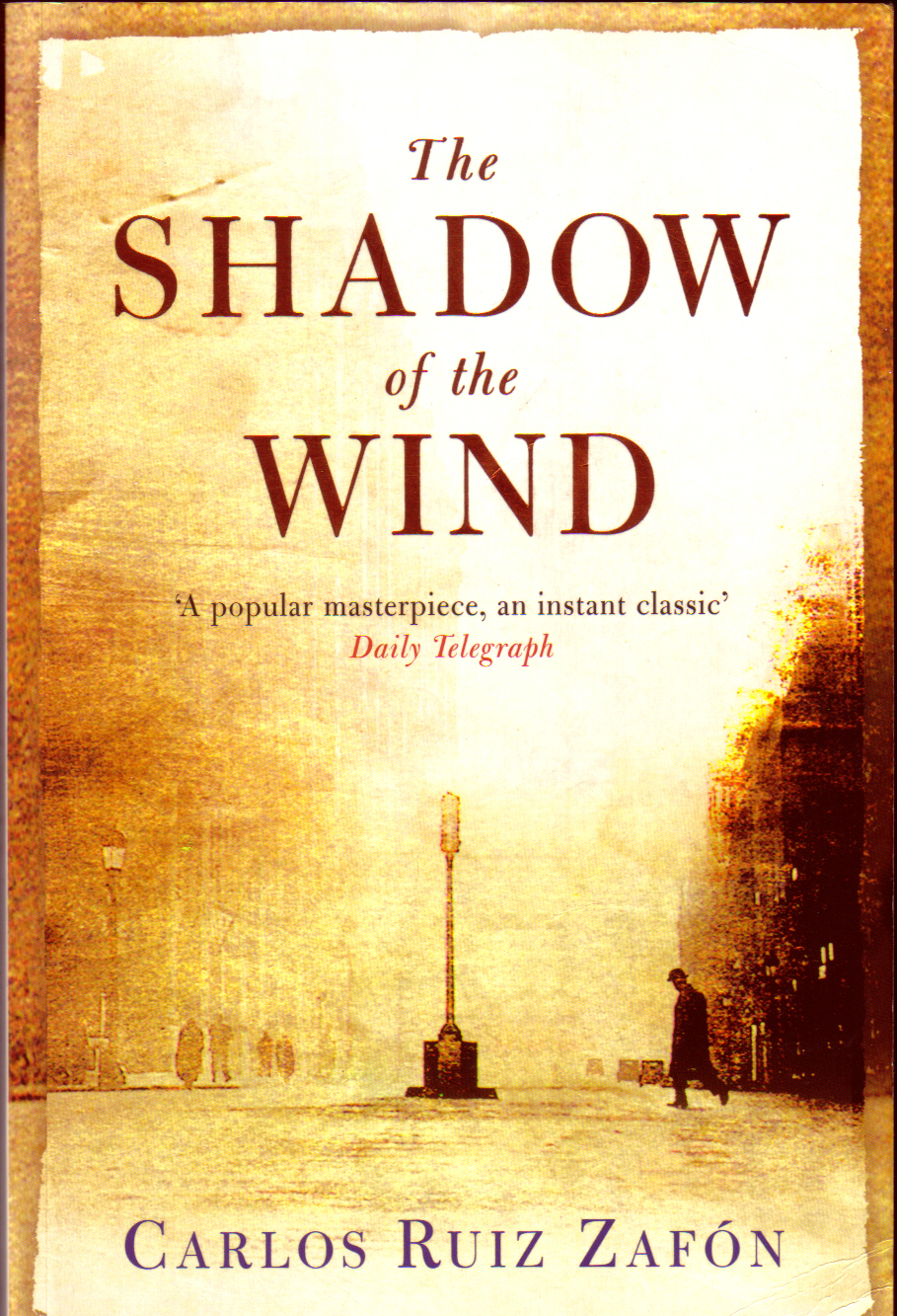
The Shadow of the Wind (Carlos Ruiz Zafon)

--The blurb--
"Hidden in the heart of the old city of Barcelona is the 'cemetery of lost books', a labyrinthine library of obscure and forgotten titles that have long gone out of print. To this library, a man brings his 10-year-old son Daniel one cold morning in 1945. Daniel is allowed to choose one book from the shelves and pulls out 'The Shadow of the Wind' by Julian Carax. But as he grows up, several people seem inordinately interested in his find. Then, one night, as he is wandering the old streets once more, Daniel is approached by a figure who reminds him of a character from the novel, a character who turns out to be the devil. This man is tracking down every last copy of Carax's work in order to burn them. What begins as a case of literary curiosity turns into a race to find out the truth behind the life and death of Julian Carax and to save those he left behind."

--The review--
A myth persists that ranks Paris, France, as the city of light and romance. However, other cities (European ones, in particular) would also be able to stake a legitimate claim on this title, such as Venice, San Francisco, and Barcelona, with the potential of the latter specifically being heightened by Carlos Ruiz Zafon's The Shadow of the Wind, published in 2001 and being celebrated to great fanfare ever since. Can such a spotlighted book really live up to the hype and dethrone Paris as the city of love?

Those who have visited Barcelona will be able to visualize its imprinted walls, twisting path designs and hidden passages as they read; those who have not will be surely incited to visit. The sweeping setting, combined with the novel's secret trysts, haunted houses and curses that stretch across the years, make for a heart-racing read as readers follow the teenaged narrator, Daniel, through the streets of this Catalan city. Any book lover will surely, after reading, wish to roam Barcelona's alleyways searching for the entrance to the cemetery of lost books, wondering if there is a real-life guardian at the door as in The Shadow of the Wind. While it is not a fully realistic novel, with there being too many coincidences and fanciful occurrences for that, Ruiz Zafon's grasp of poetic description and fast-paced action makes this seem less significant. The length of the book may appear off-putting, but needn't be: the author's ability to build suspense and keep us turning the pages means that the sheer volume of it seems to disappear beneath our fingertips.

Another appeal of the novel is its imperfect protagonist, Daniel, and the company he keeps: all are very human and thus are moody and do make mistakes (at best), or harbour murderous instincts (at worst). In spite of this, they fit well into the adventurous setting, allowing readers to lose themselves completely in the story's waves of description, exciting plot, and dramatic turn of phrase. Occasionally concision is lost, meaning that there is a risk of forgetting why certain events occurred, but this does not detract from overall enjoyment of the story, meaning that there is without doubt scope for future rereads, whether alone or in conjunction with the rest of the series (Zafon has so far released two subsequent books, intending the series to eventually have four parts).

The novel's ending is nicely cyclical, with the end scene being a mirror of the first, right down to the dialogue. This, too, demonstrates superb planning and execution, and contributes to the reader's desire to turn right back to the beginning and start reading again, preferably while on a trip to Barcelona. Now, find me a book about Paris that does that...

other works by Carlos Ruiz Zafon
The Prince of Mist (1993)
The Midnight Palace (1994)
The Watcher in the Shadows (1995)
Marina (1999)
The Angel's Game (2008)* 
The Prisoner of Heaven (2011)*

*part of The Shadow of the Wind series

Wednesday, 16 November 2011

Time Regained (Marcel Proust)

--The blurb--
""Time Regained" begins in the bleak and uncertain years of World War I. Years later, after the war's end, Proust's narrator returns to Paris and reflects on time, reality, jealousy, artistic creation, and the raw material of literature - his past life."

--The review--
I have often criticised throughout my reading of Proust's epic his frequently over-complicated and vague style which seems designed to tie our brains in knots. The final volume of the heptalogy, Time Regained, starts off much more clearly and lucidly, which makes us feel that the narrator has the benefit of hindsight at last - which, with it being set more towards the end of his life, seems fitting. At least initially, it is less furious and intense, and more thoughtful.

However, we are soon treated to a glut of the meaningless gossip that pervaded earlier volumes. While this gives us a clue as to the nature of the narrator's life and social circle, it is maddening at the same time - if you have no time for celebrity-type gossip in real life, you are unlikely to have much patience for it in literature. Some of it is perhaps intended to show characters up as being hypocritical, but the targets of their hypocrisy probably took place so long ago that the effect is lost. Proust's political commentary on the war is equally uninteresting and is clearly aimed at those who already have knowledge of or opinions on the subject at hand. 

There are even examples of bad style, such as the line "To return to Mr Charlus..." (it is surely an elementary rule of narrative writing that such transitioning phrases are not required), and the fact that the first-person narrator has access to conversations and information in this volume that simply would not be possible. Punctuation needs to be more varied (a person can only take so many commas, although thankfully a semi-colon does appear...on page 320), and the volume is also loosely or badly organised, to the degree that we risk missing key events. But then again, are all of our own thoughts beautifully organised? Probably not.

To go on: we do not end up caring much for the death of one of the recurring characters due to the estrangement between himself and the narrator. The narrator's self-deprecation and false modesty is extremely annoying (especially when in the same breath he then goes on to talk as if he were an expert), and yet we must admit that it is natural for even the hugely talented to have doubts from time to time.

Plenty of the novel, however, still rings true today. Narcissistic though they may be, it is the narrator's thoughts and relationships that are of interest, not the author's attempts at political comment (it should be noted that supreme effort is apparently required to divorce narrator and author in this work of autobiographical-fiction-meets-history-and-philosophy). There is great irony in the author's recognition that all we do, or are, is so insignificant against the world's might.

The passages of memory after the narrator's return from convalescence are truly beautiful and testify to the author's powers of description. Despite certain episodes seeming contrived, the author's ability to still be relevant and appreciated today is staggering: his comments on pop art (how far is it truly enjoyed by 'laymen' and how far is it still a middle-class hobby?) are as accurate now as when they were written. He is correct that things from our childhood reawaken in us a sense of hope and wonder, and he posits ideas that still give us plenty to consider (for instance: is something still real if only we experience it, or does it have to be shared or common in order to qualify? Does truth go beyond fact?).

While a new edition is perhaps needed in order to increase mass appeal (Lydia Davis' looks promising), this does not mean that Time Regained (or even the heptalogy as a whole) is not worth pursuing in its current form. Proust has the ability to make us laugh (with his caustic descriptions of characters) and to make us cry (with his moving descriptions of landscapes and feelings). By the end of the seven volumes, most people have probably spent a year or more with Proust, and by then he's like an annoying family member: he's eccentric, digressive, annoying, boring at some moments, confusing at others; but he's also incisive, witty, intelligent, thought-provoking, sensitive and deeply poetic. In short, in spite of his shortcomings, we love him anyway.

Other works by Marcel Proust
Swann's Way (volume 1)
Within a Budding Grove (volume 2)
The Guermantes Way (volume 3)
Sodom and Gomorrah (volume 4)
The Captive/The Fugitive (volume 5/6)

Sunday, 10 April 2011

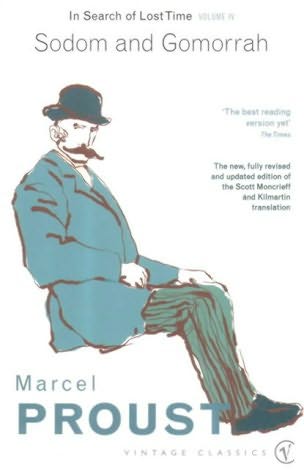
Sodom and Gomorrah (Marcel Proust)

--The blurb--
"In this fourth volume, Proust's novel takes up for the first time the theme of homosexual love and examines how destructive sexual jealousy can be for those who suffer it."

--The review--
In presenting us with yet more hundreds of pages of high society goings-on (or, perhaps more to the point, non-goings-on), Proust seems out to bore us. However, the situation becomes more interesting and poignant when St Loup and Swann reappear, and we agree more with Saint-Loup too, who seems to be suggesting that he is becoming bored with high society life, and by this stage in the epic French novel we readily acquiesce. These two characters are refreshing among the parade of faceless individuals and only slight movements of an amoebic conglomerate. 

As with other volumes of In Search Of Lost Time, though, this fourth instalments is, by turns, eerily prophetic, sublime, and thoughtful. The narrator continues also to give us academic and philosophical food for thought: we are forced to consider our own narcissism, for one thing. Do we not all, in some way, consider our own lives as a cast of a few special ones moving against a background of superficial and two-dimensional others? If this is the case then Proust has replicated our own situations very accurately, even if this in a setting that contemporary readers do not recognise. On a more academic level, the discussion of the etymology of place names is relevant to the theme of name versus place raised in earlier volumes, but was interesting to me as a topic that I had considered as a subject of my master's degree thesis, so this interest may therefore not be so piqued for others. The same applies to the discussion of sex versus gender which takes place later in this volume. More universally intriguing is perhaps the nature of dream and sleep; Proust asserts his curiosity that we do not count the pleasures experienced in sleep as part of our everyday life's catalogue of happy moments.

The author is consistent in his inconsistency in the provision of gleams of light. The prose is still often impenetrable and opaque, and it is difficult to tell how much of this can be traced back to the author himself and how much of it can be laid at the translator's door. While certain gems keep the reader going, and such passages are clearly successful, these are counteracted by the lack of success found in the author's use of malapropism. The narrator's persona also continues to be difficult to deal with: while he is becoming more assertive, he is still manipulative, irritating, wimpish, neurotic and possessive, with his separation anxiety serving as an omnipresent undercurrent. This is simultaneously annoying and interesting as it does in some ways provide narrative momentum: we wonder, as a result of his nature, what purpose his relationship with Albertine really serves, and it is a relief to the readers to know that some of the servants featured in the novel also find his neuroses ridiculous, and that not everyone in the novel is taking the narrator as seriously as he is taking himself. The Balbec hotellier is another voice of reason - even though the narrator assumes that he says "I can tell you have nothing better to do" out of jealousy at not having been invited, the reality is that he says what the rest of us are thinking.

The reader longs for the narrator to return to the pleasant, peaceful and beautiful seaside retreat of Balbec in the hope of escaping the high society circles in which he has been moving in Paris. This unbearable circle of people is unfortunately not entirely left behind in the French capital, but this is slightly compensated for by other characters appearing who are more interesting - even if they are equally unconvincing, caricaturish, and an embodiment of petty inside politics. The audacity and tactlessness expressed by some of these members of the gentry would be hilarious with the right delivery, and further comedy can be ferreted out from the Verdurins' fickleness.

It is difficult to link the title to the book's content, as its theme does not supply a consistent thread - apart from a few throwaway tidbits we are not given much. This is something to be grateful for in other ways, though - if the alternative were a full-on diatribe of the ilk found in Part 1, Chapter 1, then most readers would likely pass. Proust as a precursor to the Austenesque humour that is so known and loved in British society today provides light to contrast the narrator's indecisiveness; he really seems to want to romanticise the fact of him being a womaniser, and seems more in love with the idea of being in love than ever. We end the volume feeling that his continuing liaison with Albertine is going to be a very bad car crash to say the least, and wondering how the author will pick up the pieces.

Other works by Marcel Proust
Pleasures and Days (1896)
Swann's Way (volume 1; 1913)
Within A Budding Grove (volume 2; 1919)
The Lemoine Affair (1919)
The Guermantes Way (volume 3; 1920/21)
The Captive/The Fugitive (volumes 5/6; 1923/25)
Time Regained (volume 7; 1927)

Tuesday, 31 August 2010

First Grey, Then White, Then Blue (Margriet de Moor)

--The blurb--
"Magda in life - no less than Magda in death - was an enigma. A free spirit, alluring but private, loving yet remote, she effected the lives of those around her in ways beyond measure. For her husband Robert, who wanted to possess her, body and soul, what Magda gave him was never enough. He murdered her, leaving her lover to discover her body. As friends gather for her funeral, the mystery of Magda's life is slowly, tantalizingly, revealed. Who really knew Magda, and what truths has her death revealed?"

--The review--
Dutch writer Margriet de Moor published her first novel in the 1990s, but despite having published three more books since, all of which have been translated into English, is pretty quiet on the British literary scene. It is eminently puzzling, in some ways, as to why this should be the case. Of course this may be out of choice on the part of the author, but it may also be attributable to the work itself.

The latter reason seems to be countered in the negative: de Moor is able to write gruesomely and poetically in equal measure, which makes for a positively unique effect. Sustaining imagery and trains of thought with success, de Moor combines simplicity in terms of the number of characters with complexity as she jumps across time, making the tale of Magda deliberately non-chronological. In addition to spotlighting arbitrary aspects of the lives and relationships of Magda, Robert, Erik, and Nellie, this murder mystery is unlike others in being solved right at the beginning, with the rest of the book theoretically being devoted to unravelling it.

I say 'theoretically' because by the end of the book we are not much closer to understanding Magda. We have already heard from Robert and Erik about their contact with her and their roles in her life, so by the time Magda starts to speak our interest is piqued - her side of the story is already highly desirable and it is possible that the motivation behind her murder may finally be revealed. But while readers are given a lot more detail about her two-year absence prior to the murder, and while this is all very interesting and beautifully described, it does not give any concrete answers regarding the novel's principal premise.

The most intriguing segment is possibly the final one, when Nellie is preparing to go to Magda's funeral with her son Gaby. Even though it is no more illuminating in explaining the causes and background of the crime, it still gives a feeling of tying up the novel satisfyingly, especially since Gaby is finally given a voice here too. But the feeling of a lack of answers is still frustrating, and although this may be partly solved in a reader's mind by further readings of the book, this yawning chasm between mystery and truth, even if part of the book's beauty, may also explain why Margriet de Moor's works are still relatively unknown in the English-speaking world: the work can be as beautiful and poetic and gruesome as it likes, but if it is still too enigmatic for the general population, it may just not make it to the other side.

Other works by Margriet de Moor
Back Views (1988; short stories)
The Virtuoso (1996)
The Duke of Egypt (2001)
The Drowned (2005)

Sunday, 25 July 2010

Swann's Way (Marcel Proust)

--The blurb--
"In this opening volume of Proust's great novel, the narrator seems at first to be launching a fairly traditional life-story. But after the prelude the narrator travels backwards rather than forwards in time, in order to tell the story of a love affair that had taken place before his own birth. Swann's jealous love for Odette, together with the comic antics of the Verdurins and the adoring members of their 'little clan', provide a prophetic model of the narrator's own love-relationships and peregrinations in salon society."

--The review--
Choosing whether to read this in translation or in the original French will be personal to everyone. When it comes to fluency in a language, it's my belief that there exists a fine line between understanding and appreciation: you can know the meaning of the words (or the parts) without being fully able to appreciate their beauty (or the whole). It was in fact my French fiancé, who has read the entire series of In Search of Lost Time, in French, on the grounds that he (whose English is better than my French) would not feel able to fully enjoy it in English, who recommended that I read the opus in my own mother tongue, English. Taking him at his word (for now at least; I may choose to read parts of it in French later), I therefore embarked on it in English. So far, no regrets.

The translation (by Moncrieff, with Enright as editor) is beautifully rendered and very poetic (although part of this quality may be an accident of the translation itself). Almost Biblical in its timeless principles of life, it contains many comforting and useful words of life in a way that may be more recognised today by readers of Charlotte Brontë. However, less accessible to the modern reader are the relationships contained therein: the relationship between the narrator and his mother is highly Oedipal, and the relationship between Swann and Odette is just one long series of mind games. The meaning of this latter relationship is continually unclear: we are not sure if he wants to sleep with her (despite his statement that he does not find her attractive - although this too changes later on), or if he is just using her to further his own integration into the Verdurins' prestigious social circle. Swann's own insecurity in his relationship, and the fact that he can never seem to decide whether he likes her or not, keeps readers in suspense with great success.

The beauty inherent in this novel does not mean that weaknesses are nonexistent. The style may be offputting to some: think a combination of James Joyce's Ulysses, and Joseph Heller's Catch-22, which has then been aged quite a bit. It rambles considerably and at times often does not seem to be about very much. None of the characters are especially likeable and there also exists a narrative flaw of which Philip Roth and others are often guilty - the narrator has access to information about Swann and Odette that he could not possibly have been privy to, which casts doubt on his reliability. However, this being a seven-volume epic, it is possible that this will be resolved later, and simultaneously, it is precisely this ambiguity of motive and feeling which so perfectly encapsulates the madness of the kind of love or lust being experienced.

Odette and Swann's relationship, while weird, is a constant source of interest: she is playing mind games with him just as much as he is playing them with her, and the evolution of her character proves extraordinary, with her being portrayed as innocent and infatuated initially, before it is then implied that she puts her own self-interest above any positive qualities that Swann may have. Further to this, the language used by Proust is highly sexual and sensual, although we are not told explicitly about the relationship's physical status.

The first volume's poetry, complexity and highly synaesthetic approach all serves to hook the reader totally and utterly, despite the faults in the novel's construction, leaving readers awaiting the next instalment with bated breath.

In Search of Lost Time - list of instalments
volume 1 - Swann's Way
volume 2 - Within A Budding Grove
volume 3 - Guermantes' Way
volume 4 - Sodom and Gomorrah
volume 5/6 - The Captive and the Fugitive
volume 7 - Time Regained

Thursday, 27 May 2010

The Orange Girl (Jostein Gaarder)

--The blurb--
"At fifteen, Georg comes upon a letter written to him by his dying father, to be read when he is old enough. Their two voices make a fascinating dialogue as Georg gets to know the father he can barely remember and is challenged by him to answer some profound questions."

--The review--
Gaarder appears to possess, in all of his books, an effortless capacity to blend the haunting with the thought-provoking, the ordinary with the extraordinary, and the inspiring with the sad. The Orange Girl is no exception to this, introducing children to the rudiments of philosophical thought and deeper contemplation through the medium of a highly readable story.

Regular readers of Gaarder's work will find that a few things grate: those familiar with Sophie's World may find that the "Are you sitting comfortably..." beginning lacks hugely in originality, and, more generally, that the novella's ending is on the side of cliché. On a more personal note, the use of existing brand names in fiction is something that annoys me greatly, and the annoyance was not lessened here. Nevertheless, there are many positives to be found in this story: the characters are few, but simply and vividly drawn, while the story is simultaneously touching and compelling in its mystery and sadness. Anyone who has ever suffered a bereavement will find that this strikes a chord, and as a novella it stands as a useful precursor to Gaarder's longer and more harrowing Through A Glass Darkly, with both exploring many of the same themes, albeit through different prisms.

The story is essentially one long chapter, but it is easy and intriguing to read, flowing well. Gaarder successfully lulls the reader into a genuine sense of security and awakening: the cogs turn in your mind as you read, but slowly and without taxation. The effects linger gently, and despite the story's slight element of predictability, it is a pleasing and worthwhile read for adults as well as children. Carrying a great sense of simultaneous personal and universal history, it is a reminder to us all to never forget our origins, and to remember always that even our own parents were once young too.

Other works by Jostein Gaarder
The Frog Castle (1988)
The Solitaire Mystery (1990)
Sophie's World (1991)
The Christmas Mystery (1992)
Through A Glass Darkly (1993)
Hello? Is There Anybody There? (1996)
Vita Brevis (1996)
Maya (1999)
The Ringmaster's Daughter (2001)
Checkmate (2006)
The Yellow Dwarves (2006)
The Castle In The Pyrenees (2008)

Monday, 30 November 2009

Bookish Bits & Bobs: Lost in Translation

In September 2008, I emigrated to France, with the idea of remaining here permanently. And here I remain, and here I am happy (for now, but with the hope of that never changing). I was in the fortunate position of already having a fair grasp of the language before coming here, and while the best way of improving one's day-to-day use of the language comes through contemporary engagement with it (e.g., through French speakers - check -, through contemporary print media such as free metro magazines - check -, and through other contemporary media sources such as television and radio - erm, half a check, since we don't have and have no intention of acquiring a TV), I do also enjoy the privilege of being able to read books in the language. While this may not improve my contemporary French much (in the way of idioms and whathaveyou), it can only solidify other things, such as grammatical knowledge and vocabulary.

The joy of reading is pleasantly widened when one is given the chance to read in multiple languages, not only by the access to a greater range of stories but also in terms of cultural and linguistic access. And yet this joy is paradoxically tainted: very few novels are translated into English (relative to the number that are actually released in their original language) and while in some cases it is perhaps for the best, the aforementioned joy is at times tainted with the paradox that others will not be able to share it with you, since the lack of translation means there is no way that they will be able to read it in the near future.

This, to me, is still something of a puzzle. Why is so little work translated into the most popular languages (let's say, for the sake of argument, that these are English, Spanish and Chinese)? Why wouldn't publishers and agents want their authors' work to have maximum worldwide exposure? Is it due to a lack of interest from readers (perceived or actual)? Is it to do with the financial risk involved? Is it down to a lack of translators? Or something else?

Certainly the translator's task is no easy one; this is something that David Lodge acknowledges publicly in the foreword to his 2008 novel Deaf Sentence, which frequently draws on puns relating to deafness and death, including in the novel's title. To this end, he offers up his novel as a dedication to the translators by way of advance apology. But it is not only the translation of idioms that challenges translators - the uses of language that inextricably bind culture into them, such as the French 'tu' and 'vous', can often go horribly wrong in translation. In one particular translation of Pippi Longstocking, where the Swedish equivalent of this is handled quite badly, it took me years to understand what the series' original author, Astrid Lindgren, had been driving at in Pippi's rudeness towards her teacher.

This is certainly an issue of unending contention. However, we can only expect it to decline further if more literature lovers do not take languages at school and university (in the wake of the UK Labour goverment's policy by which foreign languages are no longer compulsory after the age of 14, when most only take up a second language at 11 as it is, fewer and fewer choose to study another language further and with any gravity). If the importance of other languages is not emphasised, so that the sharing of ideas the world over can be facilitated, even more books can be expected to be lost in the gulf of translation.

Thursday, 30 April 2009

The Music of Silence (Andrea Bocelli)

--The blurb--
"Andrea Bocelli is currently the world's most successful male singer. He has sold an astonishing 60 million albums worldwide and has sung for the Pope and Bill Clinton. His concerts sell out in every continent, and his album Sacred Arias has become the biggest-selling album of all time by a classical vocalist. His single 'Canto Della Terra', was the BBC's official song of Euro 2000. Yet behind this man's extraordinary success lies a story of personal triumph more dramatic than any opera. Andrea Bocelli was blinded at the age of twelve, whilst playing football. Not only did he overcome his sight loss to qualify as a lawyer, but continued to pursue his childhood dream to sing, using Braille musical scores and lyric sheets. He was discovered singing in piano bars by the Italian star Zucchero, before Pavarotti took him under his wing. Bocelli's first CD, Romanza, became the third biggest global hit in 1998, rocketing him to international stardom. Everything he has released since then has either gone Gold or Platinum. His recordings now outsell all of the 'Three Tenors'. Andrea Bocelli: The Music of Silence is Bocelli's true story, told in his own words for the first time. In this frank and charming memoir, Bocelli talks as never before about his blindness(something he has long refused to talk about with the press) the importance of family, and stage fright."
blurb from www.amazon.co.uk

--The review--
The unusual choice to present his life story through an alter ego, Amos Bardi, makes this autobiography a charming and distinctive read, and thankfully Bocelli explains the full details of his choice to the reader in the introduction so that we can proceed with the least of confusion. Written with sophistication and without the help of a ghostwriter, it allows unprecedented insight into Bocelli's life, personality and upbringing, including equally unprecedented frankness regarding the misdemeanours of his youth.

However, parts of this autobiography were far too syrupy. Objection number one is a general point: it appeared at times that Bocelli chose this alter ego/third person passageway so that he could big himself up more than he would have been able to by writing more traditionally, and this egotism became a little grating. Objection number two is more specific - having worked in a nursery, and thus realised that even the smallest child can be 'trained' or prepared to cope with the greatest of changes, I couldn't really sympathise with the great heartbreaking situation of chapter three, when Bocelli's parents leave him at boarding school - but perhaps that's just me. The ending of the autobiography, when Bocelli finally finds fame, was also a little weak and seemed to peter out, but this seems fairly usual in autobiographies where the author's career is not yet over (so there is perhaps no 'natural' conclusion).

The slightly unconventional style may not sit well with everyone, especially since it takes a bit of getting used to, even with the initial explanation. However, it is certainly bound to stick in your head, and allows the polymath underneath the classical crossover star to be deftly revealed.

Sunday, 22 February 2009

The Tale of Genji (Lady Murasaki; tr. Arthur Waley)

--The blurb--
"One of the world's oldest novels and the greatest single work of Japanese literature, this 11th-century romance centers on the lives and loves of an emperor's son. It offers a vast tapestry of the intrigues and rivalries of court life, as well as an exquisitely detailed portrayal of a decaying aristocracy."
blurb from www.doverpublications.com

--The review--
In the world of ancient epics, three are usually given prevalence: the Iliad, the Odyssey (both presumed to be by Homer), and the Aeneid (Virgil's Roman version of the Iliad). These are usually quickly followed by Dante's Divina Commedia, which is more modern. It is pretty rare to hear about anything coming from further east (Homer's epics are Greek, Virgil's is Roman/Italian, and Dante's is also Italian). This was until The Economist gave the Tale of Genji, the main Japanese player on this particular sports field, probably its most public airing recently, prompted by the epic's 1000th birthday. I decided to give it a try, although being unfamiliar with the conventions of Japanese literature and society at this point may have made this a baptism of fire. There are only three main translators who have attempted to translate this entire work, which still wasn't finished at the author's presumed death: Arthur Waley in 1929, Royall Tyler in the early 2000s, and Edward Seidensticker (somewhere in between). Based on The Economist's analysis, I plumped for the Arthur Waley translation - just the first book of the epic to begin with (the complete epic is massive, and while abridged and paperback versions are available at reasonable prices, larger hardback unabridged copies with illustrations can cost in the region of £150-£200). The Economist hails it as the first modern novel, and this is arguably true, with all of the aforementioned epics being written in verse. Perhaps the nearest English equivalent, Chaucer's The Canterbury Tales, is also written in verse, while The Tale of Genji is undoubtedly written in prose (assuming it was not just rendered into prose by the translator for the sake of convenience).

The Tale of Genji is overwhelming to begin with, largely owing to the ancient Japanese literary custom of not referring to characters very often by their first names, often opting for appellations of rank instead (e.g. Heir Apparent, Chancellor), which, somewhat alarmingly, change as the characters progress through the aristocracy. While this does not preclude understanding completely, particularly given the fact that many translators try to remedy this themselves with more frequest inclusion of first names, this is a factor making the tale worth rereading, as with the deeper understanding that comes from subsequent reading comes greater appreciation.

Waley's translation is skilful, although I understand from The Economist's article that it is in some way abridged, while Seidensticker's translation is more faithful. It is tremendously eloquent to read, though not inaccessible, and the writing's prevalent beauty is accentuated by Lady Murasaki's use of poetry, as quoted by the characters, throughout. While riveting, the complexity of the story (as further added to by the names issue described above) means that if possible, it is probably better to read this in stretches for as long as you can manage, getting through it in a short and intense period of time, rather than drip-feeding it over weeks.

Along with skilful writing and good pace (even if the plot is a little slack or vague at times), successful characterisation is generally also achieved, with many likeable female characters appearing in the part of the Tale that I was able to procure (part one, also called The Tale of Genji). The characterisation of Genji himself is also strong, although he appears quite the opposite to how Lady Murasaki wants us to see him: the author insists that he is charming and gallant, but his actions show him as a rash, naive womaniser with little regard for others, who also happens to be a paedophile on the side. Nice.

However, with time on your hands, this doesn't stop you galloping through the story at breakneck speed, and leaves you wanting to read it again. While it may be an acquired taste, and certainly requires patience, I can't wait to get my mitts on the rest of the tale (though may plump for Royall Tyler's translation, as Waley translated all but one of the chapters and I'd prefer something that sounds a little more modern on the ear).

other works by Lady Murasaki
The Diary of Murasaki Shikibu
The Murasaki Shikibu Collection (poetry)

Sunday, 16 November 2008

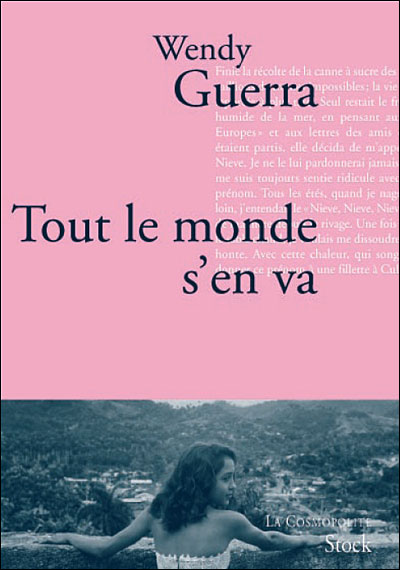
Tout le monde s'en va (Wendy Guerra)


--The blurb--
"This debut novel takes the form of a private journal, that of Nieve, who is growing up in Cuba in the 1980s. She confides to the diary the defining moments of her existence, from childhood to the cusp of womanhood.
Torn between artistic and bohemian parents who are splitting up, she will soon know a future made up of constant departures and successive separations. The reader follows the personal, intellectual, political and artistic evolution of this young girl. As a child, just as her parents have separated, she goes to live in Cienfuegos with her mother and her mother's Swedish lover, who gives her a love of games and of reading. However, her father obtains custody of her and takes her to the mountains with his troupe of puppeteers. Having been subjected to maltreatment from her father, Nieve is then placed under the care of a Child Protection Centre (Castrist jargon for an orphanage), before being able to live with her mother again and leave with her for La Havane, where they never stop hoping for a permit to leave Cuba.
As the months and pages go on, Nieve's pen becomes more self-centred, to the point of becoming more self-analytical. Her experiences with relationships contribute to the awakening of her artistic sensibility and political conscience. Creative and artistic compulsion is at the heart of this work, as are the themes of accomplishment and resistance."
*blurb from www.fnac.com; translation mine

--The review--
Published under the title "Todos se van" in Spanish, this oeuvre is unfortunately as yet unavailable in English. However, since none of us know what the future holds, let us proceed. Realistic child characters, both in personality and language, are difficult to create and still maintain integrity. Donna Tartt's "The Little Friend" was spoilt for me because of this. However, Wendy Guerra not only manages to achieve realistic dialogue and thoughts for the narrator's age at the start of the book (six or seven) but also manages to successfully capture the character's growth throughout the book (again in terms of the use of language as well as sophistication of thought).

The other characters are also all painted excellently, with both their good and their infuriating points shining through. The imagery is therefore vivid: the neurotic mother, the alcoholic father, the increasingly self-righteous teenager. However, I didn't feel that I could really 'connect' with Nieve, though perhaps (in an existentialist sort of way) I wasn't meant to - it's always difficult to tell whether or not this is the author's intention. However, I could empathise with some of the emotions, even though attachment to the character herself was not strong.

Learners of French or Spanish would do well to read this book: the language becomes progressively more complex in a realistic way, which serves as a very positive tool for learning. The novel is also not over-peopled with characters, meaning that while emotions meander as the character grows, the story also possesses a quality of sharp focus. It is a sophisticated and well-constructed coming-of-age story that deviates from the clichéed examples of this genre that are usually cited. However, this difference from other well-known exemplars is not easy to pin down: it does have a certain je ne sais quoi. Some qualities that do come to mind, though, are Nieve's obstinacy, which is admirable rather than irritating; a lack of attempt to be amusing, as is often common in fictional young diarists; and a lack of whininess, which makes the character more likeable than her other fictional contemporaries.
Reading about Wendy Guerra's life gives the reader some sense that Tout le monde s'en va is to an extent autobiographical, but this in no way seems to cheapen it, particularly as there is no particular overriding message or patronising missive of morality from the author as the reader reaches the book's end.

A promising novel from an author who deserves to be better-known across Europe.

Other works by Wendy Guerra
Platea a oscura (1987) - poetry
Cabeza rapada (1996) - poetry