Sunday, 4 August 2013

Things I Didn't Expect (Monica Dux)

--The blurb--
"Pregnancy is natural, healthy and fun, right? Sure it is, if you're lucky. For others, it's an adventure in physical discomfort, unachievable ideals, kooky classes and meddling experts. When Monica Dux found herself pregnant with her first child, she was dismayed to find she belonged firmly in the second category. For her, pregnancy could only be described as a medium-level catastrophe. So, three years later and about to birth her second child, Monica went on a quest: to figure out what's really going on when we incubate. Things I Didn't Expect is one woman's journey to make sense of the absurdities, the harsh realities, the myths and the downright lies about making babies. Monica explores the aspects of baby-making that we all want to talk about, but which are too embarrassing, unsettling or downright confronting. She also looks at the powerful forces that shape women's experiences of being pregnant in the west, the exploitative industries, and the medical and physical realities behind it all. Along the way, she fends off sadistic maternal health nurses, attempts to expand then contract her vagina, and struggles to keep her baby's placenta off her hippy brother's lunch menu."

--The review--
The presentation of the process of pregnancy and birth, particularly on the internet, tends to veer from an obsessively-photographed state of Zen-like bliss to a graphic portrayal of physical and mental decline. However, it is the former that is particularly pushed onto women, particularly through the popular media of television and magazines. Monica Dux's aim in Things I Didn't Expect is to debunk this perception using some of the latter (which, frankly, you'll only find online if you start digging deeper, as your friends who have had babies tend to only sing when they're winning), thankfully mixed liberally with a good sense of humour.

Dux is a great humorist who will have readers laughing out loud. Her relatively recent arrival in the publishing world means that there have not been many opportunities to see this yet, especially given that her work has mainly been publicised in Australia, and much less in other countries. Nevertheless, her cheerful and frank approach augurs well for the future and acts as a breath of fresh air in the arena of pregnancy and birth (she's like Helen Austin, but in prose form). The book is generally well-organized in the first half, exploring everything from the appearance of the vagina and getting your sex life back post-partum, to the perils of core stability exercises (although not everything in the blurb, strangely, seems to be explored in the book itself, although perhaps that has something to do with my copy being a free one from NetGalley - it's possible that these are abridged).

However, in the second half, while Dux addresses many interesting points regarding the feminist implications of the media's overly positive and pressurising presentation of pregnancy and birth, this is done in a far less snappy and organized way. Readers risk feeling a little bogged down and like Dux has diverted from her original purpose - i.e., to confront the realities of pregnancy and birth in a humorous way. Instead, we are taken on an ideological ramble that feels closer to her interests from her first book (The Great Feminist Denial, published in 2008). This all leads to the book ending in a rather abrupt and solemn way which again feels at odds with the project's original purpose, which does genuinely have value in today's society given the very valid problems that Dux presents. (This is not to say that the second half does not also have value - but the content and tone perhaps mean it would be better off saved for another book.)

Overall, though, Things I Didn't Expect is a worthy acquisition for anyone with an interest in birth and pregnancy - its laugh-out-loud moments, generally accessible style, short chapters and well-chosen anecdotes make it a volume to dip into at any time for a bit of Dux's characteristically cavalier humour and wisdom. One hopes that a similar book on parenting is in the pipeline - even if parenting doesn't suffer the same problems in the media as preparing to become one.

also by Monica Dux
The Great Feminist Denial (2008) 

Thursday, 1 August 2013

Chicken Soup For The Soul 20th Anniversary Edition (Canfield, Hansen and Newmark [eds])

--The blurb--
"The twentieth anniversary edition of the original Chicken Soup for the Soul is brimming with even more hope and inspiration - the stories you’ve always loved, plus bonus stories, plus 20 bonus stories from today’s thought leaders. Twenty years later, Chicken Soup for the Soul continues to open the heart and rekindle the spirit. Celebrate the twentieth anniversary with the classic book that inspired millions -- reinvigorated with bonus stories of inspiration! You will find hope and inspiration in these 101 heartwarming stories about counting your blessings, thinking positive, and overcoming challenges."

--The review--
It could be argued that America invented the self-improvement genre as we know it today, especially thanks to pioneers such as Ralph Waldo Emerson (who used the term 'self-help' in his 1841 essay, Compensation), Dale Carnegie (who wrote the ever-successful How To Win Friends And Influence People in 1936) and Napoleon Hill (author of Think And Grow Rich, penned in 1937). Today the industry is worth around $9 billion; and now with around 500 million Chicken Soup for the Soul books now having been sold worldwide, it's fair to say that they are one of the biggest self-help series around. And that's before you even count the revenue made from the brand's forays into other sectors: as just a few examples, you can buy Chicken Soup for the Soul DVDs, board games, greeting cards, puzzle books, dog food (yes, really), and - of course - soup. This all clocked up $2bn in retail sales in just ten years. So now that it's been twenty years since the original Chicken Soup for the Soul book hit the shelves, how does this new collection celebrate? What can it possibly add to a clearly already thriving brand?

Existing fans of the series will already be familiar with several of the stories the anniversary edition contains - but rereading these is like catching up with an old schoolmate and being pleased to see them, rather than being bored by them and feeling like they should just finish up their coffee and leave. New stories have also been added, which fit in seamlessly with the tone and style of the old. As Chicken Soup for the Soul is an international series, it was equally encouraging to see a few UK-based stories added to the collection, rather than the compilation being wholly rooted in the US. With luck, this is something that will continue to improve about the series: while many of its readers are from America, the brand's founders are quick to acknowledge its worldwide readership, so to see more stories from readers from these countries would be more representative.

Stories from great thinkers of our age, such as Deepak Chopra, have also been included in this edition. While it's a good way to recognise the brand's success, it also highlights why the at-times criticized homogeneous style in which the stories are written is in fact used. Even though some readers may be pleased to see writers' individual styles take on a more significant role, as variation in style is always welcome, this new approach is also in fact the anniversary edition's downfall, as not all of the luminaries the editors have chosen are actually able to write clearly and in a way that's meaningful and practical.

However, none of this stops the collection from doing what it ultimately sets out to do: proving that it's still as relevant to readers as it ever was. The stories, even if they are overly saccharine at times, generally continue to surprise, move, and provoke thought. The ever-expanding collection of titles (now numbering over 200) also continues to accompany readers throughout their lives: readers of the teen and kid series ten years ago may now be looking for a book to appeal to their hobby, birthplace, profession, or status as a new parent (hear that, Duchess of Cambridge?). Introducing the series to a new generation of readers is just one of the important roles that the brand has in keeping people positive and inspiring them to overcome new challenges - and those things will never get old.

For a full list of Chicken Soup for the Soul titles, see the official website.

Sunday, 14 July 2013

Bookish Bits and Bobs: Vive les livres

It's recently been reported that the French consumption of ebooks has gone up by 2% between 2011 and 2013...making a total of a mere 3% of book sales. This compares to around 22% consumption in the US and around 10% consumption in the UK. So why are French readers not interested?

Trying to get a connection? Good luck with that
One theory that has been posited is that the French are less enthusiastic about gadgetry in general, meaning that ebook uptake was always bound to be slow. Only about 1% of the adult population of France is said to own an ereader, while this figure is more like 26% in the US. This of course doesn't account for tablet ownership, but even if we look at this, it too is lower (10% of the French adult population owns one, compared to 34% in the US). These statistics are perhaps surprising to those who spend most of their time around Paris, where ebook readers, tablets and smartphones abound. However, travel just a couple of hours south and it's clear that such gadgetry is a novelty, with ereader users getting strange looks in public as they are such a rare sight. In some very rural areas, connectivity is also still limited to non-existent, which will limit uptake.

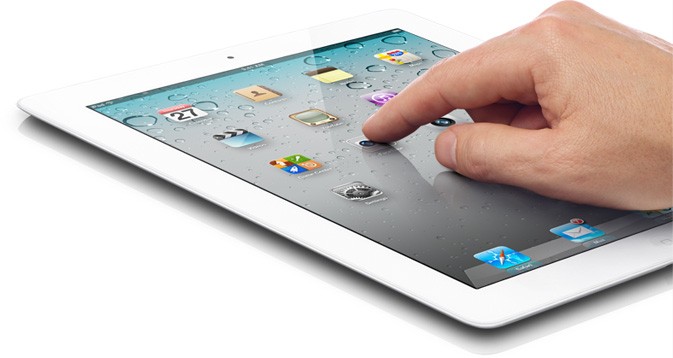
It's also worth bearing in mind that salaries in the US are higher than in France. According to the BBC, the average American works for $3,263 a month, while the average French person earns $2,886 - and while differences in the cost of living can partly justify this gap in salary, it would not be true to say that everyday living costs are always lower in France. (Long-distance train travel and food are just two of the things that spring to mind as being cheaper in the US.) Prices of these gadgets are also comparatively lower. Not many people in France (outside the capital, of course) have the spare €400 required for the 16GB iPad 2 - whereas people in the US, with higher average salaries, are able to snag one for $400 (about €300 at today's exchange rate). But this can't be all there is to it. Why aren't the French interested in this technology, or in reading ebooks in general?

The French version of Big Brother
At the risk of sounding deliberately polemic, it could be observed that the French are just slow on the uptake in general when it comes to new trends, and that they also just have different tastes (and that this is, indeed, part of the country's charm). For instance, celebrity gossip and reality TV does exist in France, but to nowhere near the same degree of popularity as in the US or UK. They are also more parochial in their food tastes, preferring to continue exploring the cuisine of their own country (or even just region) rather than branching out and cooking dishes from many different countries. This naturally stretches into technology and more specifically into education and technology. Smartboards in French state schools? You have to be joking.

The front-facing, chalk-and-talk French system
Why is education important in this debate? It's not that all schools in the UK and US are now teaching exclusively from e-textbooks and dancing around bonfires of their old paper copies (although there are of course reasons why this wouldn't be such a terrible thing), as compared to France, where students are still made to copy out chalked notes from the blackboard (erm, in some places...see right!). While a lack of technology in French schools is partly linked to the country's slow uptake of e-readers and so on (given that children and adults arguably haven't been shown the benefits to any advanced degree), it also links back to the fact that French education is still very traditional indeed. It's probably roughly where Britain was back in the eighties or maybe even the seventies. "Special needs" go largely unaddressed; little account is taken of students' differing learning styles (kinetic, aesthetic and so on); rote learning is highly prized; arts, sports and even sciences take a back seat in primary schools, while most of the learning time is spent on literacy and numeracy; and learning is overall very book-based, with focus on individual rather than group learning. 

Perhaps this sounds harsh and a French student who's left the system recently (or is still in it) will soon come along to debunk this. But it seems doubtful. One of the strengths (and weaknesses) of the French education system is its lack of overall change across the years, and this would explain the lack of technological assimilation in French schools. The "if it ain't broke, don't fix it" philosophy prevails. Why would students need ebook readers or smartboards? Textbooks and blackboards work just as well. In 2010, only 66% of French teachers claimed to have used technology in their classroom in the last 12 months, compared to 96% of UK teachers. The teachers in France cited reasons for this which included potential disruption to the class, difficulties in installing the technology, and doubting the technology's pedagogical efficacy. All of this amounts to an attitude and ethos whereby physical books are highly prized by French children and adults. Combined with the income levels and gadget prices mentioned above, this makes them more likely to use paper books than electronic ones.

Bookshop, rue de la Convention, Paris
The same pattern pervades the French book market. Having spent their education with the value of physical books being reinforced, the French are keen to continue prizing this, with the prices of paper books being highly protected so that authors are paid properly. High book prices have driven consumers in other countries to flock to online sellers, but as well as cherishing paper books and the academic institution of the country's authors, the French also like to uphold the livelihood of independent booksellers, which is partly driven by anti-capitalist sentiments as well as a sense of intellectual honour. This all means that in France, large online companies (and suppliers of ebooks) cannot win over independent (or at least physical) retailers - at least for now. 

A smartboard being used in a French state school
One can therefore conclude that far too many factors are still too strongly at play in favour of paper books for the French to even consider converting seriously to ebooks. So could this ever change? The French have already started stealing Britain's TV shows (creating their own versions of Money Drop and Come Dine With Me, to name but a few), even if some of these were programmes that Britain decided it didn't want anymore way back in the eighties (such as Family Fortunes); will they therefore be following the UK and US suit in the near future? Back in 2010, when the above data was initially released, then-education minister Luc Chatel announced a €60m investment in school technology, and in October 2011, telecoms company Orange worked with the French government to establish a promising pilot scheme in schools. Called the Tablette Elève Nomade project, 300 Samsung Android tablets were provided to six schools across three French districts, and it went so well that the initial one-year trial was extended to last a further year. Teachers noted several positive changes, including easier motivation of disaffected learners, easier differentiation, increased team work and bonding among students, and increased parental involvement. 

Maccy D's, French-style...a sign of progress?
All of this indicates that in the right environment and with appropriate support, parents, students and teachers are all receptive to the use of new technology. As children who were born into a world where smartphones and at-home web access are normal begin to grow up, it's possible that the new young population (who, if current trends continue, are more likely to live in a shoebox of a studio flat than a roomy detached house) will be keener to read digitally (even if only to save space). Perhaps only then will ebook sales increase. France is slower to pick up on trends - but it often gets there eventually. For better or for worse, celebrity magazines such as Voici! are gaining in popularity in France, Amazon is well-used (even though discounts are nowhere near as large thanks to laws protecting authors), and even McDonalds (you'd think the arch enemy of the French) does well throughout the country. Ebook sales are likely to do this too in the end, with likelihood perhaps being increased with the decline of traditional physical bookstores such as the Fnac. However, somehow it seems less probable that France will ever stop loving books in general. Vive les livres indeed.

Friday, 12 July 2013

What's Science Ever Done For Us? (Paul Halpern)

--The blurb--
"The Simpsons, the world's most popular and longest-running animated series, is a treasure-trove of scientific ideas and a clever mixture of fact and fancy. Now there's a guide to the science behind the show. In this book, you'll find answers to an amazing array of scientific questions raised in 26 classic episodes, including: can genetics explain Homer's dimwittedness and Lisa's brains? Are shrink-rays and teleportation devices possible along the lines of Professor Frink's inventions? And do toilets in North America and Australia flush in opposite directions? Whether you're a Simpsons fan, a science buff, or both, get ready to laugh and learn as the entire town of Springfield proves that science isn't just fun - it's hilarious!"

--The review--
As a secondary school teacher, I've often found that the most successful lessons either a) have the students up on their feet for part of the time or b) start with something from popular culture that they can relate to before tying in to something more theoretical. As a die-hard fan, I find that the Simpsons offers endless fodder for many subjects (including the two that I teach: English, and social studies). Now Paul Halpern has added fuel to the flames for science teachers thanks to his collection of short essays, titled with Moe's exclamation, "What's science ever done for us?" (Said right before burning down a Christian Science centre.) 

As a lecturer in physics, Halpern is well-qualified to analyse and break down some of the conundrums that come up in the series, including parallel universes, the idea that one day we could all end up living on Mars, and the notion of artificial intelligence. The seriousness with which he covers this material is greatly appealing both to scientists and to fans of the show, and is very much in keeping with similar essay collections that have been released in relation to The Simpsons. However, Halpern's own knowledge occasionally gets in the way, with a few of his explanations having the potential to soar over the heads of some readers (including me...bearing in mind that I essentially have the science knowledge of a sixteen-year-old, if that).

The breadth and depth with which the ideas are explored are generally executed appropriately and successfully. Classic episodes (such as Two Cars In Every Garage And Three Eyes On Every Fish) are analysed alongside those from series 15 or later (such as I, Doh-bot), and such scope ensures appeal to all generations of fans. The serious science covers biological, chemical and physical aspects, from whether Homer's theory of a donut-shaped universe is valid to the possible ecological consequences of pollution from nuclear power plants, all blended into easily-digestible essays. The short essay format also means that the compendium is easy to dip into at will, and the beauty of it for teachers also lies in its blend of fun and education (even if at times it's clear that Halpern is more used to explaining physics to 20-year-olds than to 14-year-olds).

This well-written compilation clearly has fun at its heart, surrounded by a body of science, and simultaneously conveys great respect for The Simpsons itself, making it a great shame that this book has not been authorized by the creators of the show. Naturally, though, this doesn't stop students from getting great educational value out of the essays within. Thanks to this book, I've managed to squeeze media, robotics, ethics, comprehension and vocabulary into one lesson - and all while linking back to students' science and technology module, as well as to the cultural context of the language they are learning (they are second language English students). Now that's what I call interdisciplinary learning. Thanks, Paul.

you may also like
The Simpsons and Philosophy: The D'oh! of Homer (Irwin, Conrad and Skoble - eds)
The Gospel According to the Simpsons (Mark Pinsky)
The Psychology of the Simpsons (Alan Brown) 

other works by Paul Halpern
Edge of the Universe: A Voyage to the Cosmic Horizon and Beyond (2012)
Collider: The Search for the World's Smallest Particles (2010)
Brave New Universe (2006; with Paul Wesson and Joseph Henry Press)
The Great Beyond (2005)
Faraway Worlds (2004; with Lynette R Cook)
Cyclical Serpent (2003)
The Pursuit of Destiny: A History of Prediction (2000)
Countdown to Apocalypse (1998)
The Quest for Alien Planets (1997)
Cosmic Wormholes (1993)
Time Journeys (1990)

Thursday, 11 July 2013

Let It Be (Chad Gayle)

--The blurb--
"Newly-separated Michelle Jansen longs to create a new life for herself and her children, Joseph and Pam. Crossing the state of Texas, Michelle puts down roots in Amarillo, where she winds up in a low-paying job that comes with a fringe benefit—a burgeoning relationship with a co-worker who wants to love her the way she needs to be loved. Making a fresh start isn’t easy, however. Michelle’s ex-husband is willing to destroy her new life if he can’t have her for himself, and although she finds solace in her new romance and her favorite music, the music of the Beatles, Michelle is hurt in an unexpected, almost unimaginable way when she is betrayed by her very own son. When passion and rage collide, one man will nearly lose his life, another will lose his freedom, and a family will be split in two. Can they find healing and forgiveness in the midst of so much sorrow and guilt? Or will love give them the strength to let it be?"

--The review--
Books based on the oeuvre of popular and cherished artistes stray into risky territory, frequently being overly reverential or failing to do justice to the work the author clearly admires. Let It Be, as betrayed by its title, has the songs of The Beatles as its basis. However, its writer, Chad Gayle, does not succeed in allowing the music to swell through its pages, thanks to a combination of distance, obscurity, and inconsistency.

At times the links back to the book's title are too obvious and superficial. At other times they are barely there at all; having the chapter titles named after Beatles tracks is insufficient when there is no discernible thread of this laced through the plot itself. Equally, it's possible that the Beatles' lyrics could be so deeply woven into Let It Be's prose that only the most diehard fans could pick up on heavily encoded references, meaning that the book possibly presupposes knowledge. This is not a book for those who know little about The Beatles - Gayle's references to songs are ostensibly flat and rushed - and even hardcore fans might be disappointed by the lack of musicality emanating from the pages.

There are other problems too. The constant switching between different characters' viewpoints is initially disorienting and there are significant difficulties with the characterisation of child protagonist Joseph and his twelve-year-old neighbour Jud. (Curiously, despite showing the viewpoint of every other character, Gayle does not even try to show the perspective of Joseph's thirteen-year-old sister Pam.) Joseph is a conglomerate of a four-year-old's naivety and a fourteen-year-old's cynicism, while Jud acts more like a rebellious sixteen-year-old than a twelve-year-old. All of this suggests that the author has had little to no interaction with children of this age, giving even further credence to the maxim "write what you know". Given that Joseph is supposed to largely be carrying the story, it is disappointing that his traits do not seem to gel as naturally as the child protagonists in American modern classics, such as Sam Krupnik or Ramona Quimby. One could even go as far as to say that none of the characters' voices sound fully authentic, including those of the adults (Michelle, Bill, and Dan).

The interactions between the adults pose further questions. Anecdotes are forced, the domestic violence scenes are hackneyed, and one wonders if Gayle is trying to satirise misogyny or if he is genuinely serious. Either way, it's a dangerous line to walk. The cliché of the single father ending up in the sleazy motel is also nothing new. Gayle's tendency to tell, rather than show, means that it makes it difficult to believe in his characters, who end up seeming one-dimensional to the reader. For the most part, their actions are not especially surprising or radical either. Consequently, by the time Joseph's 'sin' is revealed, this has no impact on the audience. His actions were perfectly understandable, and as with the protagonist of Philip Roth's The Human Stain, the 'confession' is meaningless, undermining the sharp and unexpected opening which was one of the book's few positives.

Gayle does, however, show some signs of promise. There are glimmers of developing character in Michelle and Dan, where they say things in their minds that seem to have come straight from the heart. One intriguing segment sees arch enemies Bill and Dan paired together, making for an interesting juxtaposition of thought and action, and Gayle's balance of direct and indirect speech is used skillfully to create different effects. 

Ultimately, Let It Be is a story full of opportunity - be that as a chance to show Michelle as a strong woman, or the chance to weave a truly rich, synaesthetic tapestry of the Beatles' legacy. Unfortunately, it would appear that this opportunity was not fully taken up - meaning that there is still plenty of room for Beatles fans to pay literary homage to the Fab Four.

Tuesday, 9 July 2013

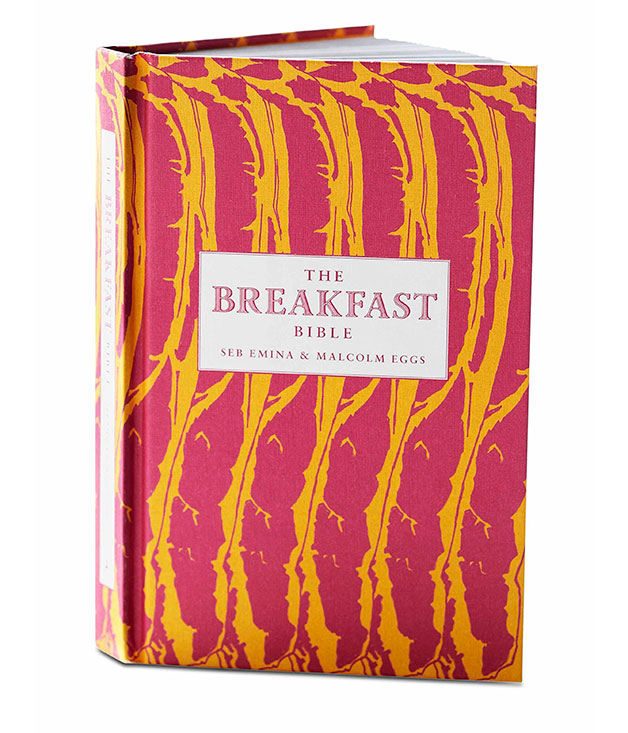
The Breakfast Bible (Seb Emina et al)

--The blurb--
"When it comes to the most important meal of the day, this is the book to end all books, a delectable selection of recipes, advice, illustrations and miscellany. The recipes in the robust volume begin with the iconic full English - which can mean anything as long as there are eggs, bacon, sausages, mushrooms, tomatoes, black pudding, bread, potatoes and beans involved - before moving confidently on to more exotic fare such as kedgeree, omelette Arnold Bennett, waffles, American muffins, porridge, roast peaches, channa masala from India, borek from the Balkans and pĂŁes de queijo from South America. There are also useful tips like the top songs for boiling an egg to, and how to store mushrooms. Interspersing the practicalities of putting a good breakfast together are essays and miscellanies from a crack team of eggsperts. Among them are H.P. Seuss, Blake Pudding, Poppy Tartt and Malcolm Eggs, who offer their musings on such varied topics as forgotten breakfast cereals of the 1980s, famous last breakfasts and Freud's famous Breakfast Dream. Whether you are a cereal purist, a dedicated fan of eggs and bacon or a breakfast-aficionado with a world view, The Breakfast Bible is the most important book of the day."

--The review--
My husband often jokes that he did well to marry a Brit, as the breakfasts in other countries are rubbish. He says this while being French (so no "but what about croissants?" will change his mind) and while travelling extensively around Europe for work (so he has had plenty of time to be won over by other countries' dubious displays of selections of ham and cheese). However, even he has to admit that the brilliantly-researched Breakfast Bible, by Seb Emina and co, will open up any reader's eyes to a range of culinary possibilities from around the world.

Beautiful photographs are interspersed with witty (yes, really) puns, historical tidbits, food quizzes, culinary horoscopes and amusing diversionary lists (including songs to eat while cooking/eating breakfast - although somehow they forgot the blindingly obvious Breakfast At Tiffany's by Deep Blue Something). This, of course, does not stop the range of reliable and easy-to-follow recipes from being centre stage. As well as expanding on one's knowledge of the full English breakfast (who would have thought that a mixture of oats, yeast and water would lift bacon and sausages to even greater heights?), other breakfast foodstuffs enter stage left to mix up our breakfasts throughout the week (for example, Persian eggs, made with saffron and halloumi, make a nice change).

So the book expands horizons, makes us laugh, and fills our bellies in even more ways than before. So what? What makes The Breakfast Bible different to other food books?

Seb Emina's accessible and drily humorous style, along with that of his co-writers, is clearly part of it. However, it can't be the only reason that this book never gets put back on the shelf, taking up permanent residency on our breakfast table to be consulted regularly. On the practical side, it also deals with cooking techniques, such as how to buy your raw ingredients to ensure you're always getting food to fit your requirements. However, it's Emina's unique take on this that makes the book memorable: who else would tell you to not use an egg timer, but instead to cook along with a song, meaning that by the time it's over your egg will be cooked just how you like it? Short essays on certain aspects of our British breakfasting history (such as class at the breakfast table) also help to give an even rounder and fuller understanding and impression of the meaning behind the meal. All of this takes place without ever feeling chaotic or losing readability. All tastes are also catered for, whether you're on a health kick or throwing caution to the wind, whether you're refined or trashy (Pac-Man cereal, anyone?), and whether you're traditional or adventurous.

Perhaps more important, though, is the non-politically-correct yet inclusive view of breakfast presented by this diverse collection. Perhaps even in time it will help to draw my husband back to his own homeland's breakfasts thanks to Emina's recipes for pains au chocolat, croissants, and French toast. Meanwhile, him indoors is just grateful to have been steered clear of the Glamorgan sausage (suffice it to say that hard-core meat-eaters will be very disappointed by what sounds initially like a carnivore's dream) - and as I sink back into a tea-induced stupor (tea from China, for what it's worth), I'll send you on your way with a simple bon dégustation - and a recommendation to buy this book.

cross-posted to Ferret Food and Wines

Monday, 8 July 2013

Food and Philosophy: Eat, Think, and Be Merry (edited by Fritz Allhoff and Dave Monroe)

 --The blurb--
"Food & Philosophy offers a collection of essays which explore a range of philosophical topics related to food; it joins Wine & Philosophy and Beer & Philosophy in in the "Epicurean Trilogy." Essays are organized thematically and written by philosophers, food writers, and professional chefs. Provides a critical reflection on what and how we eat can contribute to a robust enjoyment of gastronomic pleasures A [...] collection which emphasizes the importance of food as a proper object of philosophical reflection in its own right."

--The review--
From vegetarianism to picky eating, and from allergies to fast food, we all eat differently. Sometimes the food we put in our mouths is shaped by things beyond our control, while others are the results of definite choices. In the case of the latter, it seems reasonable to consider the ethics behind those choices. Is it right to say "no thanks" at a dinner party when given a foodstuff you do not like? Should we walk on by the value chicken and pick up a free-range one instead? And what do philosophers have to say about veganism? The collection of essays entitled Food And Philosophy endeavours to find out.

Some of the essays contained within the compendium (edited by Fritz Allhof and Dave Monroe) raise immediate questions. In suggesting that our eating habits are formed by our communities, one of the writers, named Frye, goes on to say that all communities are shaped to be a certain way, which does not seem to account for culinary diversity within communities (although there is perhaps some truth to the argument - in a different essay - that vegetarians in the Western world will more or less come from the same social group). Such loopholes in arguments betray weaknesses in some of the elements of the essayists' style. Some prioritize basic rhetoric over sophisticated argument, for instance, while others lose focus and lack revolutionary ideas (the idea that eating disorders have their basis in control issues, for instance, is an idea as old as the hills). Nevertheless, the entire volume generally remains very accessible, even though the writers' individual styles remain apparent. As such, the topics addressed are equally diverse, with anorexia, obesity and everything in between all being covered, meaning that all readers should find something that resonates with them on a personal as well as an intellectual level.

Naturally, however, we all eat selectively, and this element in our diets - that of choice - is discussed extensively throughout the collection. This inevitably leads to the discussion of whether taste is objective or subjective, and the notation of the fact that perceptions of what we "can" or "can't" taste expand regularly, with the addition of umami to the flavour spectrum being one recent example. The collection's extensive bibliography further corroborates the notion of endless possibility within this topic of research. The highly interdisciplinary nature of this compilation raises a variety of questions - for example, are so-called 'experts' just more eloquent? When we compare food writers' experiences, are we really disputing their experiences, or just their descriptions? This is further underlined by another essayist's assertion that foods themselves cannot be positive or negative in taste or flavour; only our individual experiences can be.

This is, of course, not just about linguistics and philosophy (although it's true that the usual suspects are cited several times: de Saussure, Brillat Savarin, Hume...): for the romantic, the world of literature is frequently cited, with Proust naturally getting a look-in alongside a few more surprise guests such as Jorge Amado and William Faulkner. The ruthless world of marketing is also discussed, with one essayist asking what brands of food really give us (identity, familiarity, and someone to choose for us are all reasons cited). For the analytical, the realm of the psychology of food forces us to question the role of taste and smell in our formative experiences. Other experts point out how historical and cultural context can change the perception of food - think of horse and narwhal as foodstuffs, or the rise and rise of service Ă  la russe. The notions of food as symbols and anchors of our memory, as well as the idea that taste is influenced strongly by culture, are all-pervasive. 

Some essays are more grounded in reality than others (with the essay entitled Eating Well perhaps being best for this), while others are swamped by philosophy to the point that they begin to lose clarity. The aim of the collection is not equally at the forefront of all the writers' mind, with certain contributors losing sight of the philosophical element. Some essayists are calm and logical, while others are schmaltzy; some are academic and methodical, while others take on a more aggressive, Michael Moore-style tone of reportage. However, what most of the essays culminate - perhaps not intentionally - in a link to Plato's famous story of the shadows in the cave. It is strongly suggested that foodies and laymen alike are ever on a quest to find out about the 'real' food that is creating the 'shadow' of what we are able to taste - and this concept proves a helpful gelatine in binding this highly recommended collection of essays together. 

perfect partners
Wine and Philosophy (ed. Fritz Allhoff) 
Beer and Philosophy (ed. Steven D Hales)

cross-posted to Ferret Food and Wines  

Saturday, 6 July 2013

Get reading!

What do you get when you cross Nook, The Evening Standard, Trafalgar Square, and Boris Johnson?

Mr Toad, avec wine
The answer is the 2013 Get Reading Festival, set to take place this year on July 13th. Next Saturday, famous authors will take to London's Trafalgar Square to encourage children from all over the UK to read. To kick-start the event, Boris Johnson read from The Wind In The Willows at a primary school in Battersea, hoping to introduce the ten-year-olds to something that isn't JK Rowling. Reading from a ereader by Nook (one of the festival's sponsors), the festival seems set to hook children with technology, thanks not only to ebook readers but also to interactive screens that will be set up in the square. Free to the public, the festival has been organised chiefly by broadsheet newspaper The Evening Standard.

The Mayor's Fund has already backed the newspaper's literacy campaign to the tune of £500,000, to help implement volunteer programmes in London schools in the hope of raising literacy levels. Now Nook has pledged 1000 ebook readers to the volunteers to further raise standards. Other leading publishers are on board too, with big names such as Hachette, Penguin and Random House all donating books to load onto the ereaders.

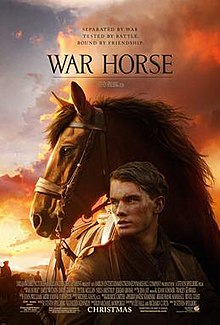
Excerpts from Matilda The Musical and War Horse are also set to feature in the upcoming festival, alongside respected children's authors such as Malorie Blackman and Anne Fine. Taking place from 11.00 until 5.00, the interested are encouraged to visit The Evening Standard's website for more details and to reserve their places. A wonderful opportunity for those easily able to travel to the capital, it could enable children who have so far shown little interest in reading to see how much fun it can be, as well as allowing those who already love reading to find their niche and meet others with similar interests.

With luck, this pilot project will see similar events being rolled out across the UK - every child needs to feel supported in their reading and such occasions allow reading to be part of a norm and reality, not the secret preserve of the geeky. And, with a little bit more luck, it'll show them that there's more to reading than JK Rowling.

Thursday, 27 June 2013

Bookish Bits and Bobs: Lost in translation (2)

The book I translated for a friend studying at SOAS at the end of 2010
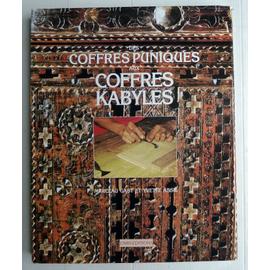
There's a reason why this blog's been on hiatus for a few weeks. Apart from the expected travails at this time of year - chiefly exam grading, both for my school and for one of the UK's national exam boards - I've also been grappling with something less expected and equally interesting. It doesn't happen often, but occasionally I do get some translation work in. This has taken me on a fascinating odyssey through all types of texts, from horoscopes and mobile phone contracts to academic texts on Kabylian woodwork. This time it was a legal transcription of proceedings, and while I have no training whatsoever in the law, it did make me see why people find this field exciting: the thrill of seeing all of these big companies at loggerheads with one another, combined with the intellectual challenge of wrangling with their weasel words and coded messages, means you're certainly unlikely to have a boring day in the office. But what is it that grips me about translation in general?

On a practical level, it enables me to put the theories learned in the translation module I took at university to good use. It also gives me the opportunity to further ameliorate my French. Having studied the language formally from the age of 11, and informally before that, I still constantly strive to improve. Living just outside of Paris since 2008, having a French husband (previously boyfriend) since 2005 (as well as the built-in French inlaws that came with him), and working in a bilingual environment all help - but I do not yet consider myself to be fluent. So anything that helps to increase fluency can only be a good thing. However, this has to go hand-in-hand with intellectual or emotional reward, otherwise I wouldn't continue to do it. Otherwise, it's the same as trying to get a reluctant child to do their piano practice: there's a clearly tangible goal involved, but if their heart's not in it, it's potentially of little use. So why else?

Being an English teacher, my first love naturally lies with the English language. And as I only translate with French as the source and English as the target language, translation also selfishly allows me to indulge my love of English. There's something challenging and beautiful about trying to equate exact meanings, craft an eloquent turn of phrase, and recreate the original text's tone and effects. While this is clearly a form of intellectual development, it's also, to me, a form of spiritual development, taking me to a higher plane of description and clarity. Striking a balance between these two elements is always tricky, but like any good brainteaser, it leaves you feeling immensely satisfied once you've solved the problem by unlocking meaning.

This all makes translation sound like a very solitary activity. While indeed it can be this, thanks to many translators working alone at home, it's also tremendously collaborative, which is particularly facilitated thanks to advances in technology. As well as being able to speak to colleagues through VOIP providers such as Skype, or hold conference calls through software such as Saba, emails and online discussion fora also enable translators to bounce ideas off each other in writing, in one space. In addition, thanks to my husband being French, it's occasionally useful to be able to pick his brains too! Less facetiously, though, this all means that you don't have to feel lonely while working alone, allowing you to know that wherever you and your colleagues are in the world, and whatever time zone you work to, you can still work successfully as a team on a project. This combination of teamwork and independent discipline has its own value, too, again when it comes to developing as a person.

Translation's intrinsic value also has roots in languages' natural variegation and humans' deeply-seated affinity with rhythm and musicality. Languages all have their own individual sounds and rhythms, and that's before you even get to tonal versus atonal languages. We all respond differently to these and tend to value variation in what we hear. For this reason, it naturally follows that reading (and being able to read) texts in their original languages also delivers satisfaction. However, translators equally recognize that being able to read texts in a translated form is better than not being able to read them at all, and so are able to feel that we deliver a practical service. Beyond this, comparing translations on a critical level also brings its own enjoyment, in much the same way as listening to different versions of the same song can (and, hey, look, I spoke about this recently too).

But with applications to sit foreign language exams continuing to fall in the UK (only 43% of students were entered for a foreign language GCSE in the UK in 2010, compared to 75% in 2002), is there a danger that translation could be a dying profession? Hopefully not: Michael Gove's new curriculum plan is set to make the study of languages compulsory from the age of seven, and on top of this, rising university tuition fees could also be in the translation profession's favour, as students turn towards more practical courses that stand a greater chance of being of real use post-graduation. A quick search on the website of university applications service UCAS turns up 15 providers of translation courses available for entry in 2014, including at such prestigious universities as Cardiff and UEA. Several of these courses involve practical placements in the workplace. Further to this, the world of translation is working hard to promote itself through events such as International Translation Day, which is celebrated at the end of September each year and is supported by several major bodies, including The British Council, The London Book Fair, and The Translators Association. Launched in 2010, it focuses on debates, translator residencies, mentoring schemes, among other projects. In addition, translation prizes such as the Stephen Spender Prize continue to thrive, while taking care to include categories for children in an attempt to hook the next generation.

All of this helps to improve accessibility not only to translation as a profession but also to translated works of literature. Even if you consider that you know little about languages, chances are that you have been touched by translation. Stieg Larsson, Paulo Coelho, Elie Wiesel all, apart from being men, have one thing in common: without translators, you'd have heard of none of them.

Tuesday, 11 June 2013

Incomplete and Utter History of Classical Music (Stephen Fry and Tim Lihoreau)

--The blurb--
"In his Incomplete & Utter History of Classical Music, Stephen Fry presents a potted and [...] rambling 700-year history of classical music and the world as we know it. Along this musical journey he casually throws in references to pretty much whatever takes his fancy, from the Mongol invasion of Russia and Mr Khan (Genghis to his friends), the founding of the MCC, the Black Death (which once again became the new black in England), to the heady revolutionary atmosphere of Mozart's Don Giovanni and the deep doo-doo that Louis XVI got into (or 'du-du' as the French would say).
It's all here - Ambrose and early English plainsong, Bach, Mozart (beloved of mobile phones everywhere), Beethoven, Debussy, Wagner (the old romantic), right up to the present day."

--The review--
"Stephen Fry...national treasure...", opens a certain Weebl video. And certainly very few could argue with that. Beloved by many, he frequently graces our television screens, not least as part of legendary comedies Blackadder and Jeeves and Wooster, as well as (more recently) on intellectual TV pop quizzes such as QI and Never Mind The Buzzcocks. He also regularly graces the nation's bookshelves thanks to his autobiographies and books on poetry. In 2004, he released his Incomplete and Utter History of Classical Music in partnership with Tim Lihoreau, a musician who works closely with radio station Classic FM. Although the book is ghostwritten by Lihoreau, Fry's inimitable style and humour comes through strongly, and the idiosyncratic and at times paradoxical nature of this is also encapsulated in the book's title, which combines modesty and deliberately gross exaggeration in equal measure.

This Lihoreau-Fry lovechild has many merits, presenting the history of classical music in a concise and accessible manner. As Fry rightly points out on multiple occasions in the tome, there's nothing wrong with accessibility. So what if someone only knows Grieg's Hall Of The Mountain King from the Alton Towers advert? It's better than not knowing it at all. However, one could also argue that it's a little like reading Harry Potter or Twilight: great if you're reading, but not so great if you never move on to anything else. One of the many joys of classical music (and indeed almost any music) is the seemingly endless scope for the analysis of different interpretations, and just as many of us have multiple copies of Cry Me A River, Summertime, Blackbird or Somewhere Over The Rainbow kicking around, we fulfil different needs by having several recordings of, say, Handel's Giulio Cesare, and infinitely exploring its various nuances and emphases. This is something that is little mentioned (if at all) by the Fry-Lihoreau team - but then again, this book is only billed as being an introduction to classical music.

The introduction is eased all the more by Fry's signature sense of humour, which of course has been a key element in marketing this book to draw his fans in. Be that as it may, though, some might consider that Fry's particular brand of humour rests significantly on tone of voice and comic timing, making this book better as a radio series (which is, incidentally, how it originated) or even as a television series (we are still waiting). Nevertheless, this is not to say that the pages never raise a chuckle, and they are packed with brilliantly British puns throughout, referring to everything from Jim'll Fix It (perhaps not so politically correct in these times, but never mind) to The Beano. The authors also do cover a vast period of history in a relatively short space without skimping on detail, but some of this space is meaningless filler (which would arguably be cut out for TV or radio) and some of the space is devoted disproportionately to the composers that Fry just happens to like best (but then again, I would say that, as I'm a devotee of Ancient Greek music and will always feel that it deserves more attention).

To end such an ambitious project was always going to be awkward, and Fry's observations towards the end of the book (that the focus has shifted more towards artists and reality TV now than towards composers themselves, and that film music is perhaps the new classical music) are perfectly salient, leaving the reader with plenty to contemplate. While he has tried to end the book on a contemporary note, the danger of this was always that his conclusion would date quickly - some of the groups he mentions, such as Amici Forever, who were busily popularizing classical music at the time of the book's publication nearly ten years ago, have already disbanded. Future edits should probably take account of this by offering up a more general conclusion, perhaps without mentioning specific names unless their place in history is safely assured (mentioning Pavarotti, for instance, is probably not too big a risk). Ultimately, though, despite these pernickety criticisms, a totally unscientific experiment perhaps proves that the book has achieved its aim of popular appeal: when offered up to a class of twenty fifteen-year-olds for free, alongside an autobiography of Bagpuss' creator and two CS Lewis books, this was the only one to be snatched up instantly.

other works by Stephen Fry
The Liar (1992)
Paperweight (1992)
The Hippopotamus (1994)
Making History (1996)
Moab is my Washpot (1997)
The Stars' Tennis Balls (2000)
Rescuing The Spectacled Bear (2002)
The Ode Less Travelled (2005)
Stephen Fry in America (2008)
The Fry Chronicles (2010)